Why does a piano have 88 keys?
Composers pushed the range wider until, in the late 1800s, it settled on what human ears can clearly tell apart.
27.5Hz
Have you ever counted the keys on a piano? There are 52 white keys and 36 black ones, 88 in all. Grand or upright, in a concert hall or an elementary school music room, that number hardly ever changes.
But why 88? Not 100, not 80, but this slightly odd number. It carries within it some 300 years of the piano’s evolution.
It began with 54 keys
The piano was born around 1700 in Florence, Italy. Bartolomeo Cristofori, an instrument maker in the service of the Medici family, invented a keyboard instrument whose strings were struck by hammers. The harpsichord that came before it plucked its strings with quills, so players could not make notes louder or softer. Because this new instrument could play both soft and loud, it came to be called the “pianoforte,” from the Italian for “soft-loud.”
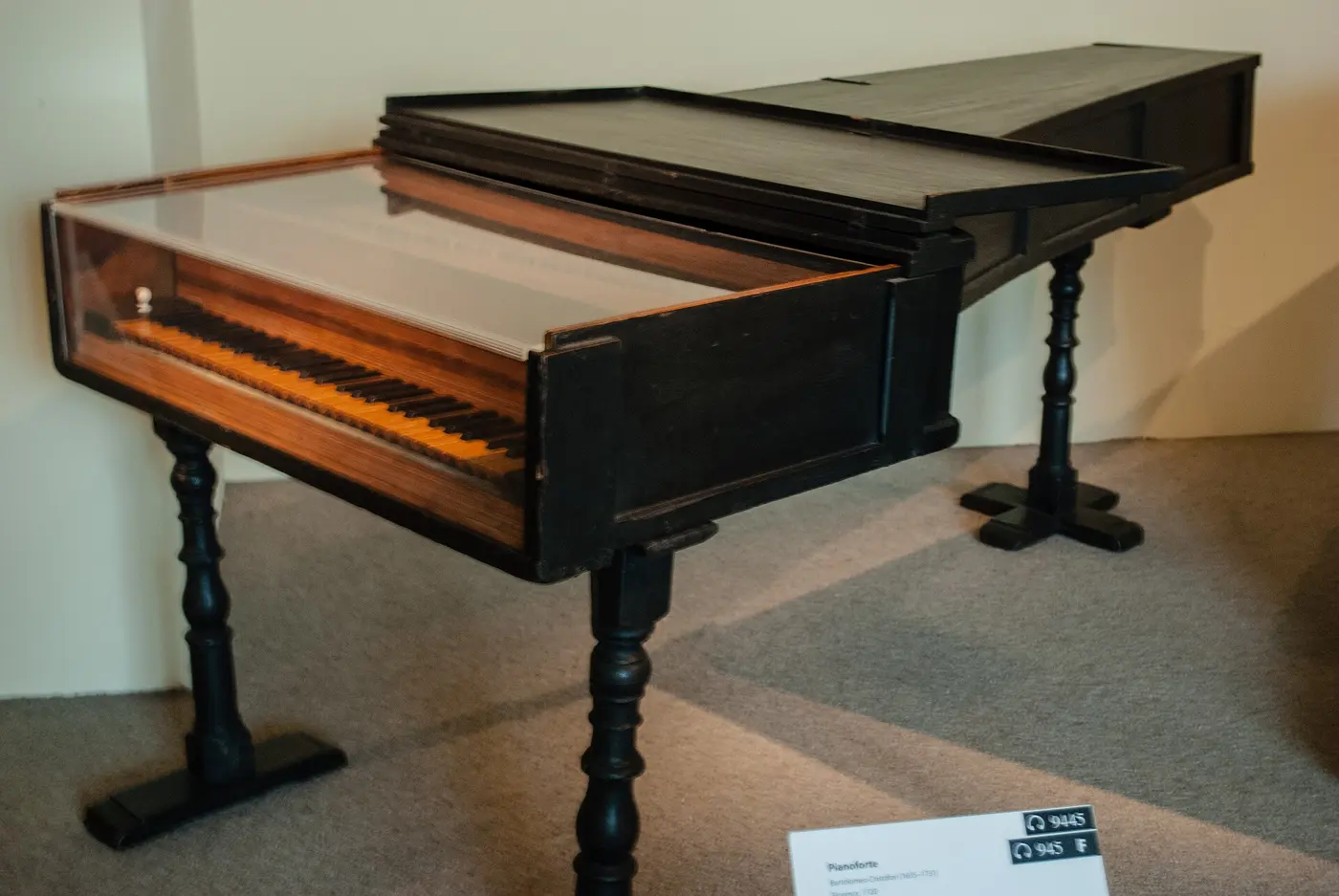

Cristofori’s 1720 piano, preserved at the Metropolitan Museum of Art in New York, has just 54 keys, about 60 percent of a modern piano. Even toward the end of the 18th century, in Mozart’s day, five octaves—around 61 keys—was the norm.
Composers stretched the range
From there, the piano’s range grew alongside the demands of composers. Every time a new instrument appeared, composers used it from one end to the other and then asked for higher and lower notes still.
The piano that the English firm Broadwood gave Beethoven in 1817 had a range of six octaves. By the time Liszt and Chopin were at work in the 19th century, the piano had become the star of the concert stage, and audiences wanted a bigger, more brilliant sound. Seven-octave pianos began to be built in the 1830s, and by the middle of the century, 85-key pianos were in wide use.
Then, in the second half of the 19th century, Steinway in the United States and other makers produced 88-key pianos by adding three more keys at the top of the 85-key range. Through the 1880s and 1890s, many manufacturers followed suit, and 88 keys became the world standard.
The “just right” range our ears revealed
So why did the expansion stop there? The main reason is thought to lie in human hearing.
The lowest note on an 88-key piano vibrates about 27.5 times a second. The highest vibrates about 4,186 times a second. Human ears can detect sounds lower and higher than that, but beyond this range it becomes harder to perceive them as distinct pitches. Notes that are too low sound like a rumble or a vibration, and notes that are too high sound like a thin ringing, so they are hard to use in melodies or chords.
The 88-key range also covers nearly the entire range of the instruments used in an orchestra. For composers, that meant a single piano could try out the full span of the orchestra, so there seemed little need to go further.
Some pianos have more than 88 keys
Still, 88 is not an absolute rule. The Imperial, made by the Austrian piano maker Bösendorfer, has 97 keys, with nine extra at the bass end, for exactly eight octaves. It is said to have come about because the composer and pianist Ferruccio Busoni, while arranging Bach’s organ works for piano, wanted to reproduce the organ’s deep bass.
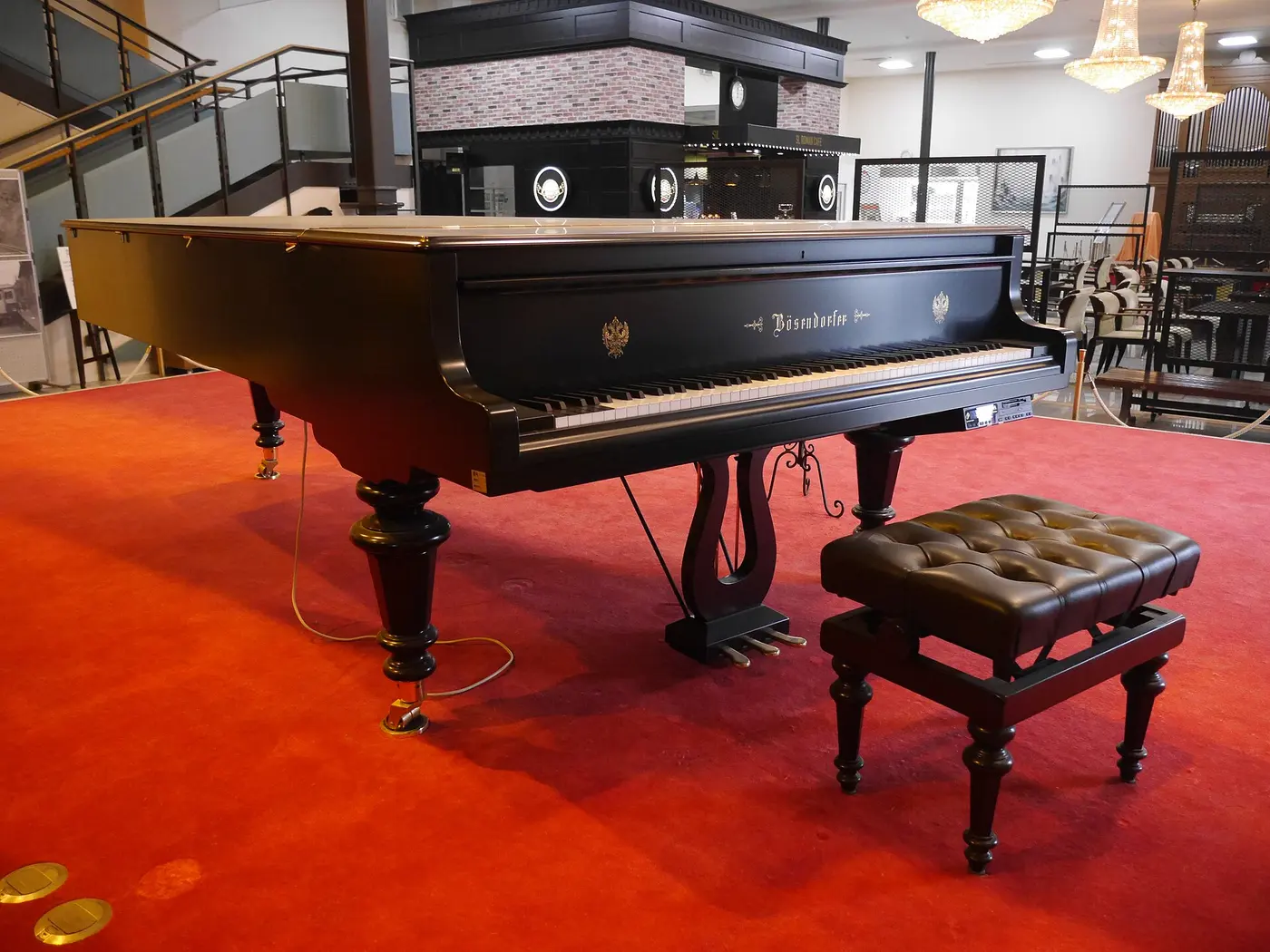

These extra keys, however, are almost never used in ordinary pieces. Some instruments have them colored black or fitted with a hinged cover so that players don’t hit them by mistake. Even when they aren’t played, the extra strings are said to resonate and enrich the sound of the whole piano.