Why do orchestras tune to an A?
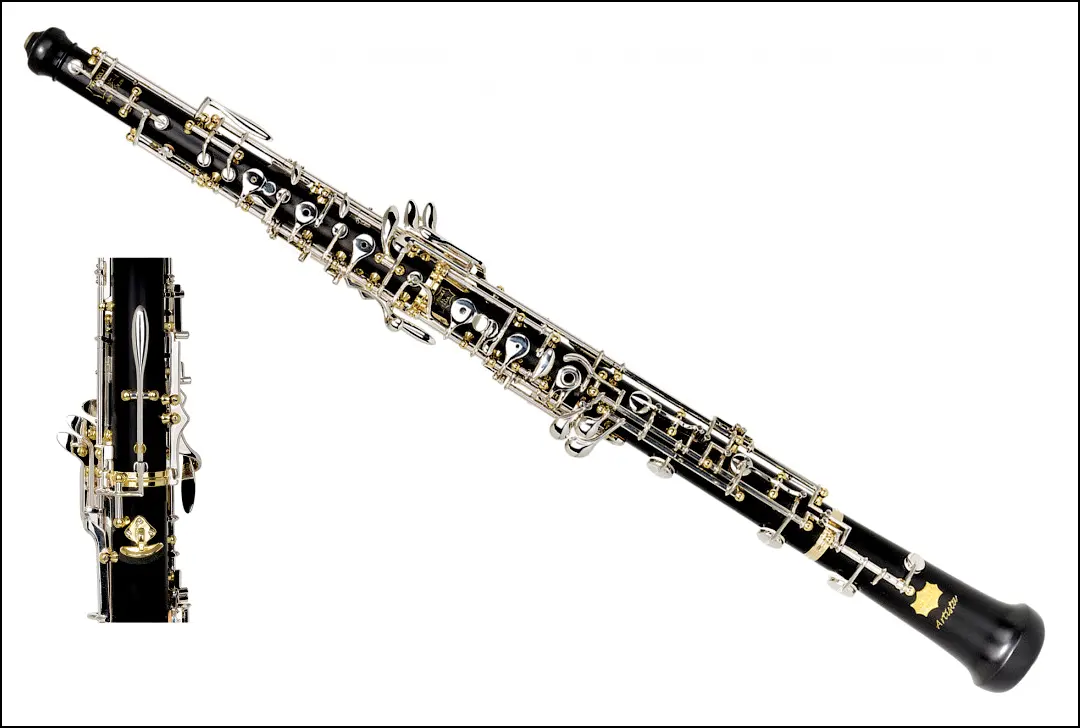
A is an open string shared by every string instrument. The tuning note is usually played by the oboe.
440Hz
At an orchestra concert, a little before the house lights go down, the oboist on stage begins to play one long note. One after another, the strings and winds join in on the same pitch, and for a moment the hall is wrapped in a soft cloud of sound.
The note being played is, almost without exception, an A. Why A, and not C or G? And why is it the oboe that gets the job?
The note every string shares
The key lies with the strings, which make up most of an orchestra. Every string instrument has “open strings”: the notes that sound when a string is played without being pressed by a finger. A violin’s four strings are G, D, A and E; the viola and cello are tuned C, G, D, A; the double bass, E, A, D, G.
Lay them side by side and you can see that A is an open string on every string instrument, from the violin down to the double bass. Players first tune the A string to the reference pitch, then tune each neighboring string from there, and the whole instrument falls into place. If the entire orchestra is to take its bearings from a single note, A is the most convenient choice.

Why the oboe?
The reference A is usually played by the principal oboist. Several reasons are commonly given.
One is that its sound carries. The oboe has a clear, focused tone rich in overtones, easy to pick out even among many instruments. Another is that its pitch is stable. The oboe’s pitch is determined largely by its reed, and it is hard to change much on the spot. Since it can’t be adjusted mid-performance the way a string instrument can, it makes more sense for everyone else to match the oboe.
There is a historical reason, too. From the Baroque era onward, flutes, clarinets, horns and other instruments came and went from the orchestra, but the oboe was part of the lineup in nearly every piece. Being the instrument that was always there is also thought to be one reason it was chosen as the reference. These days, by the way, many oboists check their pitch with a tuner (an electronic pitch meter) before sounding the A. And at concerts that include a piano, such as a piano concerto, it is customary to tune to the piano, which cannot be retuned on the spot.
A isn’t always 440 hertz
So how high is the reference A? Today’s international standard defines the A near the middle of the piano (A4) as a note that vibrates 440 times per second: 440 hertz. It was recommended at an international conference in London in 1939 and later became a standard of the International Organization for Standardization (ISO).
Go back in history, though, and the pitch of A was astonishingly inconsistent. A tuning fork from 1740 said to have belonged to Handel sounds at about 422.5 hertz, while some forks from Beethoven’s time, around 1800, sound at about 455 hertz. Surviving tuning forks and organs from the 18th and 19th centuries reveal A’s ranging from 395 to 465 hertz. In the 19th century pitch kept creeping upward, and to bring order to the confusion, the French government even passed a law in 1859 fixing A at 435 hertz.
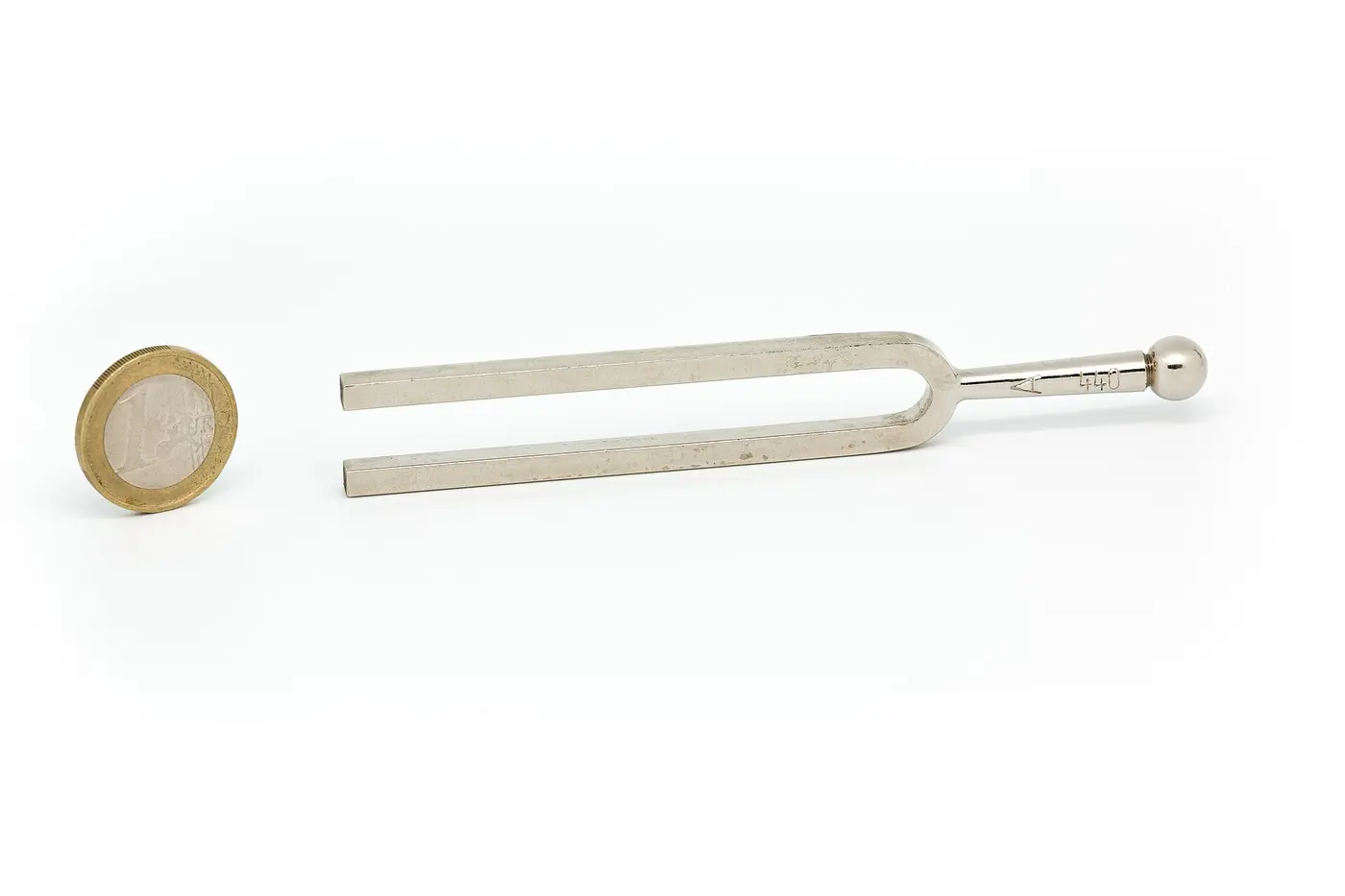

Even now, not every orchestra tunes to 440 hertz. In continental Europe orchestras often tune anywhere from 440 to 444 hertz; the New York Philharmonic is known for 442 hertz and the Vienna Philharmonic for 443. The conductor Herbert von Karajan is said to have felt that the Berlin Philharmonic sounded more brilliant tuned to 443–444 hertz. Orchestras in Japan are also said to tune mostly around 442 hertz.
It’s a difference of just a few hertz, but many musicians feel that tuning slightly higher makes the sound brighter. Meanwhile, ensembles that play Baroque music on period instruments may use a much lower A, around 415 hertz. The A that sounds at the start of a concert is, in a sense, the orchestra’s declaration of the pitch it has chosen.