How fast does a hummingbird’s heart beat?
In flight, more than 1,000 times a minute, and a rate of 1,260 beats per minute has been recorded.
1260beats
In flower gardens across the Americas, tiny birds dart from blossom to blossom with a buzzing hum. These are hummingbirds. The hum that gives them their name comes from wingbeats of about 55 per second, rising to around 80 per second at full speed.
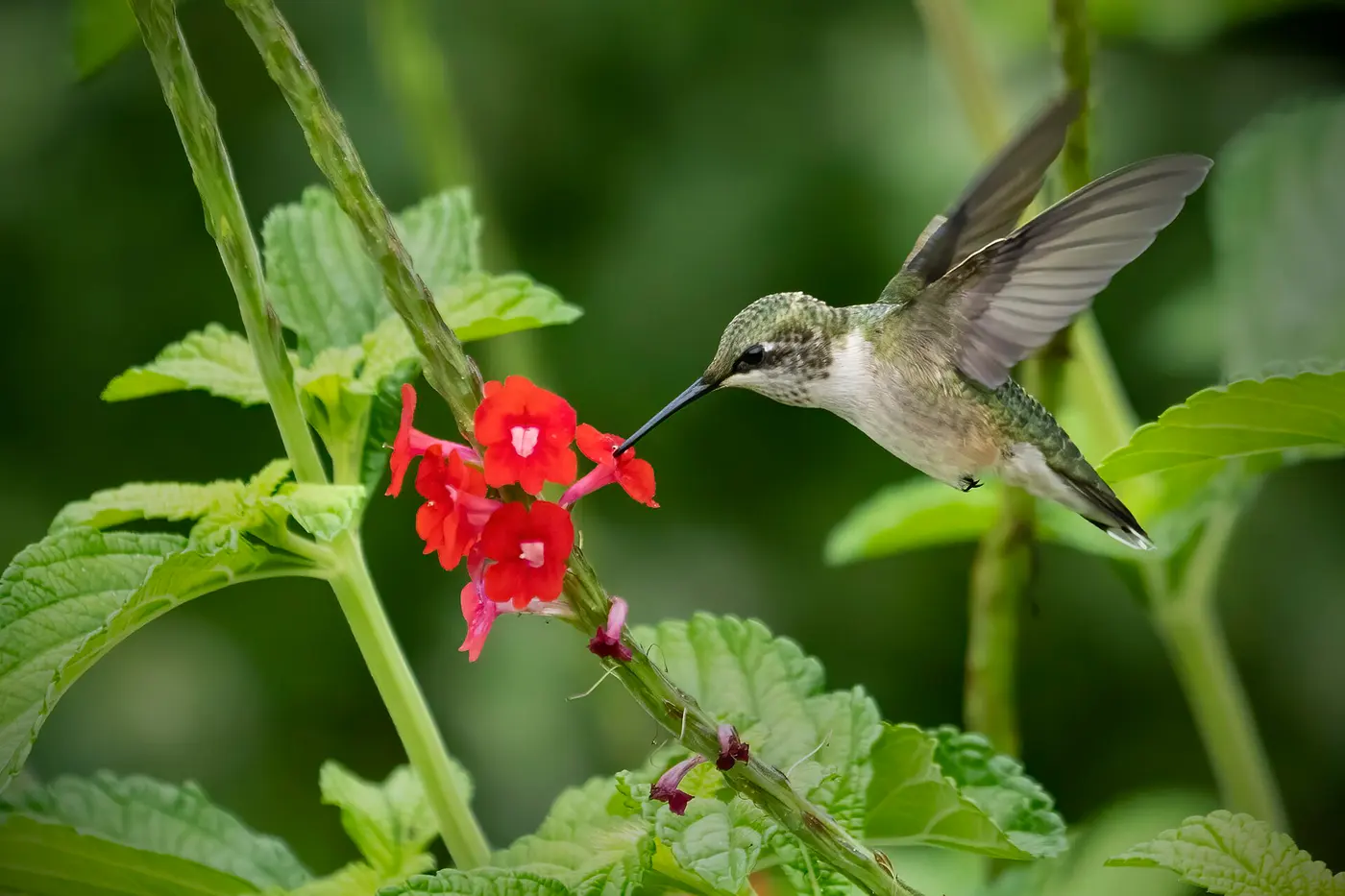
Hummingbirds sip nectar through their long, slender bills while hovering, holding themselves still at a single point in midair. Flying like a helicopter is one of the most energy-hungry feats in the bird world. Powering it all is a heart that beats astonishingly fast.
1,260 beats a minute
A human heart at rest beats about 60 to 100 times a minute. Even during hard exercise, it reaches only about 200.
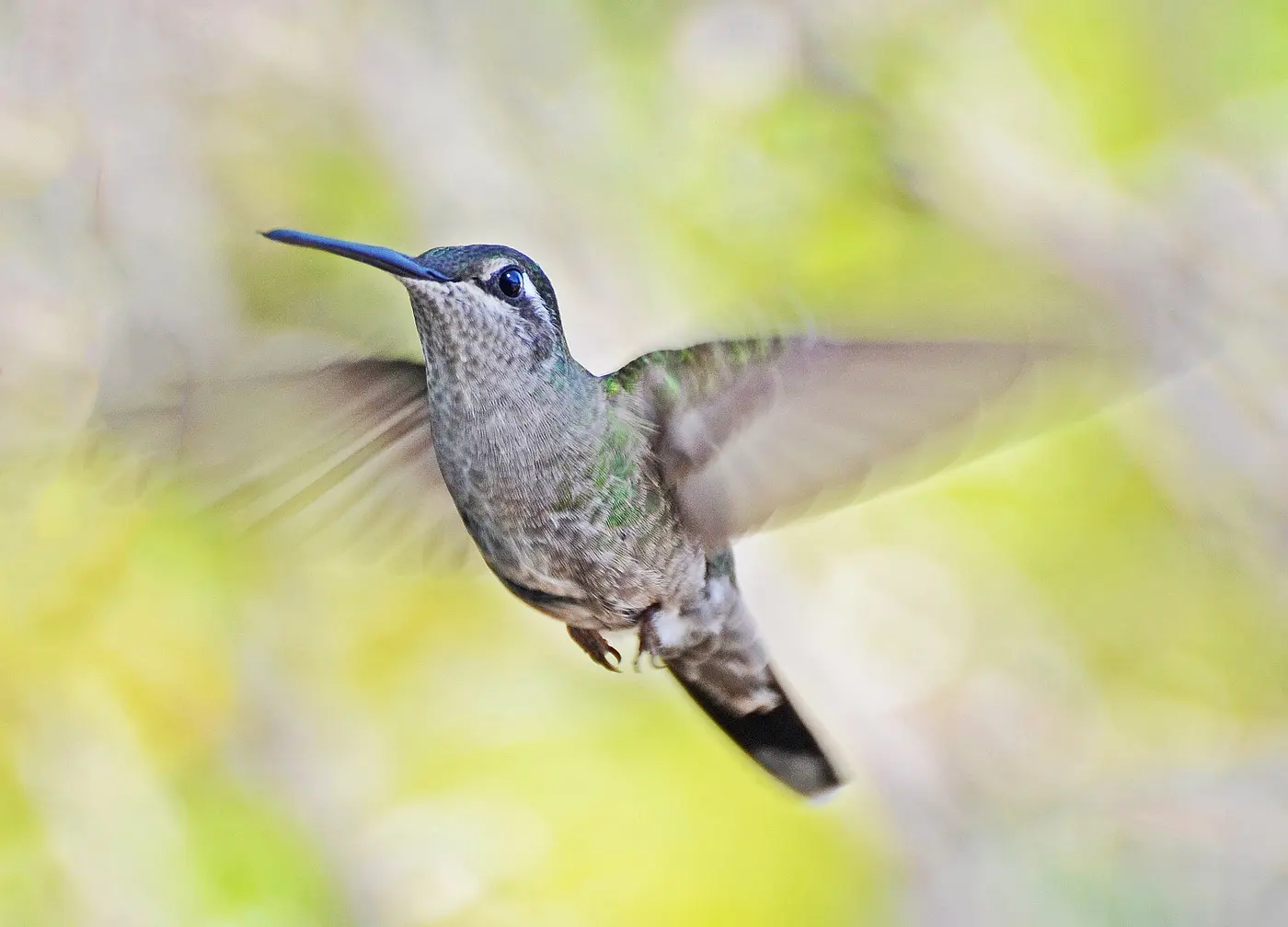
A hummingbird’s heart is in another league. The ruby-throated hummingbird, common in eastern North America, is said to have a heart rate of about 250 beats per minute at rest and about 1,220 in flight. And in the blue-throated hummingbird, which lives from Mexico to the southwestern United States, a heart rate of 1,260 beats per minute has been recorded. That is 21 beats a second, far too fast to count.
Breathing is fast as well: the blue-throated hummingbird is said to take about 250 breaths a minute even at rest.

A big heart for a small body
A hummingbird’s heart isn’t only fast; it is also remarkably large for the size of the bird. In the ruby-throated hummingbird, the heart makes up about 2.5% of body weight, which is said to be one of the largest hearts in the animal kingdom relative to body size. A human heart is only about 0.5% of body weight, so the difference is striking.
Why does a hummingbird need such a heart? The answer lies in its terrible fuel economy. The muscles that power hovering burn huge amounts of oxygen; per gram of muscle, their oxygen consumption is estimated at about 10 times that of elite human athletes. To deliver that oxygen and fuel throughout the body, the large heart pumps blood at breakneck speed.
The fuel is the sugar in flower nectar. Throughout the day, hummingbirds visit flower after flower, sipping nectar all the while. Because nectar is mostly water, the amount of water a hummingbird takes in each day is said to reach as much as five times its body weight.
Night-time energy-saving mode
At night, though, everything changes. Unable to feed on nectar in the dark, a hummingbird that kept burning energy at its daytime pace would not make it to morning.
So at night, or when it is cold, hummingbirds enter a state called torpor. They let their body temperature fall sharply, slow their heartbeat and breathing, and cut their metabolism to about one-fifteenth of normal. A body temperature that is usually around 40°C (104°F) can drop below 20°C (68°F).
In 2020, researchers reported that a black metaltail, a hummingbird living high in the Andes of Peru, had lowered its body temperature overnight to 3.26°C (about 38°F), the lowest ever recorded in a bird. As morning approaches, hummingbirds shiver to generate heat, gradually raising their temperature and heart rate until they are ready to fly again.

The price of being small
Hummingbirds have such extreme bodies because they are so small. The smaller an animal is, the larger its surface area compared with its size, and the faster it loses heat. Just keeping warm takes far more energy per unit of body weight than it does for a large animal.
By day, a heart beating more than 1,000 times a minute keeps the bird zipping through the air; by night, a hibernation-like sleep lets it quietly wait out the dark. The hummingbird’s heart lives two completely different lives, one by day and one by night.