Why are flamingos pink?
Pigments called carotenoids in their food build up in their feathers.
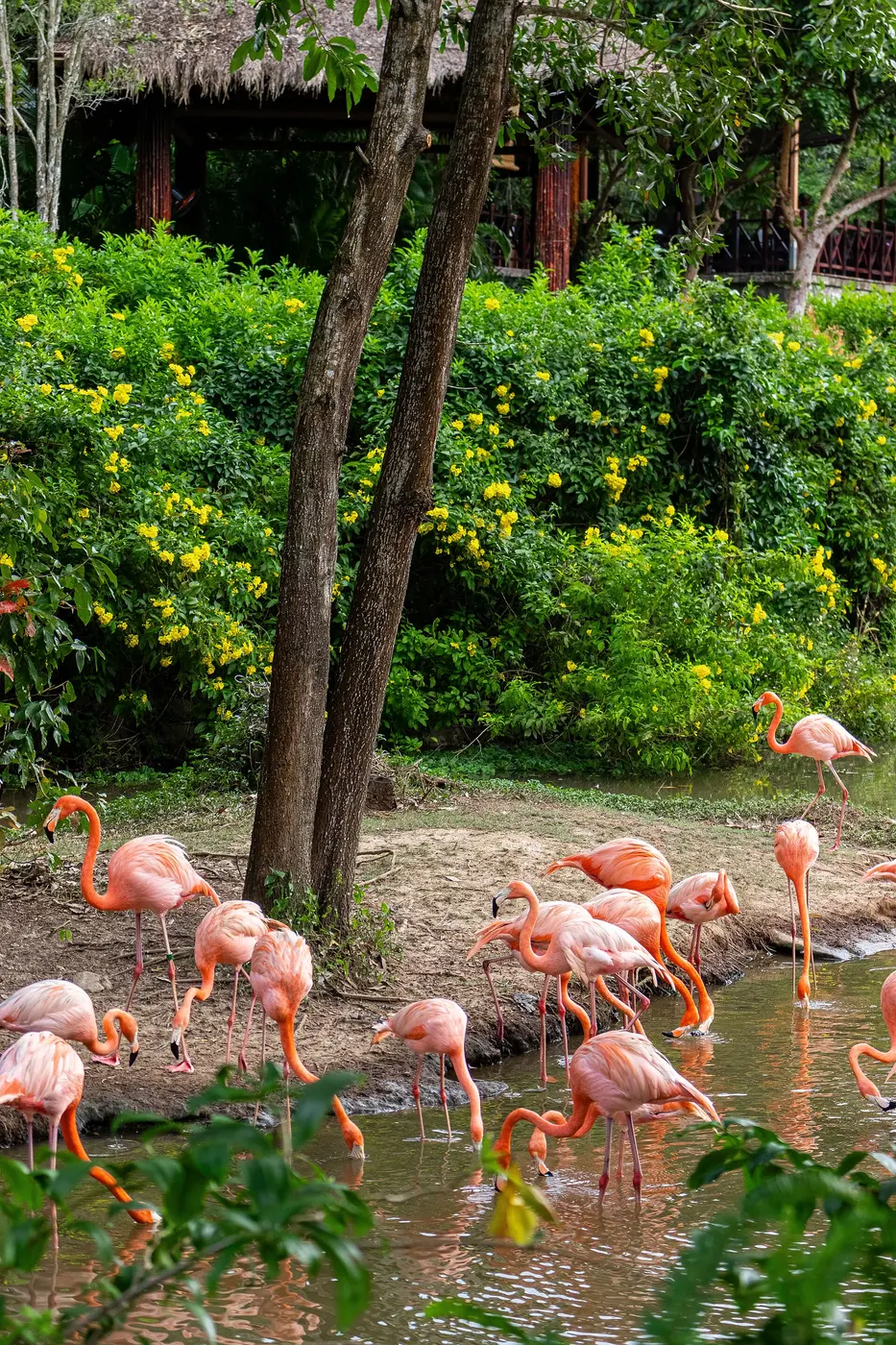
Say “flamingo,” and most people picture a vivid pink bird. Standing on long, thin legs in shallow water, neck curved down and face dipped to the surface, it is a familiar sight at zoos around the world, and one of the easiest birds to recognize.
Yet a flamingo chick fresh out of the egg is not pink at all. It is covered in fluffy gray or whitish down. That famous color is not something flamingos are born with. It is something they acquire, little by little, over time. So where does it come from?
The color comes from food
The pink in a flamingo comes from pigments called carotenoids. The orange of carrots, and the red that shrimp and crabs turn when you boil them, come from pigments in the same family.
Carotenoids are made by plants, algae and certain bacteria, but birds cannot make them in their own bodies. They have to get them from food, which means a bird’s colors can only be as rich as its diet. Flamingos live on salty lakes and tidal flats, places teeming with pigment-rich algae and the tiny shrimp-like creatures that eat them.
A flamingo feeds by dipping its bill upside down into the water and straining small food items out of the water and mud with comb-like structures along the edges of its bill. Once eaten, the carotenoids are chemically altered inside the body and stored in newly growing feathers. The flamingo is a bird that gradually takes on the color of what it eats. Its pink is, in a sense, borrowed from its dinner.

Different species, different diets, different shades
There are six species of flamingo in the world, and their colors vary widely, from the palest blush to deep, fiery tones. The American flamingo, which lives around the Caribbean, is a deep, orange-tinged red. The greater flamingo, found widely across Europe, Africa and elsewhere, is mostly whitish, with deep red or pink on its wings.
Even within a single species, how intense the color is depends on what a bird eats and how much. The lesser flamingo of Africa’s lakes feeds mainly on blue-green algae (cyanobacteria) of the kind known as spirulina, and their pigments tint the bird pink. A flamingo’s color is a kind of mirror, reflecting how well it has been eating. A pale bird and a vivid one standing side by side may simply have had very different meals.
Keeping zoo flamingos pink
There is a clear example of food setting the color, and it comes from captivity. Flamingos kept in zoos used to fade, sometimes turning whiter with each molt, because the new feathers growing in were not getting enough pigment.
So zoos tried all kinds of fixes, such as feeding the birds carrots or dried shrimp. Today, many facilities use special feed with added pigments such as canthaxanthin. There are even reports that more brightly colored birds breed more successfully, so keeping the flock pink is about more than looks.
“Red milk” for the chicks, and makeup for the adults
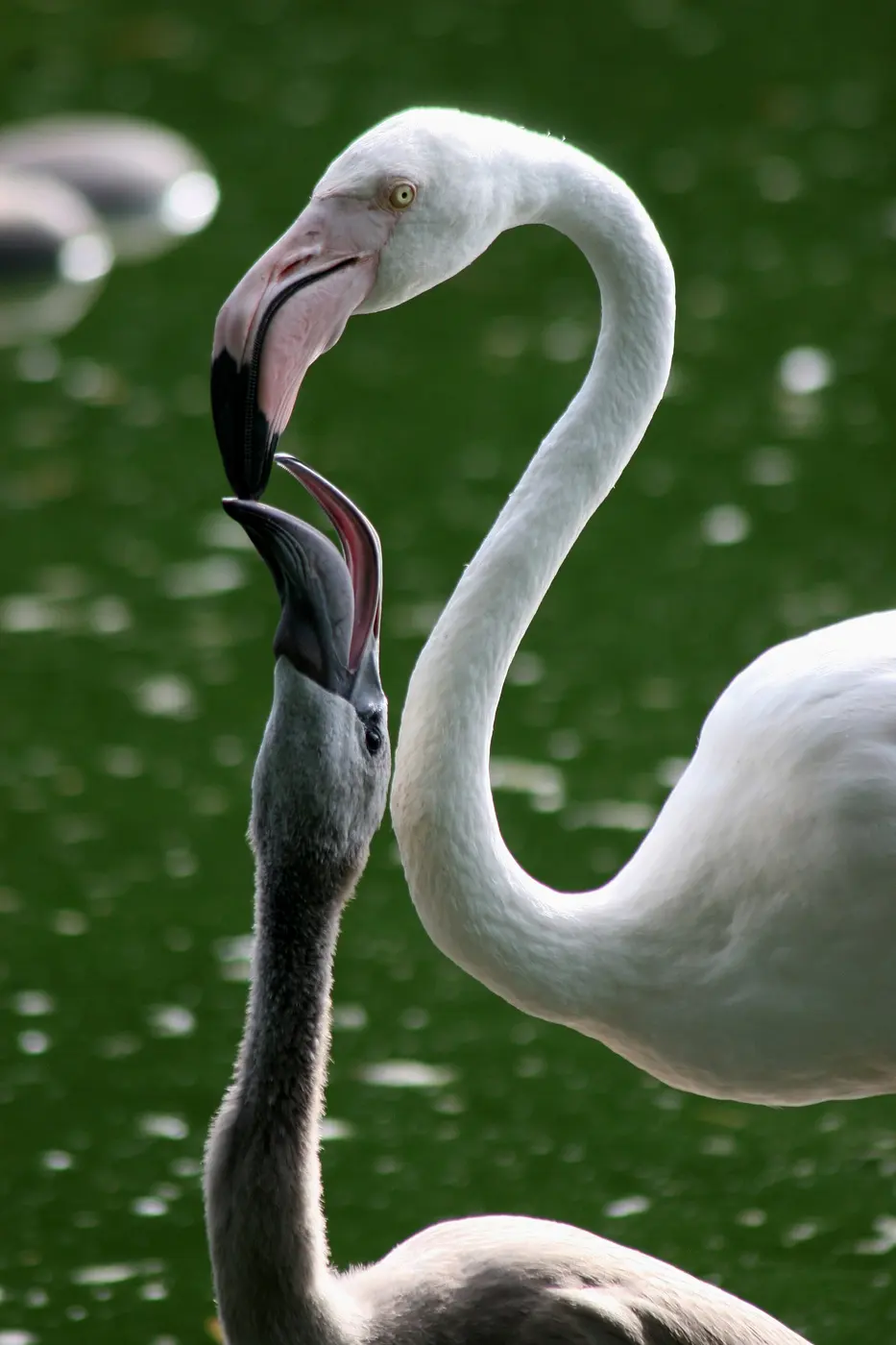
Flamingo pink also ties into a curious story about raising young. Flamingo parents feed their chicks a nutrient-rich fluid produced in the crop, a part of the esophagus, and nearby tissues. This “crop milk” contains carotenoids and is red in color. Both males and females produce it, and parents are known to gradually lose some of their color while they are raising chicks. In a sense, they pass some of their own pink on to their young along with the food.

Then, in 2011, a Spanish research team reported that greater flamingos wear “makeup.” Flamingos use their bills to smear their feathers with oil from the uropygial gland, or preen gland, at the base of the tail. This oil contains carotenoids, and during the breeding season the birds apply it diligently, making the feathers on their necks and breasts look more intensely colored. Without fresh applications the color fades, so flamingos are thought to keep reapplying it to stay vivid. Part of a flamingo’s pink, then, is quite literally makeup.