Why can owls turn their heads so far?
Their eyes can’t move, but 14 neck bones and special blood vessels let them turn their heads about 270° each way.
270°
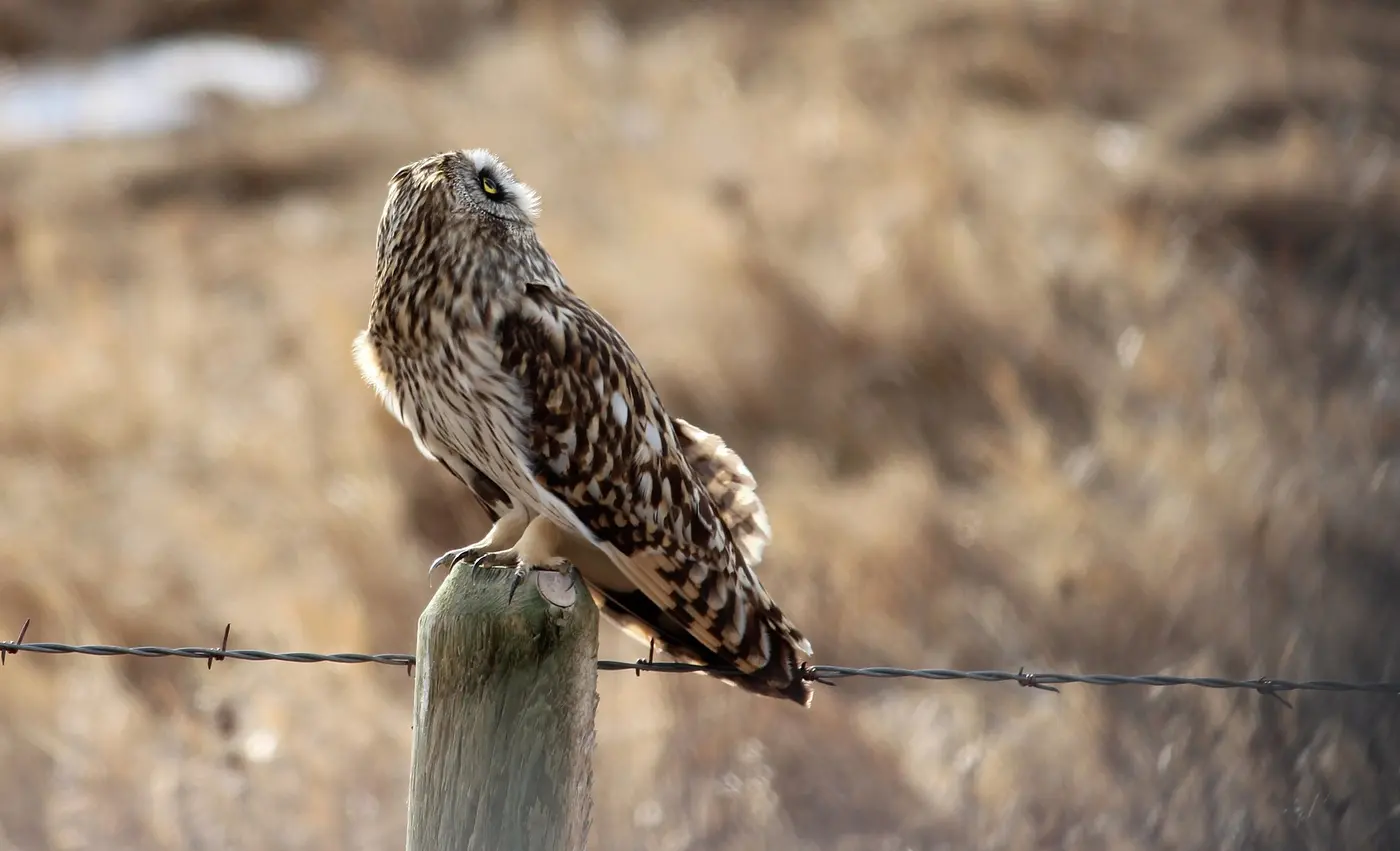
Spot an owl in a forest or a zoo and you may see something unsettling. A bird that was facing away from you keeps its body perfectly still and simply rotates its face around to look at you. It looks as if its neck is about to twist right off.
You may have heard that owls can turn their heads all the way around. That is an exaggeration. Still, an owl can turn its head up to about 270 degrees in either direction. Considering that the human neck turns only around 80 degrees each way, that is astonishing flexibility.
Fixed eyes, flexible neck
The reason owls turn their heads so much lies in their eyes. An owl’s eyes are enormous for the size of its head, and to gather what little light there is at night, they have a long, tube-like shape. As a result, the eyeballs sit snugly in the skull, and the owl cannot glance around by moving its eyes alone the way we do.
When we want to look at something to the side, we usually move our eyes first. Owls can’t, so they have to point their whole head in the direction they want to look. Catch a faint rustle in the grass, swing the head around, fix the gaze. For a nocturnal hunter, a highly mobile neck is an indispensable tool that makes up for eyes that cannot move.

Twice as many neck bones
Much of that flexibility comes down to the number of bones. In nearly all mammals, humans included, the neck has exactly seven vertebrae. Even the giraffe, for all its length of neck, has seven.
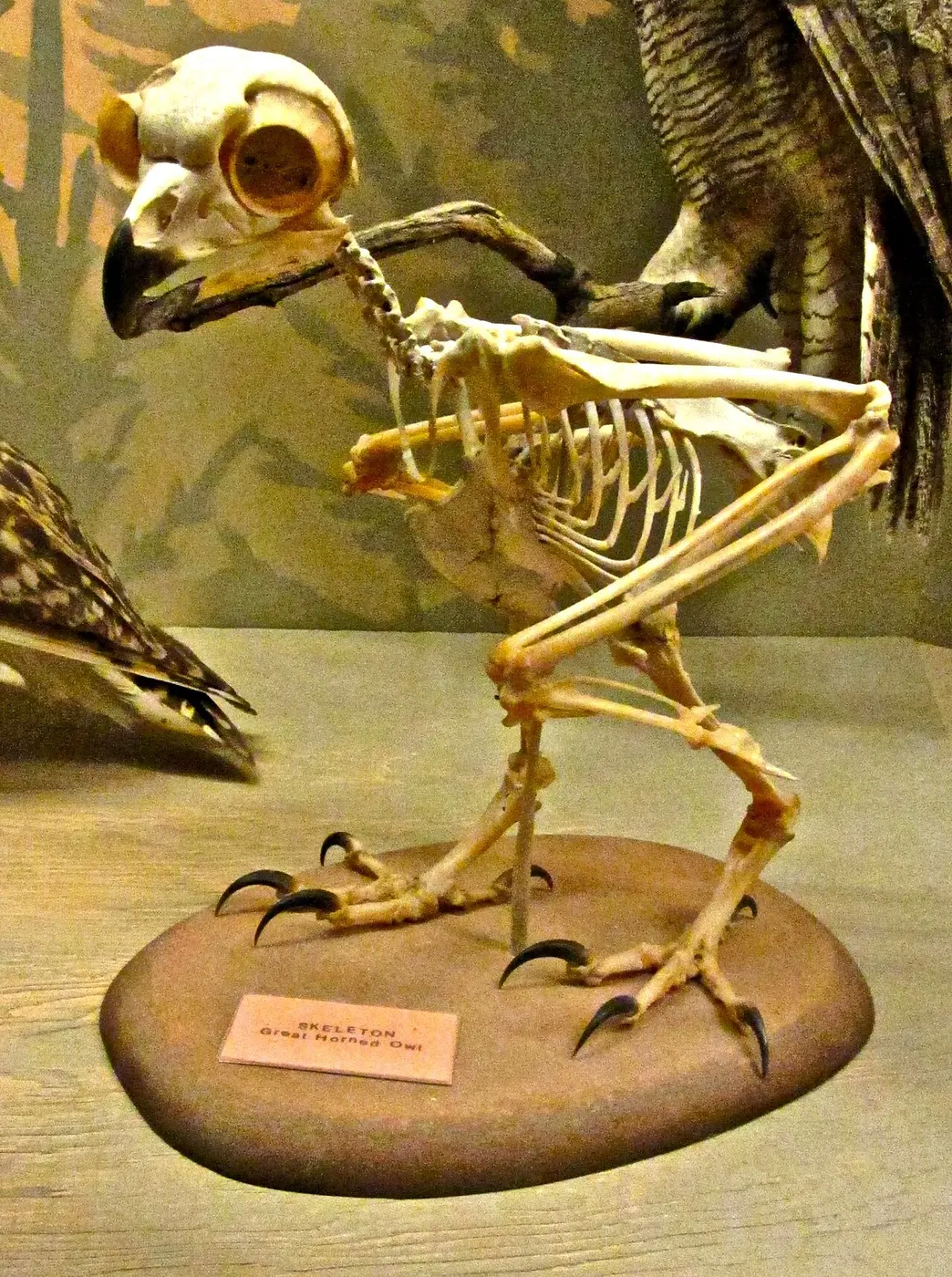
Birds are different: the number of neck vertebrae varies from species to species, and owls have 14. With twice as many bones as we have, each sharing a little of the angle, the neck as a whole can twist a long way. It is hidden under all those fluffy feathers, but an owl’s neck is surprisingly long, and in a skeleton you can see that it bends in an S-shape.
Why the blood vessels don’t tear
Twisting the neck, however, also twists the blood vessels running through it. In humans, a sudden, violent twist of the neck can injure the vertebral arteries, which run through the neck bones and supply blood to the brain, and this can lead to a stroke. So why are owls unharmed?
A team at Johns Hopkins University in the United States set out to solve the mystery. Medical illustrator Fabian de Kok-Mercado and his colleagues injected contrast dye into about a dozen owls, including snowy owls and great horned owls, that had died of natural causes, then examined the blood vessels in their necks using angiography and CT scans. Their findings, published in 2013, revealed several clever adaptations.
First, the holes in the neck bones that the vertebral arteries pass through are roughly ten times wider than the arteries themselves. With all that room around them, the vessels are hard to pinch even when the neck twists. The vertebral artery also enters the neck bones higher up than in other birds, at around the 12th vertebra, leaving extra slack in the vessel.

Even more surprising were the vessels under the jaw. As the dye went in, these vessels swelled larger and larger, forming something like small reservoirs that store blood. In humans, arteries generally get narrower as they branch and do not balloon like this. Even when turning the head far interrupts blood flow, the stored blood is thought to keep the brain and eyes supplied.
The researchers also found small connecting vessels linking the blood vessels of the neck. If one route is blocked, blood can still reach the brain by another. The owl’s swiveling head, it turns out, depends on clever engineering in both its bones and its blood vessels.