Why don’t woodpeckers get headaches?
The idea that their heads cushion the blow is losing ground; their small brains seem to be the real key.
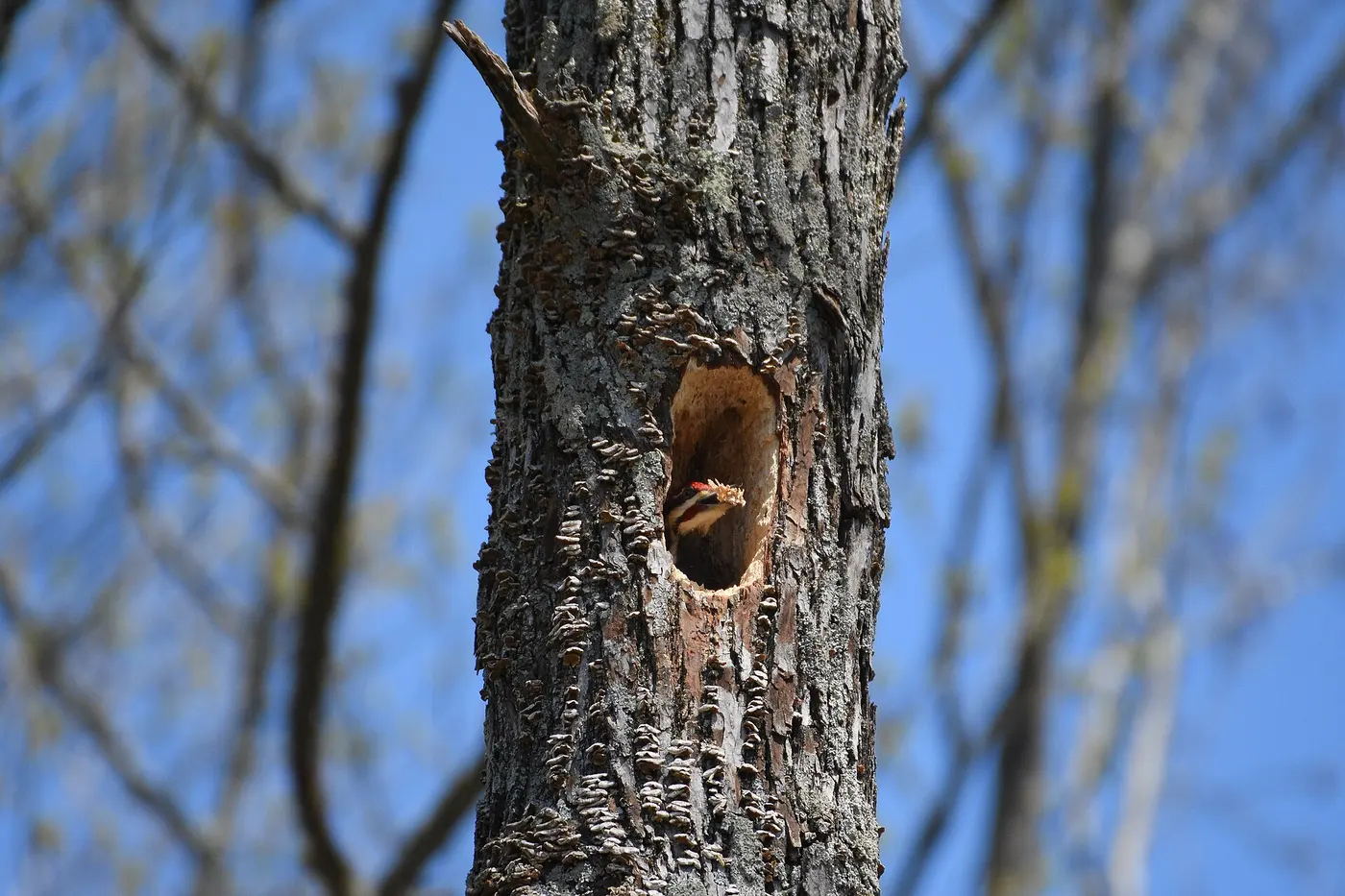
Walk through a forest in spring and you may hear a dry, rapid rat-a-tat-tat. It is a woodpecker hammering on a tree trunk with its beak. When it hunts for insects, when it digs a nest hole, and when it advertises its territory, a woodpecker drives its head into wood over and over again.
The beak is said to hit the tree at around 20 kilometers per hour (about 12 miles per hour). A person doing the same thing would be concussed in no time. So why are woodpeckers fine? The answer people believed for a long time has been badly shaken by recent research.
The “natural helmet” theory
The usual explanation has been that the woodpecker’s head has built-in shock absorbers. Part of the skull is spongy and acts as a cushion, the story goes, and the bone that supports the tongue, the hyoid, wraps all the way around the skull to protect the brain.
This “natural helmet” idea is so appealing that it has inspired new shock-absorbing materials and sports helmets. Yet hardly anyone had actually tested, in living woodpeckers, whether the head really absorbs the shock.

High-speed cameras reveal a stiff hammer
A team led by Sam Van Wassenbergh at the University of Antwerp in Belgium put the theory to a direct test. They filmed three species, the black woodpecker, the pileated woodpecker and the great spotted woodpecker, pecking at wood with high-speed cameras, analyzed more than 100 pecks, and published their findings in the journal Current Biology in 2022.
Tracking the motion of the beak and the head frame by frame, they compared how sharply each braked at the moment of impact. The head stopped almost exactly as abruptly as the beak. If the skull were acting as a cushion, the head should have slowed more gently than the beak. The woodpecker’s head works not as a shock-absorbing helmet but as a stiff hammer, the team concluded.
Come to think of it, that makes sense. A hammer with a cushion on its face would waste its force and drive nails poorly. A shock-absorbing head would make the bird worse at boring holes in wood, so it is unlikely to have evolved by natural selection, the researchers argue.
Safe because the brain is small
So if the head isn’t softening the blow, why is the brain unharmed? The team focused on brain size.
When a head stops suddenly, the smaller the brain, the less strain it suffers. Measured by length, a woodpecker’s brain is only about one-seventh the size of a human’s, so it should be able to tolerate far harsher deceleration. In their simulations, the deceleration in a woodpecker’s head during pecking exceeded the levels thought to cause concussions in monkeys and humans. Yet for the woodpecker’s small brain, even the strongest blow they analyzed stayed well below the concussion threshold.
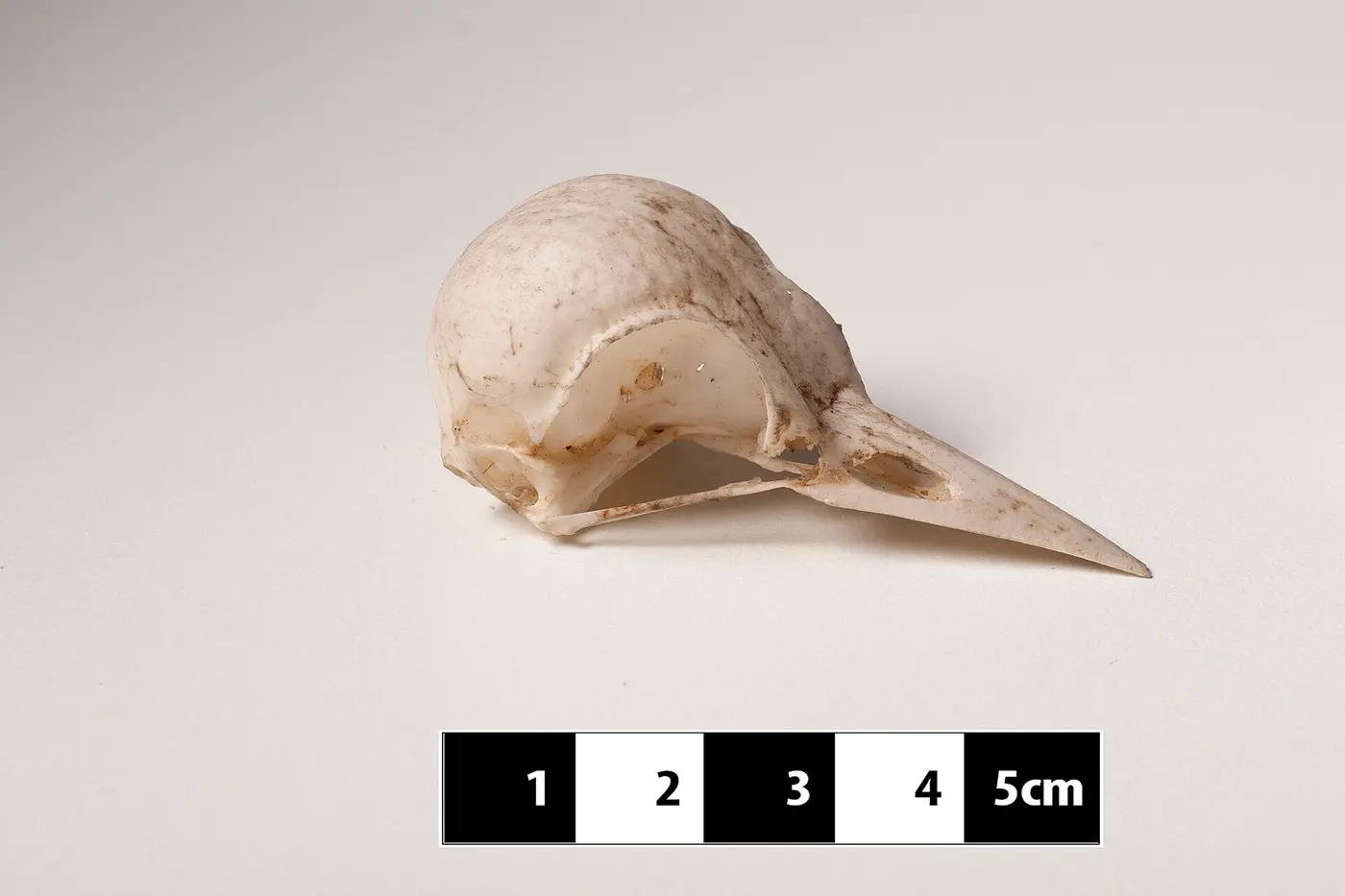

Put the other way around, woodpeckers may be living right at the edge. The researchers point out that if woodpeckers evolved stronger neck muscles to peck harder, or grew bigger bodies and brains, their risk of concussion would rise. There may be an invisible ceiling on how hard woodpeckers can peck, and how big they can get, set by the need to protect the brain.
Completely unscathed?
Even so, we can’t say for sure that woodpecker brains are untouched. In 2018, researchers in Boston examined the brains of 10 woodpeckers preserved in alcohol and found deposits that reacted to a special stain in eight of them. In some of the brains they also saw buildup of tau, a protein known to accumulate in the brains of people who take repeated blows to the head. The brains of another bird species, examined for comparison, showed no such signs.
The sample was small, however, and no one knows whether this buildup harms the birds or even plays a protective role. The researchers themselves say more work is needed.