Is pencil lead made of lead?
No lead at all. The core is graphite (a form of carbon) mixed with clay and baked hard.
17grades
In English we call the core of a pencil its “lead.” In Japanese, the word for pencil, enpitsu (鉛筆), literally means “lead brush.” Some people may even remember being told as children not to lick their pencils because it was bad for them.
Yet pencil lead contains no lead at all. In fact, pencil lead has never been made of lead at any point in history. So how did it get that name?
A black stone for marking sheep
The story begins in Borrowdale, a valley in the Lake District of northwest England. At some point before 1565, a large deposit of a shiny black mineral was found there. Some sources say it had been found as early as around 1500.
The mineral was astonishingly pure—so pure that it could be cut straight into sticks. Rubbed on paper or cloth, it left a black mark, and local people are said to have used it to mark their sheep.
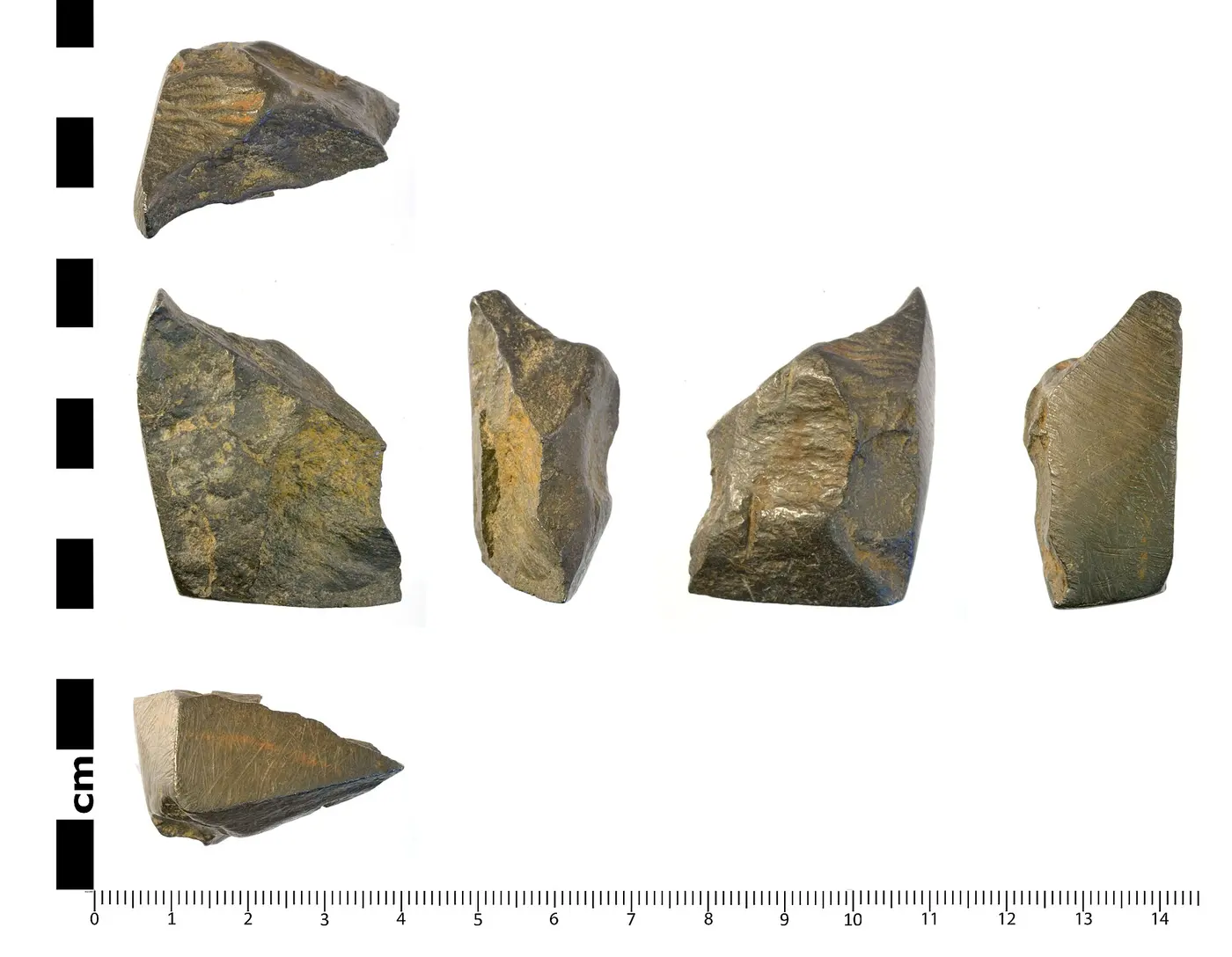

Chemistry was still in its infancy, and people took the black mineral for a kind of lead. Its dark, metallic sheen and the way it left a mark when rubbed probably reminded them of lead and lead ore. So it came to be called “plumbago,” Latin for lead ore, or “black lead.” The Japanese word for graphite, kokuen (黒鉛), literally “black lead,” still carries the mark of that mistake.
A mine guarded by the Crown
Borrowdale graphite had some unexpected uses beyond writing. In the reign of Elizabeth I, coating the inside of cannonball molds with it is said to have produced smoother, rounder cannonballs. Because of its military importance, the mine and its output were strictly controlled by the Crown.
The mineral’s true nature began to come to light in the late 18th century. Research by the Swedish chemist Carl Wilhelm Scheele and others made it clear that it was a completely different substance from lead ore, and in 1789 the German mineralogist Abraham Gottlob Werner named it “graphite,” after the Greek word for “to write.” It is, in fact, carbon—the same element as diamond.
Conté’s clay recipe
High-quality graphite like Borrowdale’s was almost never found anywhere else in the world. That became a problem for France, which was at war with Britain. Cut off from British graphite, the French could no longer make pencils.
In 1795, at the government’s request, the inventor Nicolas-Jacques Conté solved the problem. He discovered that even poor-quality graphite could make an excellent core if it was ground to powder, mixed with clay, shaped into thin rods and fired in a kiln. Around the same time, Joseph Hardtmuth in Austria is said to have come up with a similar method.
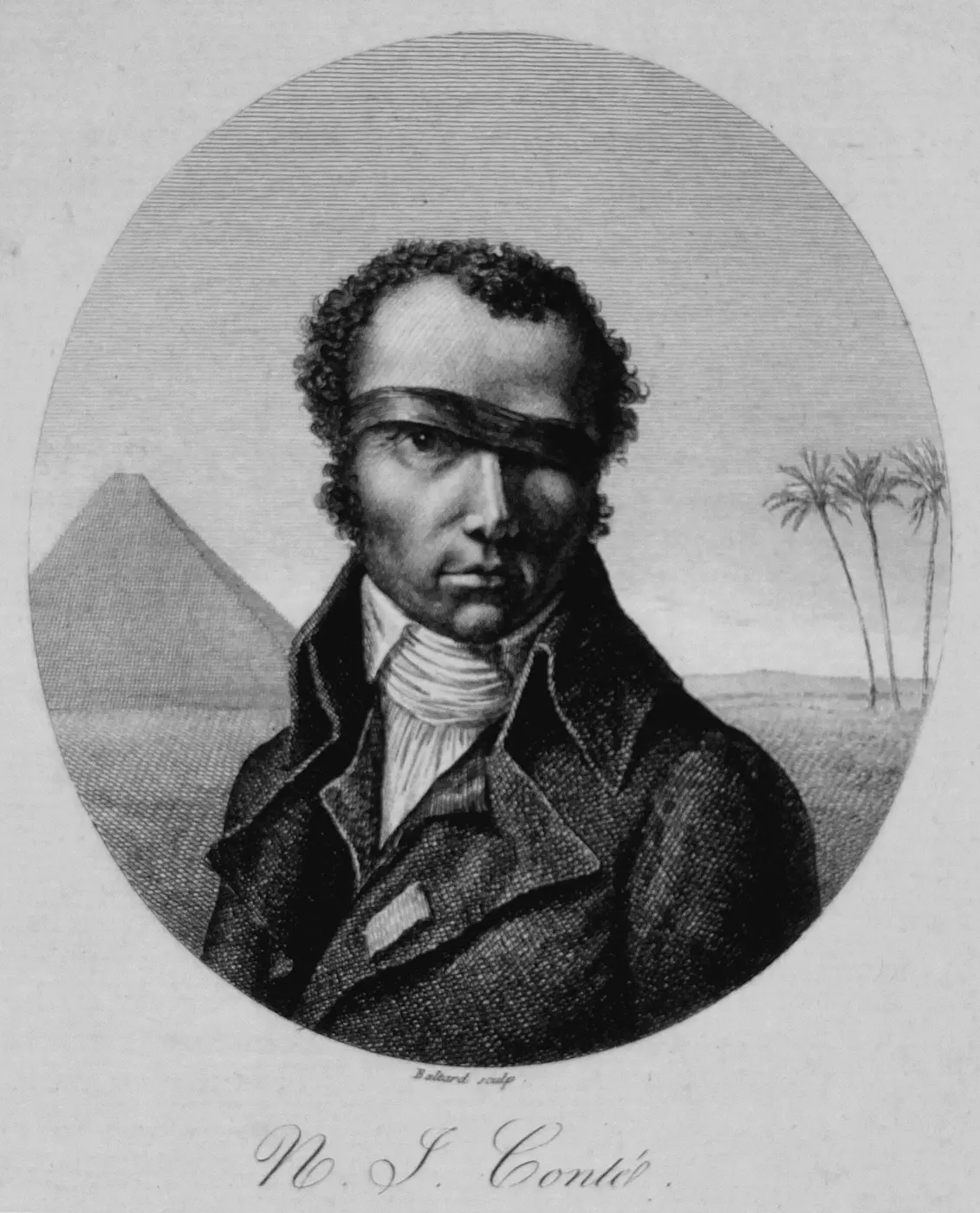

The beauty of this method was that simply changing the ratio of graphite to clay let you set the hardness of the core however you liked. More than 200 years later, pencil cores are still made in essentially the same way.
What “H” and “B” mean
More clay makes the core harder, so it draws thin, light lines. More graphite makes it softer, giving dark, black lines. That difference is what the letters stamped on a pencil tell you. H is generally taken to mean “hard” and B “black,” with HB and F as the standard middle grades. The marking “H.B.” is known to have been in use by 1814 at the latest.
Japanese Industrial Standards define 17 grades of hardness, from 9H, the hardest, to 6B, the softest.
That said, pencils and lead were not entirely strangers. Until around the middle of the 20th century, the paint used on pencil barrels sometimes contained a lot of lead. Even then, it was the outside of the pencil, not the core.