How many times can you fold a piece of paper?
The record is 12, set in 2002 by an American high school student using toilet paper about 1.2 km long.
12folds
Grab a sheet of printer paper and fold it in half. Then in half again. And again. By the fifth or sixth fold it has become a thick little wad, and around the seventh, your fingers simply won’t be able to manage it.
“No matter how big the paper, you can only fold it seven or eight times.” That claim was confidently repeated for a long time. Then, in 2002, this piece of “common knowledge” was broken with surprising ease.
Every fold doubles the thickness
Fold a sheet in half and you have two layers. Fold it again and you have four; three folds make eight. Because the count doubles with every fold, seven folds give you a stack 128 sheets thick. With printer paper 0.1 millimeters thick, that’s about 1.3 centimeters (half an inch).
The thickness isn’t the only problem. At each fold, the paper curves around the outside of the stack. The thicker the stack becomes, the more paper that curve uses up, and the shorter the flat part that’s left. You stop being able to fold not so much because you lack strength, but because you run out of paper.
The high schooler who broke the eight-fold barrier
The person who took on this barrier was Britney Gallivan, a high school student in California. It started in 2001, when her math teacher set a challenge: fold anything at all in half 12 times.
Gallivan first succeeded in folding an extremely thin sheet of gold foil 12 times. Her teacher then changed the rules: only paper would count. So she worked out, on her own, a formula for the length of paper needed to make the folds.
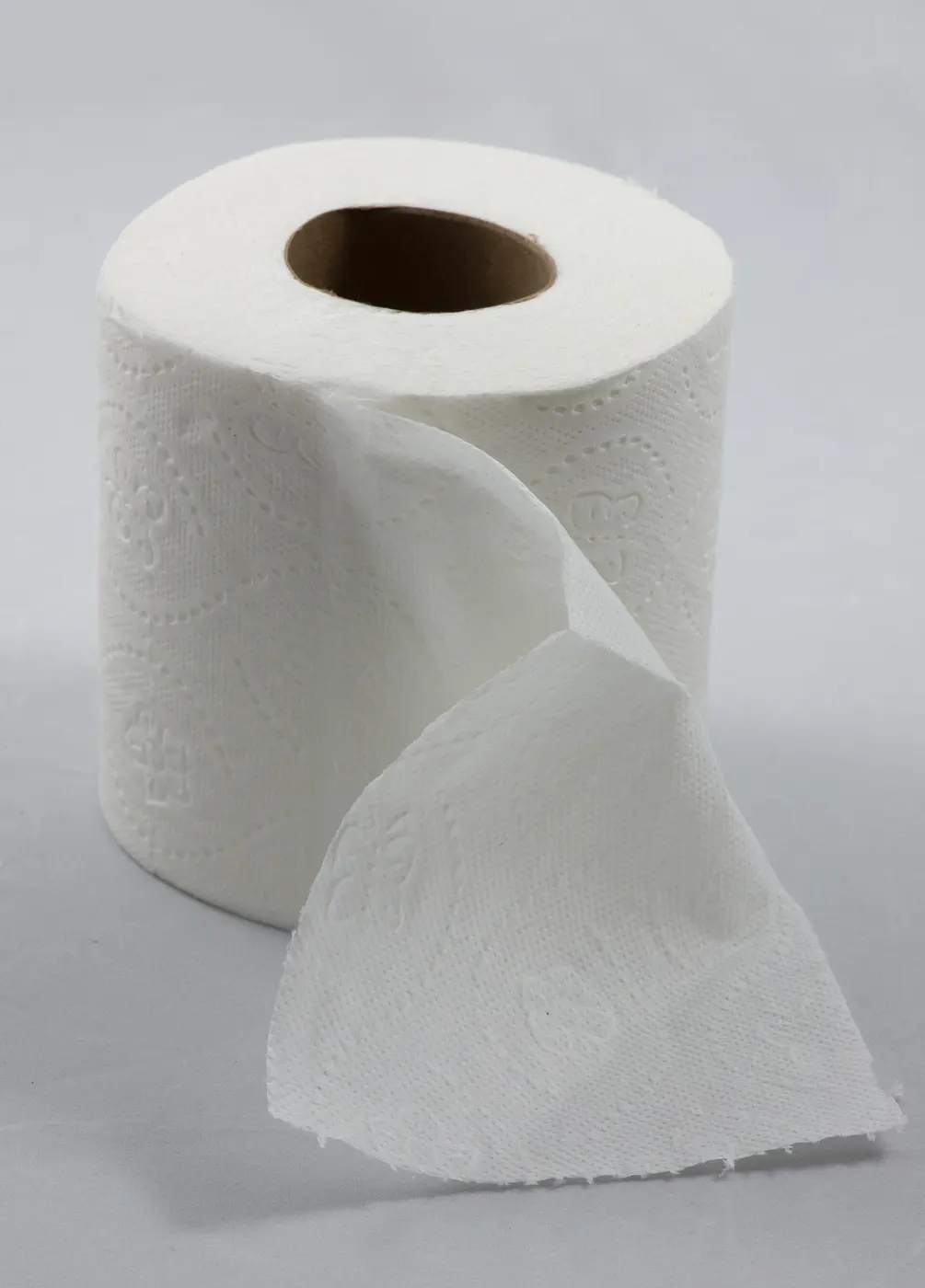

Then, in January 2002, in Pomona, California, she took a length of toilet paper about 1.2 kilometers (4,000 feet) long and folded it 12 times in the same direction. It reportedly took about eight hours, much of it spent crawling around on the floor. Those 12 folds are recognized by Guinness World Records as the most times a single piece of paper has been folded.
Each extra fold needs about four times the paper
According to the formula Gallivan derived, when you keep folding in the same direction, the length of paper you need grows roughly fourfold with each additional fold.
For paper 0.1 millimeters thick, seven folds require about 0.9 meters. Eight folds take about 3.5 meters, ten about 55 meters, and twelve as much as 880 meters or so. Thirteen would need roughly 3.5 kilometers. Adding just one more fold multiplies the preparation many times over. The formula makes it easy to see why an ordinary sheet of paper gives out at seven or eight folds.
Fold it 42 times and reach the Moon?
So what if you could fold as many times as you liked? How thick would the paper get?
Fold paper 0.1 millimeters thick 10 times and it’s about 10 centimeters thick; 20 times, about 100 meters; 30 times, about 100 kilometers. Fold it 42 times, and in theory its thickness comes to about 440,000 kilometers. That’s more than the average distance from Earth to the Moon, about 384,000 kilometers (239,000 miles).
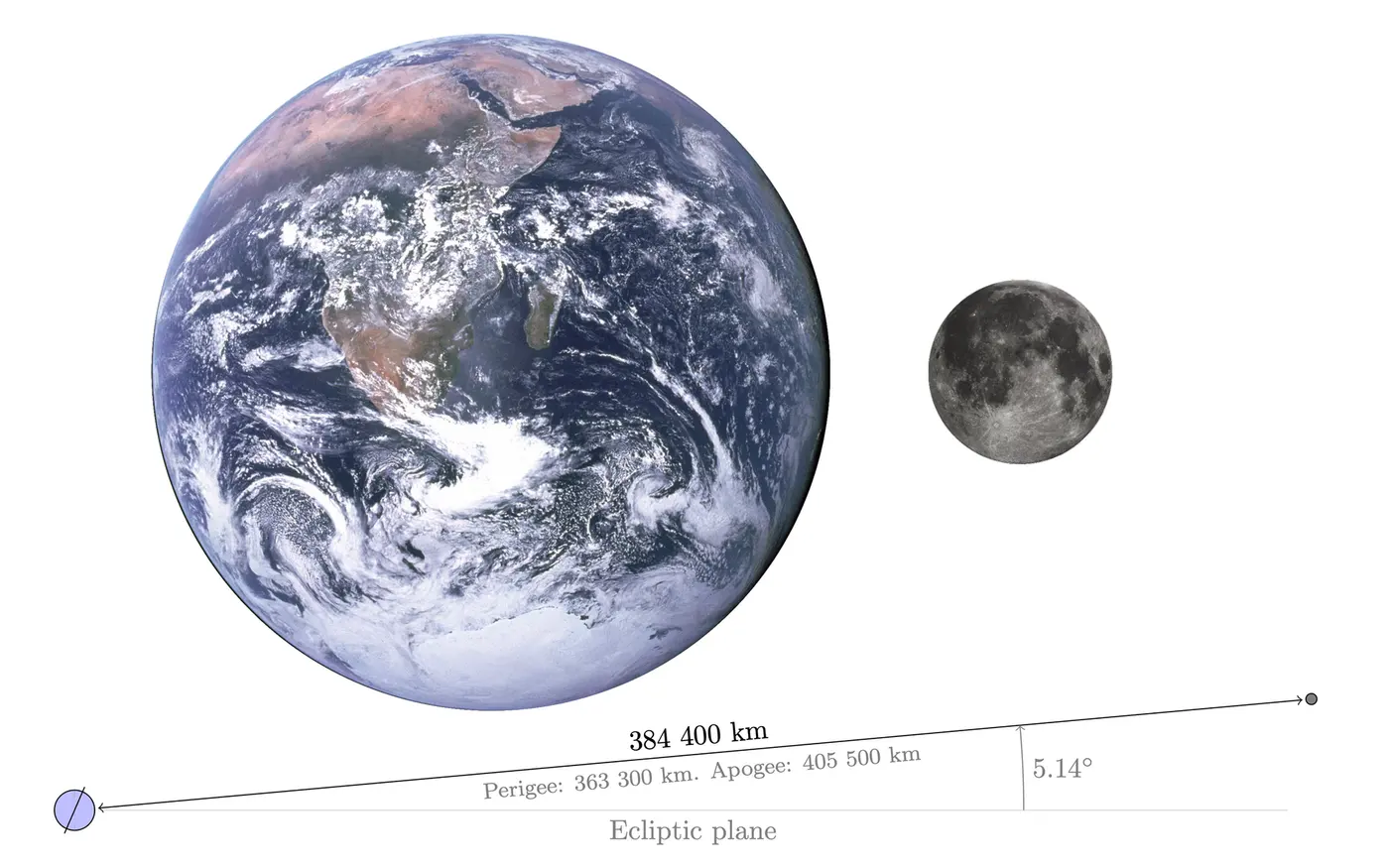

Fold it 103 times, and the calculation says the stack would be wider than the observable universe from end to end. The momentum of doubling, again and again, far outruns our intuition.
Then again, Gallivan’s formula says that folding paper 42 times would require a sheet about 100,000 light-years long. That rivals the diameter of the Milky Way, which is said to be about 100,000 light-years. A paper tower to the Moon, it seems, belongs only to thought experiments.