Is there an upper limit to temperature?
The lower limit is −273.15°C, but there’s no clear upper one. Today’s physics works up to about 10³² degrees.
5.5 trilliondegrees
In the depths of winter in Hokkaido or Antarctica, temperatures drop to −30°C, then −50°C. But temperatures can’t keep falling forever. At −273.15°C there is a floor: nothing can be colder than that.
So what about the other direction? Is there a ceiling on how hot things can get?
Temperature is particles in motion
To think about an upper limit, we first need to know what temperature actually is. All matter is made of tiny particles, atoms and molecules, which are constantly zipping about and jiggling. Temperature is a measure of how vigorous that motion is. The hotter something is, the more violently its particles move; the colder, the calmer they become.
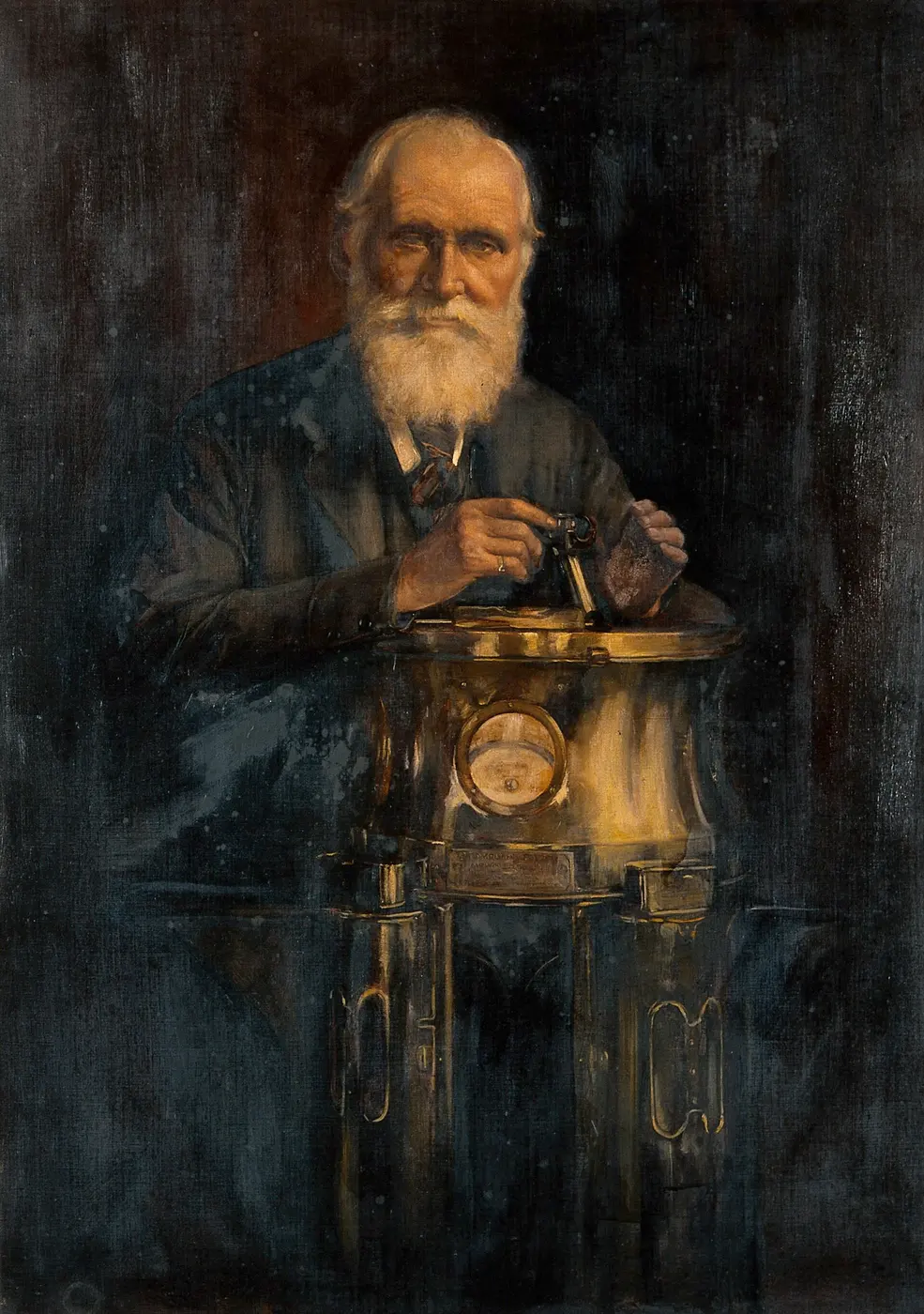
As you cool something, the motion of its particles keeps shrinking until it approaches a state where it can’t shrink any further. That temperature is absolute zero, −273.15°C. In the 19th century, the British physicist Lord Kelvin (William Thomson) proposed a temperature scale starting from absolute zero. Today the unit named after him, the kelvin (K), is the international unit of temperature. Its steps are the same size as degrees Celsius, so 0 K is −273.15°C.

Absolute zero itself is thought to be unreachable, no matter what. Even so, laboratories have produced extreme cold just about four hundred-billionths of a degree above it.
More than 300,000 times hotter than the Sun’s core
In the hot direction, on the other hand, there is no obvious wall like that floor. Particles are bound by one speed limit: nothing can travel faster than light. But as particles approach the speed of light, they barely get any faster; instead, they can keep soaking up more and more energy. So the speed of light doesn’t put a ceiling on temperature.
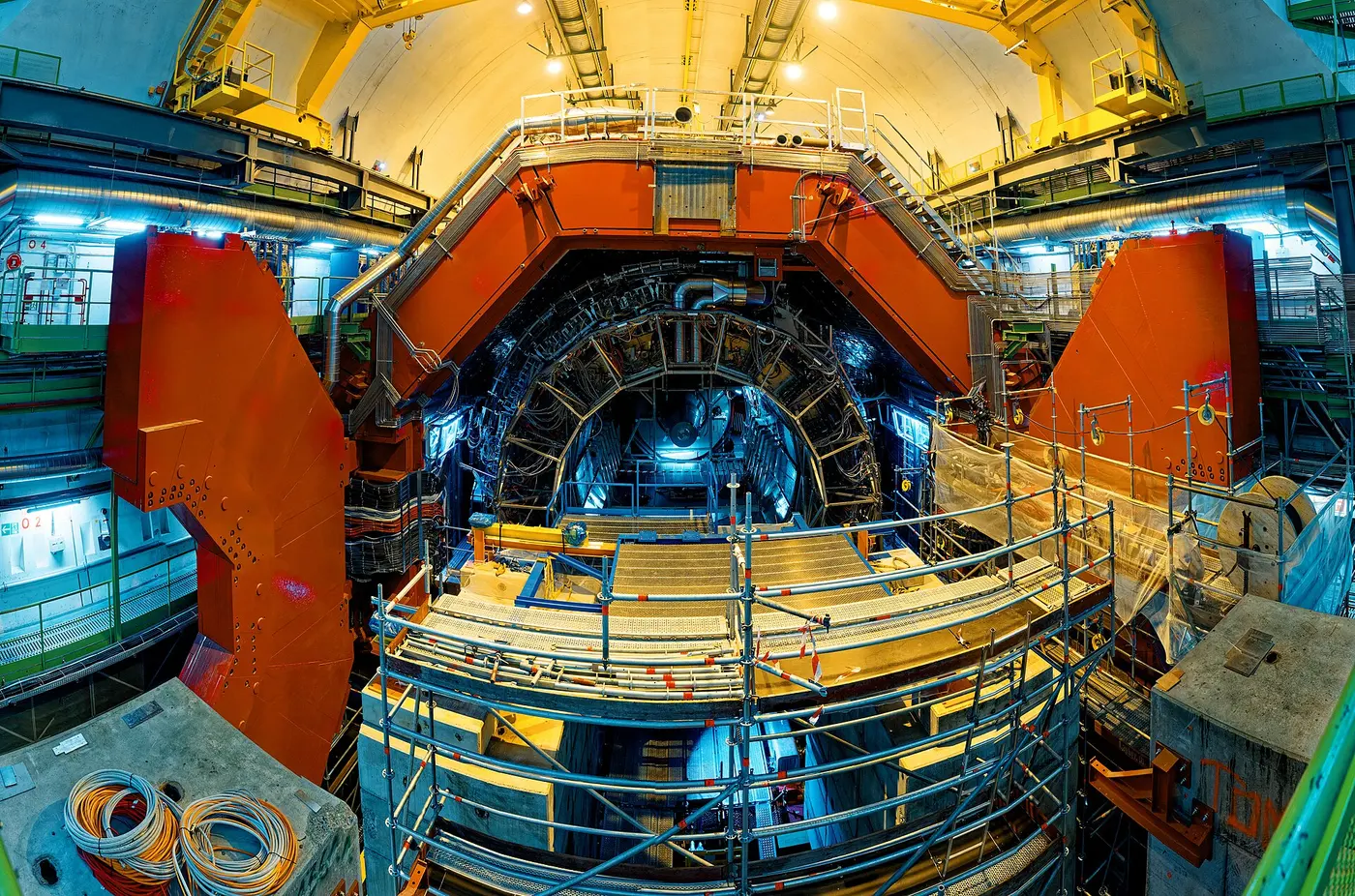
How hot, then, have humans managed to make something? The record belongs to the LHC, the giant particle accelerator at CERN, the European Organization for Nuclear Research, on the border of Switzerland and France. In 2012, the team running the LHC’s ALICE experiment announced that by accelerating lead nuclei to nearly the speed of light and smashing them together, they had produced a temperature of about 5.5 trillion degrees. That is more than 300,000 times hotter than the center of the Sun, which is put at about 16 million degrees. It was recognized by Guinness World Records as the highest temperature ever created artificially.
At such extreme temperatures, even the protons and neutrons that make up atomic nuclei can’t hold together. Their contents, particles called quarks and gluons, come loose to form a state known as quark-gluon plasma. For a very short time just after the universe was born, the whole cosmos is thought to have been filled with this kind of hot soup. The previous record was about 4 trillion degrees, measured in 2010 at RHIC, an accelerator at Brookhaven National Laboratory in the United States.

Where physics throws up its hands
So if we kept pouring in energy, would the temperature keep rising forever? One theoretical benchmark is the “Planck temperature,” about 1.4 × 10³² kelvins: roughly 1.4 times a number written as 1 followed by 32 zeros.
This corresponds to energies so enormous that the effects of gravity and the quantum effects that rule the microscopic world can no longer be ignored at the same time. At that point you would have to consider situations such as tiny black holes forming out of thermal radiation and then evaporating, and our current theories of physics can no longer explain what would happen. For a brief instant just after its birth, the universe is thought to have been at about this temperature.
In other words, the Planck temperature isn’t so much a discovered ceiling on temperature as a boundary line: beyond here, today’s physics has nothing to say. Finding out what lies beyond it is thought to require a new theory that unites gravity and the quantum world.