How does a microwave oven heat food?
Waves oscillating about 2.45 billion times a second jostle water molecules, and that jostling turns into heat.
2.45GHz
Put in a bowl of cold rice, press a button, and within minutes steam is rising from it. Unlike a stovetop or a conventional oven, the microwave isn’t passing heat along from a hot flame or hot air. It’s not unusual, in fact, for the plate to come out less hot than the food on it.
A microwave oven doesn’t add heat from the outside; it “creates” heat inside the food. And the star of the show turns out to be the water the food contains.
The secret is “microwaves”
A microwave oven uses electromagnetic waves called microwaves. Electromagnetic waves are traveling oscillations of electricity and magnetism, part of the same family as light and the radio waves used by cell phones. Household microwave ovens use microwaves with a frequency of 2.45 gigahertz, oscillating about 2.45 billion times per second. Their wavelength is about 12 centimeters (nearly 5 inches).
These microwaves are generated by a magnetron, a type of vacuum tube. It was originally a component developed for radar around the time of World War II. The story goes that around 1945, Percy Spencer, an engineer at the American company Raytheon, noticed that a candy bar in his pocket had melted while he was near a magnetron, and that this was what led to the invention of the microwave oven.
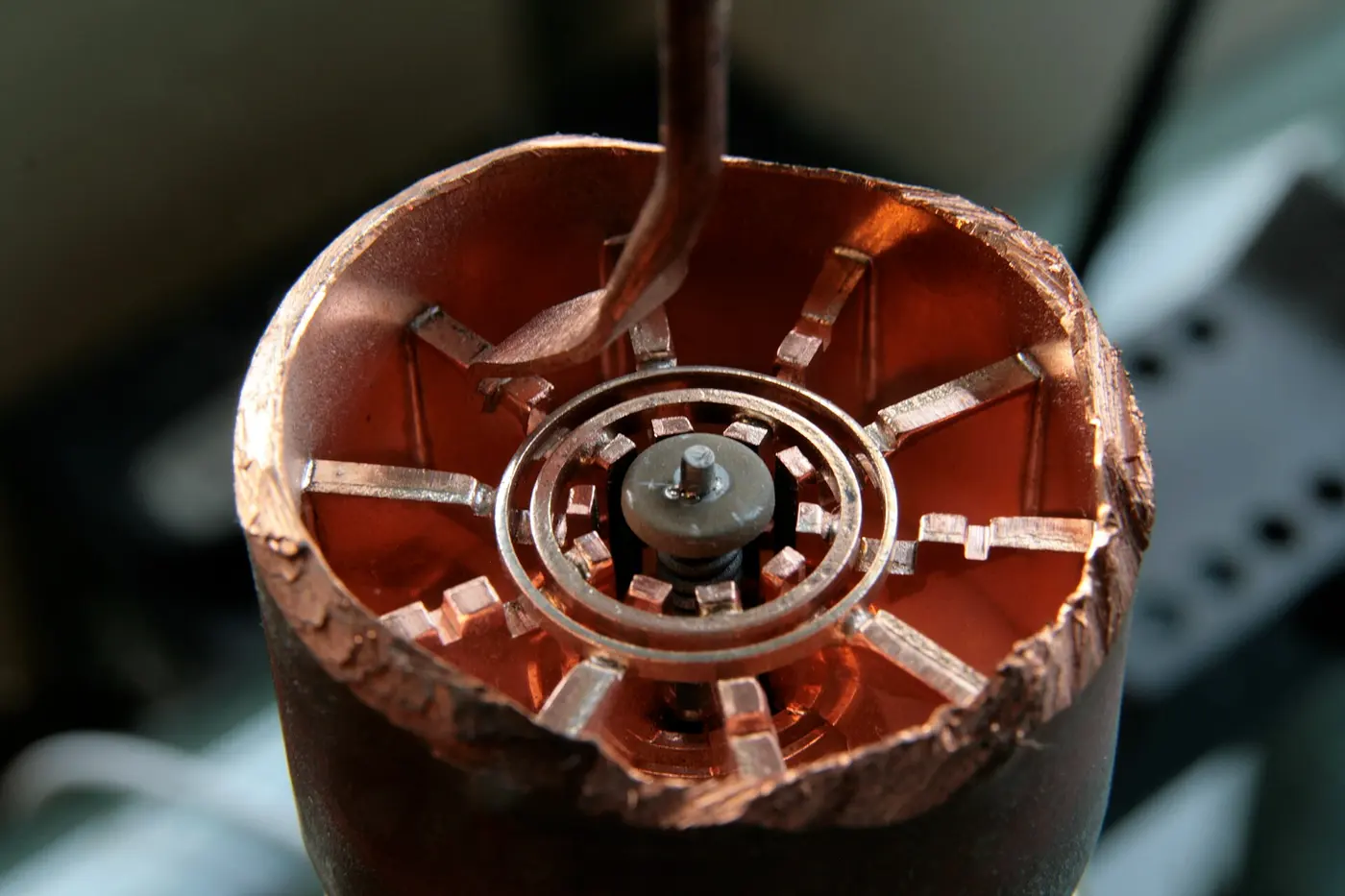

Spinning water molecules around
A water molecule carries a slight negative charge on its oxygen side and a slight positive charge on its hydrogen side. So when an electric force is applied, the molecule rotates to line up its positive and negative ends.
Inside a microwave field, the direction of that electric force flips billions of times a second. Each time, the water molecules are forced to turn, but because they are packed tightly against their neighbors, they can’t rotate freely. Shoving and bumping into one another, the best they can do is follow along a little behind. In all this jostling, the energy of the electromagnetic waves is turned into the random motion of molecules, which is to say, heat. This way of heating is called dielectric heating.
Because the water in the food itself becomes the source of heat, there is no need to wait for heat to work its way in from the surface. That is why a microwave can heat food so quickly.
“Water resonance” is a common misconception
You may have heard microwave ovens explained like this: “2.45 gigahertz is the frequency at which water molecules resonate, so water heats up especially well.” But that isn’t accurate.
At room temperature, liquid water absorbs microwaves most strongly at a much higher frequency, somewhere around 20 gigahertz. If ovens used that frequency, nearly all the energy would be absorbed at the surface of the food and never reach the inside. 2.45 gigahertz is a frequency that is absorbed moderately well while still penetrating some way into the food. How deep it penetrates varies from food to food, but it is said to be on the order of a few centimeters.
There was also the fact that this frequency band has been allocated internationally for industrial, medical and other uses besides communications, so it is less likely to interfere with radio communication.
Why frozen food is tricky
Have you ever heated frozen food only to find the outside hot and the center still frozen? This, too, comes down to how freely water molecules can move.
In ice, water molecules are locked firmly into a crystal and can’t turn freely. As a result, ice absorbs far less microwave energy than liquid water. The parts that thaw first keep getting hotter and hotter, and the gap between them and the still-frozen parts widens. Defrost settings lower the power and take more time so that heat can gradually spread from the thawed parts.
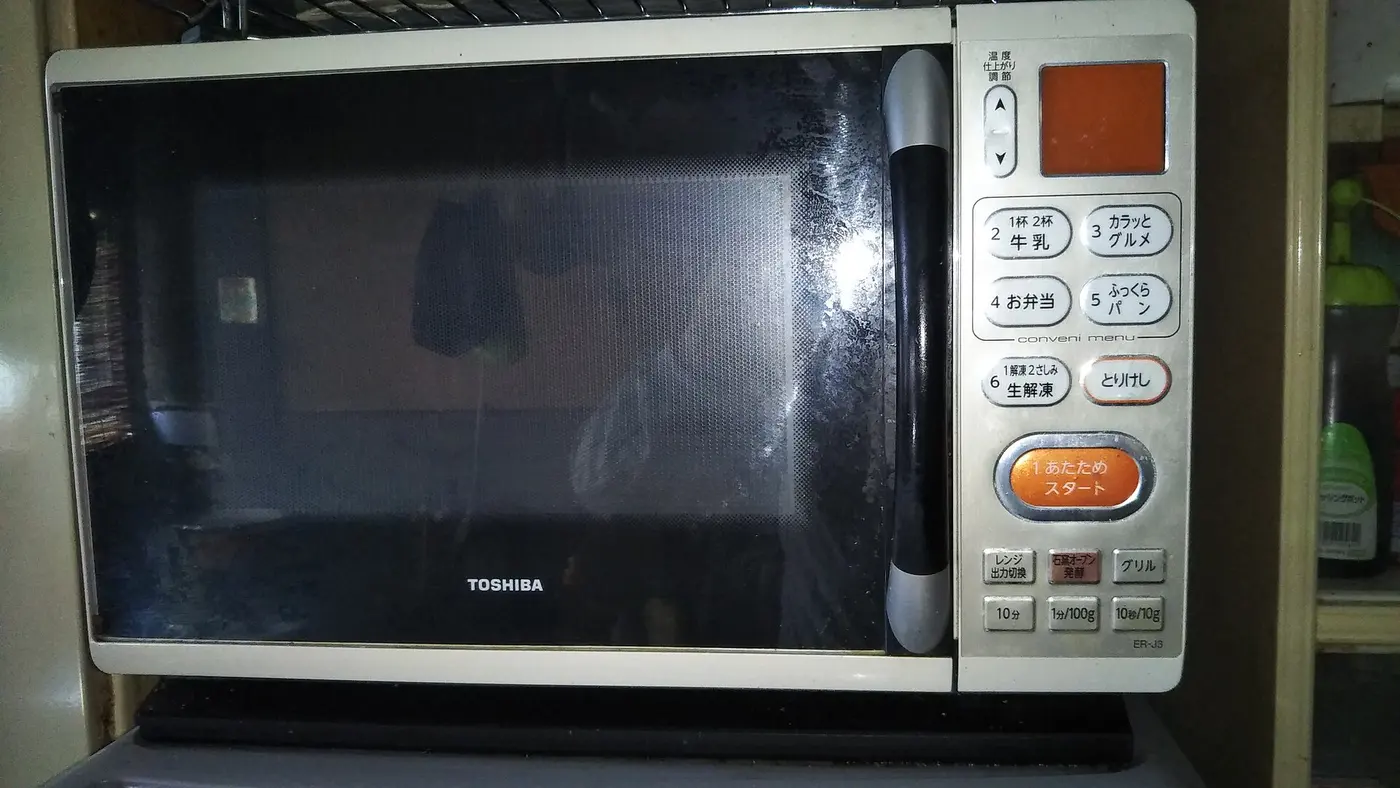

Incidentally, ceramic and glass dishes don’t get very hot because they absorb little microwave energy. Heat does pass into them from the hot food, though, so you still need to be careful when taking them out.