How many hearts does an octopus have?
Three. And the blood they pump is blue.
3hearts
In Japan, octopus is everyday food: diced into takoyaki dumplings, pickled in vinegar, sliced thin as sashimi. Yet peer inside its body and you will find that almost nothing works the way we would expect. Our familiar rules about hearts, blood and brains simply don’t apply.
Start with the number of hearts. An octopus has three. And the blood those hearts pump is not red, but blue.
Three hearts, three jobs
Each of the three hearts has its own assignment, a little like a team that has divided up the work.
One, called the systemic heart, sends blood around the whole body. Think of it as the head office. The other two are called branchial hearts, one at the base of each gill. Their job is to take the blood returning from its trip around the body and push it through the gills to pick up oxygen.
Why such an elaborate setup, when we manage perfectly well with one heart? Squeezing blood through the fine vessels inside the gills takes a fair amount of pressure. So, it is thought, the octopus adds an extra pump just before each gill to help the blood along.
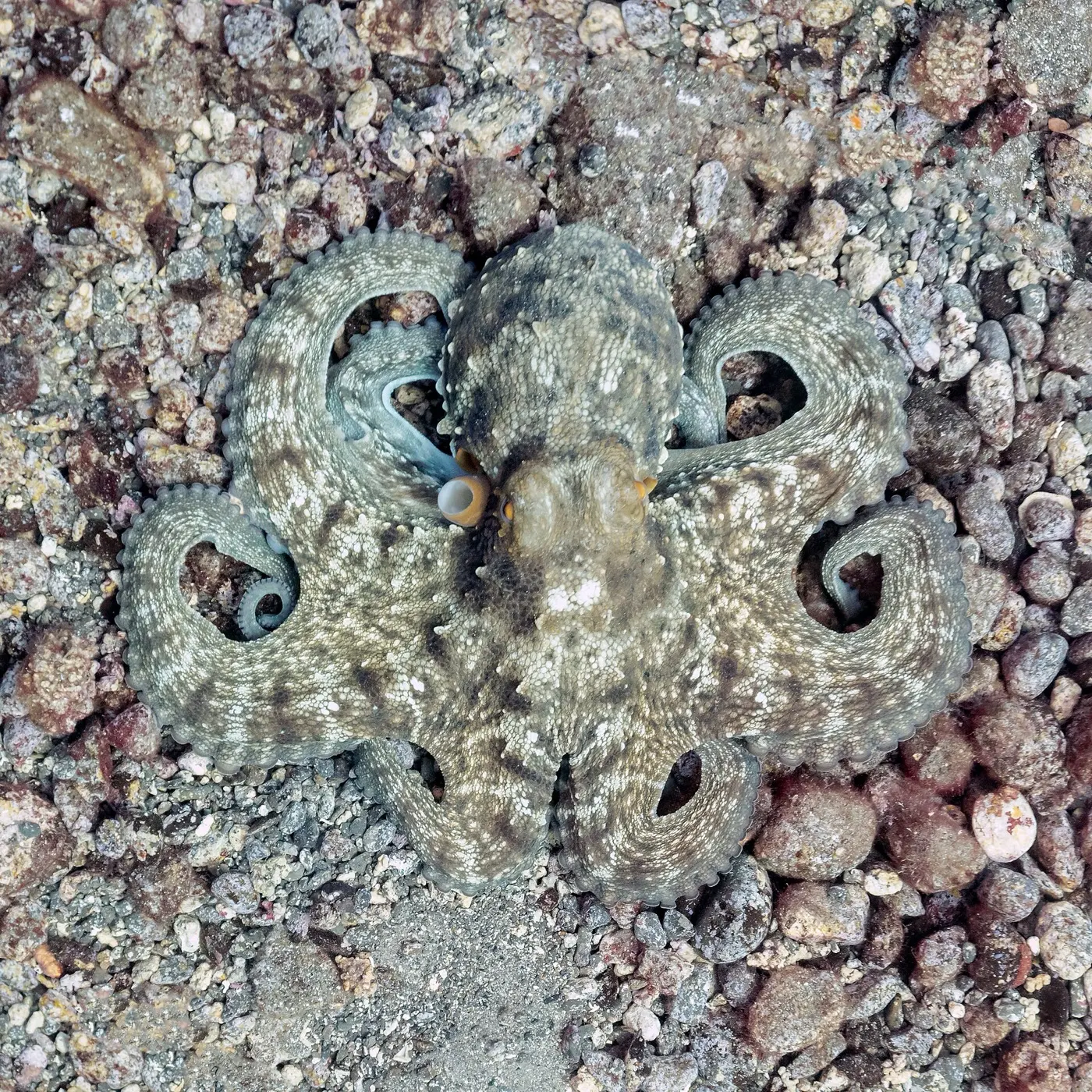
Here is the curious part: while an octopus swims, its systemic heart, the one that supplies the whole body, stops beating. Swimming by shooting out a powerful jet of water is something of an emergency measure for an octopus. That may be why it usually gets around by crawling along the seabed on its arms: swimming is hard on its body.

Blue blood, built on copper
Octopus blood is blue because it uses a different substance to carry oxygen.
In human blood, oxygen is carried by hemoglobin, a protein that contains iron. Iron looks red when it binds with oxygen, which is why our blood is red. In octopus blood, oxygen is carried by hemocyanin, a protein that contains copper. Copper takes on a bluish tint when it binds with oxygen, so octopus blood looks blue. The color of blood, in other words, depends on which metal is doing the work.
Hemocyanin is said to carry oxygen less efficiently than hemoglobin. Driving the blood hard around the body with three hearts is thought to be one way of making up for that weakness. Squid, incidentally, also have three hearts and blue blood, so the octopus is not alone in this unusual design.
A creature that thinks with its arms
The octopus’s oddities don’t end with its hearts and blood. An octopus is said to have about 500 million nerve cells, or neurons, a strikingly large number for an invertebrate.
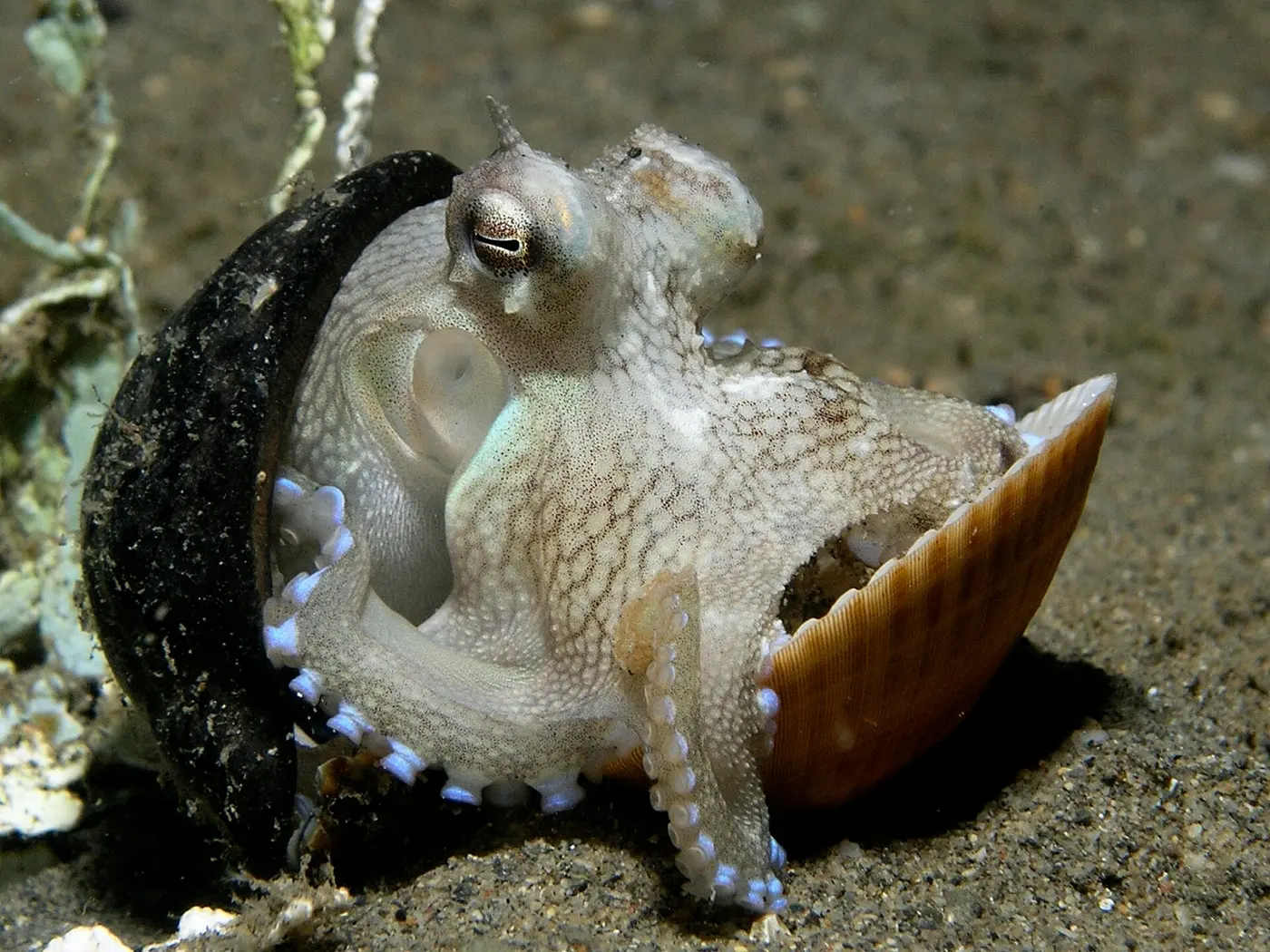
Even more surprising is where they are. Roughly two-thirds of those neurons are said to be in the eight arms, not the brain. Each arm can, to some extent, make its own decisions and move without detailed instructions from the brain. The suckers sense the texture and taste of whatever they touch, and the arm itself seems to decide whether to grab or let go.
The brain sets the general direction, and the detailed work is left to the arms on the front line, like a manager who trusts the team on the ground. An octopus’s body may be less a centralized system than an organization that delegates a great deal of authority. This unusual nervous system lies behind the octopus’s reputation for cleverness, from unscrewing jar lids to escaping from aquariums.

Three hearts, but a short life
For all their sophisticated bodies, most octopuses live only about one to two years. After laying her eggs, a female devotes herself entirely to caring for them, guarding them while eating almost nothing, and she often dies around the time the young hatch.
This rapid decline is known to involve a small organ near the eyes called the optic gland. In experiments in the 1970s, researchers reported that when the optic glands were removed from females after they had laid eggs, the females stopped tending the eggs, started eating again and lived longer. Even the way an octopus’s life ends seems to unfold like a preinstalled program, switched on by a tiny organ near the eyes.