What is the largest animal in the world?
The blue whale. It can reach about 30 meters long and weigh close to 200 tonnes.
190tonnes
Asked to name the largest animal in Earth’s history, many people would think of dinosaurs. The giant long-necked sauropods were certainly in a class of their own among land animals. But if you compare by weight, the biggest animal of all is apparently still alive today.
It is the blue whale. This mammal, swimming in the same oceans we know, is thought to be the heaviest animal ever to have lived on Earth, as far as we know.
A body of 30 meters and 190 tonnes
The largest blue whales reach about 30 meters (nearly 100 feet) in length. That is longer than a 25-meter swimming pool, and comfortably longer than a single car of Japan’s Shinkansen bullet train (about 25 meters).
The best-known weight record belongs to a 27.6-meter female caught in the Southern Ocean in 1947. She weighed about 190 tonnes. Even a large male African elephant weighs only about 6 tonnes, so she was the equivalent of more than 30 elephants. During the heyday of whaling, many other giant individuals were recorded as well.
In 1909, at a whaling station on South Georgia in the South Atlantic, a female was recorded at about 33.6 meters. But because it is unclear how whales were measured at the time, a reliable maximum is generally considered to be around 30 meters.
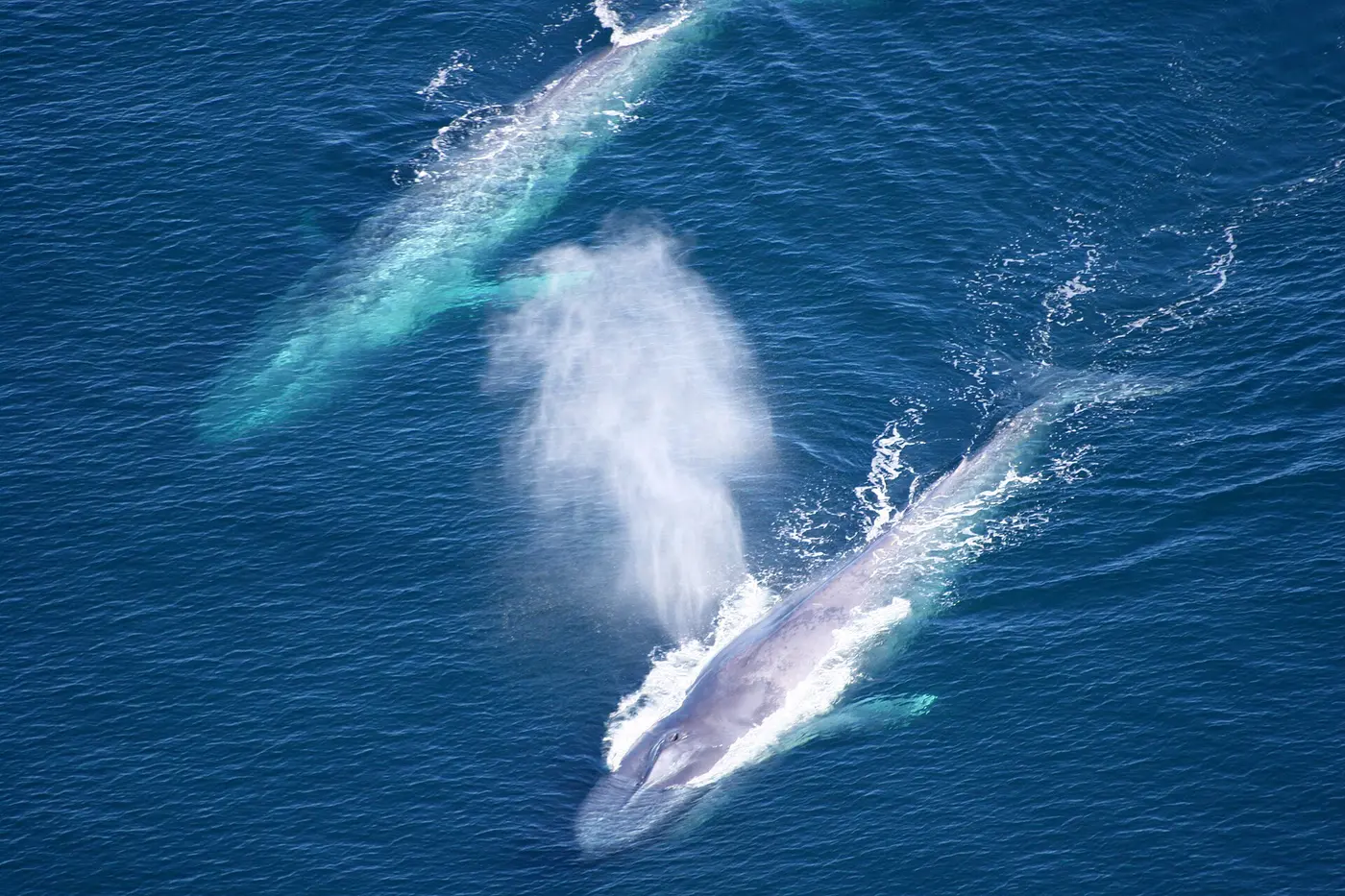

A heart not quite “the size of a car”
The blue whale’s heart has often been described as “the size of a small car.” When scientists examined a real one, though, that claim turned out to be a bit of an exaggeration.
In 2014, a team from the Royal Ontario Museum removed the heart of a blue whale that had washed up on the island of Newfoundland in Canada. It weighed about 180 kilograms (roughly 400 pounds) and was about the size of a small golf cart. Still astonishingly large, but not car-sized. There is also a story that a person could swim through its aorta; in reality, the vessel is said to be just wide enough to fit a human head.
In 2019, researchers off California managed to attach a suction-cup heart monitor to a wild blue whale and record its heartbeat. During dives, its heart rate dropped as low as about two beats per minute. When it surfaced to breathe, the rate jumped to 25 to 37 beats per minute. The researchers suspect that this heart is working close to its limit, which may be one reason whales cannot grow any bigger.
Feeding a giant on prey a few centimeters long
What sustains this enormous body is krill, just a few centimeters long. These small, shrimp-like crustaceans gather in vast swarms in the sea.
Blue whales have no teeth. Instead, hundreds of comb-like plates called baleen hang from the upper jaw. The whale balloons out the pleats of its throat, takes in a huge mouthful of krill along with seawater, then pushes the water back out through the baleen, which strains out the food.
A study published in 2021 used data from recording devices attached to whales and from echo sounders to estimate that adult blue whales eat an average of about 16 tonnes of krill a day during the feeding season. That is about three times what had previously been thought. The largest animal on Earth survives by eating vast quantities of creatures only a few centimeters long.
Bigger than dinosaurs, and ancient whales?
So how does it stack up against dinosaurs? The largest sauropods, such as Argentinosaurus, may have exceeded 30 meters in length. But weight estimates range anywhere from a few dozen tonnes to around 100 tonnes, and working out weight from fossil bones is not easy. Even so, the general view is that the blue whale was heavier.
In 2023, a fossil whale from Peru about 39 million years old, Perucetus colossus, made headlines when researchers announced it may have been as heavy as a blue whale, or even heavier. A 2024 re-examination, however, put its weight at about 60 to 70 tonnes, and a little over 110 tonnes even by generous estimates, leading to the view that the crown still belongs to the blue whale.
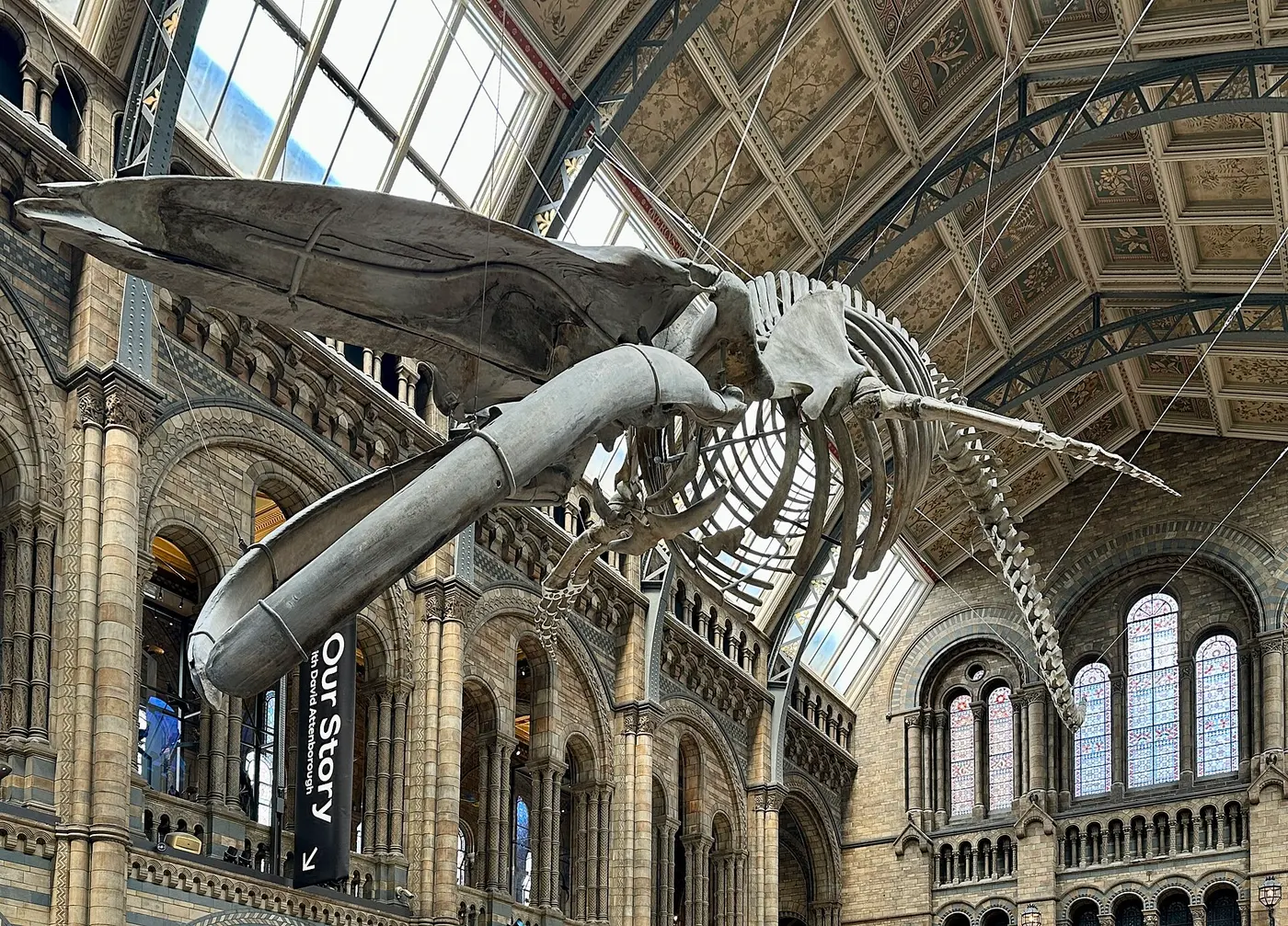

If you compare length alone, a siphonophore found in the deep sea off the coast of Western Australia in 2020 was estimated to be about 47 meters long in its coiled outer ring alone. But a siphonophore is a colony made up of many small individuals strung together, and opinions differ on whether it is fair to compare it with a single animal.