What is the longest-living animal in the world?
Among animals of confirmed age, a 507-year-old clam named Ming. Among vertebrates, the Greenland shark.
507years
In 2006, a clam was hauled up from the seabed off northern Iceland. It was small enough to sit in the palm of your hand, and there was nothing remarkable about the way it looked. But when researchers examined its shell, they found that it had been born about 500 years earlier, around the year 1499.
That was just a few years after Columbus’s first voyage, and in Japan the Warring States period, a long era of civil war, had only just begun. From then until the 21st century, this clam had been quietly living on at the bottom of the cold sea.
A 500-year diary written in shell
The clam was an ocean quahog (scientific name Arctica islandica), and it was later nicknamed “Ming.” The name came from the first analysis, which put its age at 405 years, placing its birth in the time of China’s Ming dynasty.
Its age can be read because the shell lays down one growth line each year, much like the rings of a tree. A later, more detailed study recounted the lines and revised Ming’s age to 507 years. As far as is known, that is the longest life of any individual animal whose age has been directly confirmed.
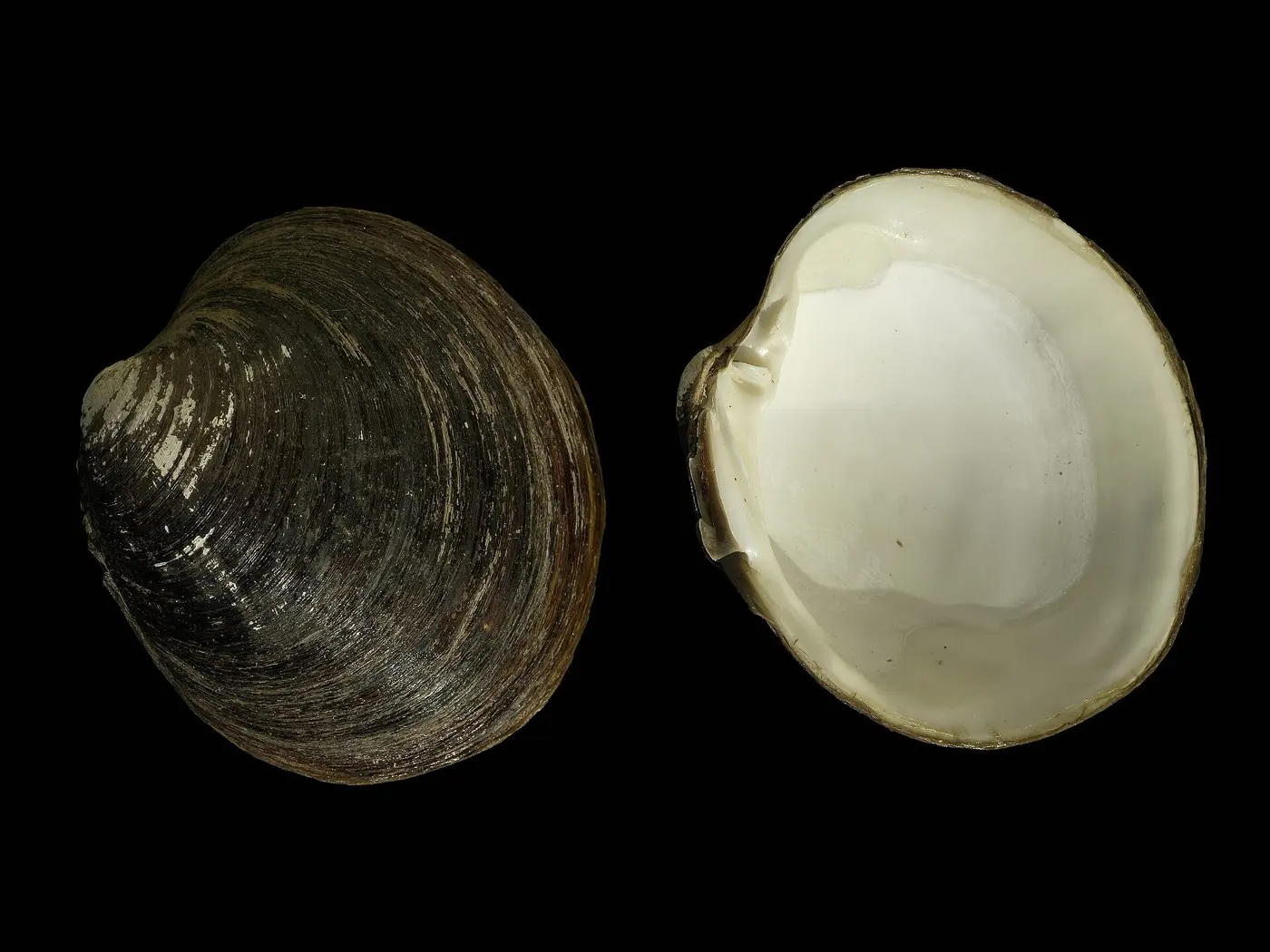

There is a slightly sad side to the story, though. Ming died when its shell was opened to determine its age. The researchers had no idea it would turn out to be so old.
A shark that grows up at 150
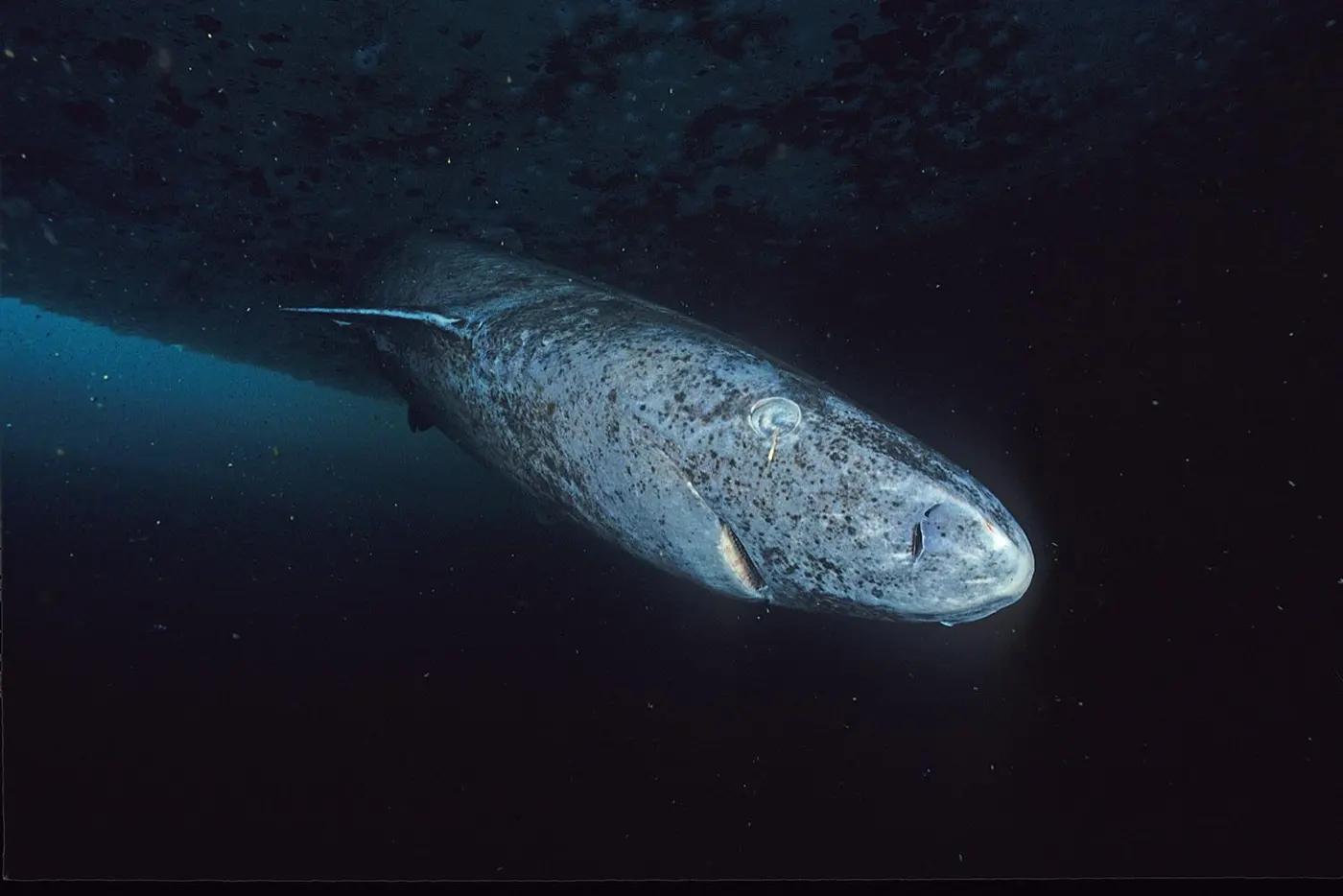
Among animals with backbones—vertebrates—the longest-lived is thought to be the Greenland shark, which lives in the cold depths of the North Atlantic and the Arctic Ocean.
A study published in 2016 estimated the sharks’ ages using radiocarbon in the center of the lens of the eye. The core of the lens forms before birth and is never replaced, so it preserves a “record” of when the animal was born. The largest individual, more than 5 meters (16 feet) long, came out at an estimated 392 years. The margin of error, however, is a hefty plus or minus 120 years, so “about 400 years” is only a rough guide.
What’s astonishing is how slowly they grow. Their bodies lengthen by only about a centimeter a year, and it is estimated to take around 150 years before they can reproduce. Doing everything slowly in frigid water may be the secret of this shark’s long life.

On land, giant tortoises are also famous for their longevity. It is not unusual for Galápagos giant tortoises to live more than 100 years, and on the island of Saint Helena in the South Atlantic, a tortoise named Jonathan, estimated to have hatched around 1832, is still alive today.
What does “long-lived” even mean?
Everything so far rests on one assumption: that we are comparing how many years a single individual has lived since it was born.
Change that yardstick a little, and the rankings shift dramatically. Some deep-sea corals and sponges, for example, form colonies estimated to be more than 4,000 years old. A colony, however, is a gathering of many small individuals, and opinions differ on whether it is fair to compare it with the lifespan of a single animal.
More extreme still is the so-called immortal jellyfish, Turritopsis. When it is weakened or injured, it can revert from its mature jellyfish form to the youthful stage known as a polyp. Because it can then grow into a jellyfish again, it can in theory postpone the end of its life again and again.
Staying alive and growing old are not necessarily the same thing. That is the question this jellyfish puts to us. In nature, of course, they get eaten or fall ill, so no individual actually lives forever.