How fast do fingernails grow?
Fingernails grow about 0.1 mm a day, a little over 3 mm a month. Toenails grow at about half that speed.
3.5mm
How often do you cut your nails? Some people do it once a week; others notice them getting long and reach for the clippers in a hurry. We look at our hands every day, yet nobody has ever caught a nail in the act of growing.
That’s hardly surprising. A fingernail grows only about 0.1 millimeters a day, roughly the thickness of a sheet of paper. Thanks to people who measured this faint change with astonishing patience, several clear patterns in how nails grow have come to light.
Nails are made beneath the skin
A nail is a hard plate made of a protein called keratin, the same family of material found in hair and in animal hooves and horns.
The part that makes the nail isn’t the part you can see. Under the skin at the base of the nail lies a region called the nail matrix, where new cells are produced one after another. As they harden, the new cells push the older part of the nail forward. In other words, a nail “grows” by being pushed out, little by little, from the root.
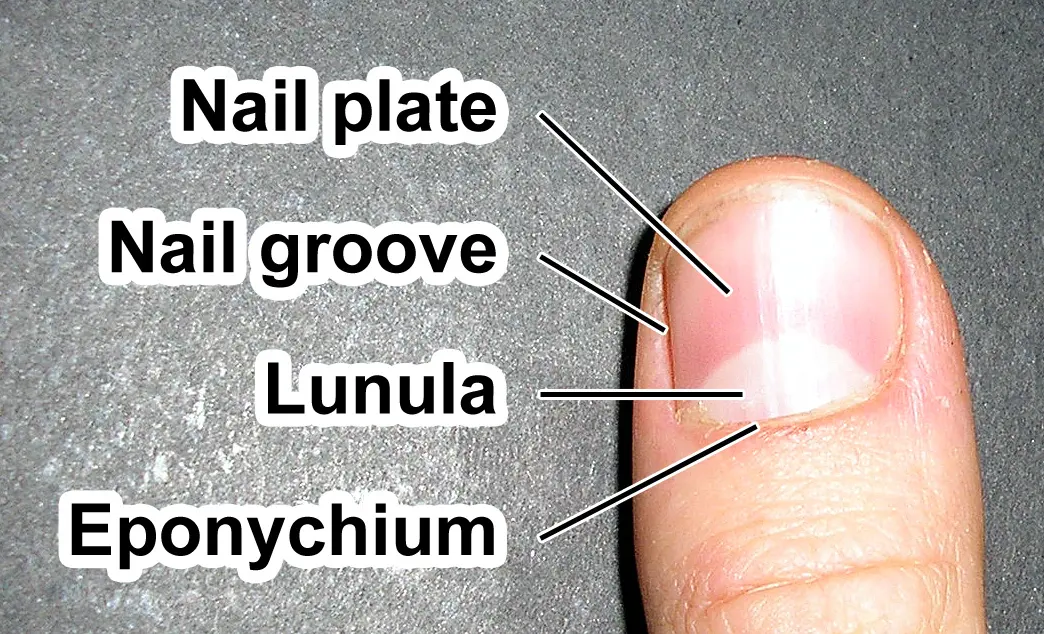

The pale, half-moon shape at the base of the nail is called the lunula, and it is part of the matrix showing through. The nail plate you can see is no longer made of living cells, which is why trimming it doesn’t hurt.
Toenails grow at half the speed
So how fast is it, exactly? In a U.S. study published in 2010, 22 healthy young adults filed a small mark near the base of their nails and recorded, one to three months later, how far the mark had moved.
On average, fingernails grew about 3.47 millimeters a month and toenails about 1.62. Toenails grow only about half as fast as fingernails. Among the fingers, the little fingernail grew more slowly than the rest, while among the toes, the big toenail was fastest. There was no clear difference between the right and left hands. The researchers also reported that nails seem to be growing faster than estimates made decades earlier.
Growing a whole new nail, all the way to the tip, is said to take about three to six months for a fingernail and a year to a year and a half for a toenail.
The doctor who measured his thumbnail for 35 years
The longest-running record of nail growth comes from an American internist, William Bean.
Starting around November 1941, the month before the attack on Pearl Harbor, Bean made small scratches near the base of his nails and counted the days until each mark moved out to the tip and disappeared. In 1980 he published a report in a medical journal titled “Nail Growth: Thirty-five Years of Observation.” His left thumbnail had grown an average of 0.123 millimeters a day when he was 32, but only 0.095 millimeters a day at 67. As he aged, his nails grew more slowly.
Bean also noted that his nails slowed down when he came down with mumps or measles. In 2025, 36 years after his death, this patient research earned him an Ig Nobel Prize in Literature.
A record written into your nails
Because nails grow at a fairly steady pace, they turn out to be useful in unexpected ways.
When the body is put under heavy strain, say by an illness with a high fever or a serious injury, the matrix can temporarily slow its production of cells. The result is a groove running across the surface of the nail. These grooves are called Beau’s lines, after the French physician who first described them in 1846.
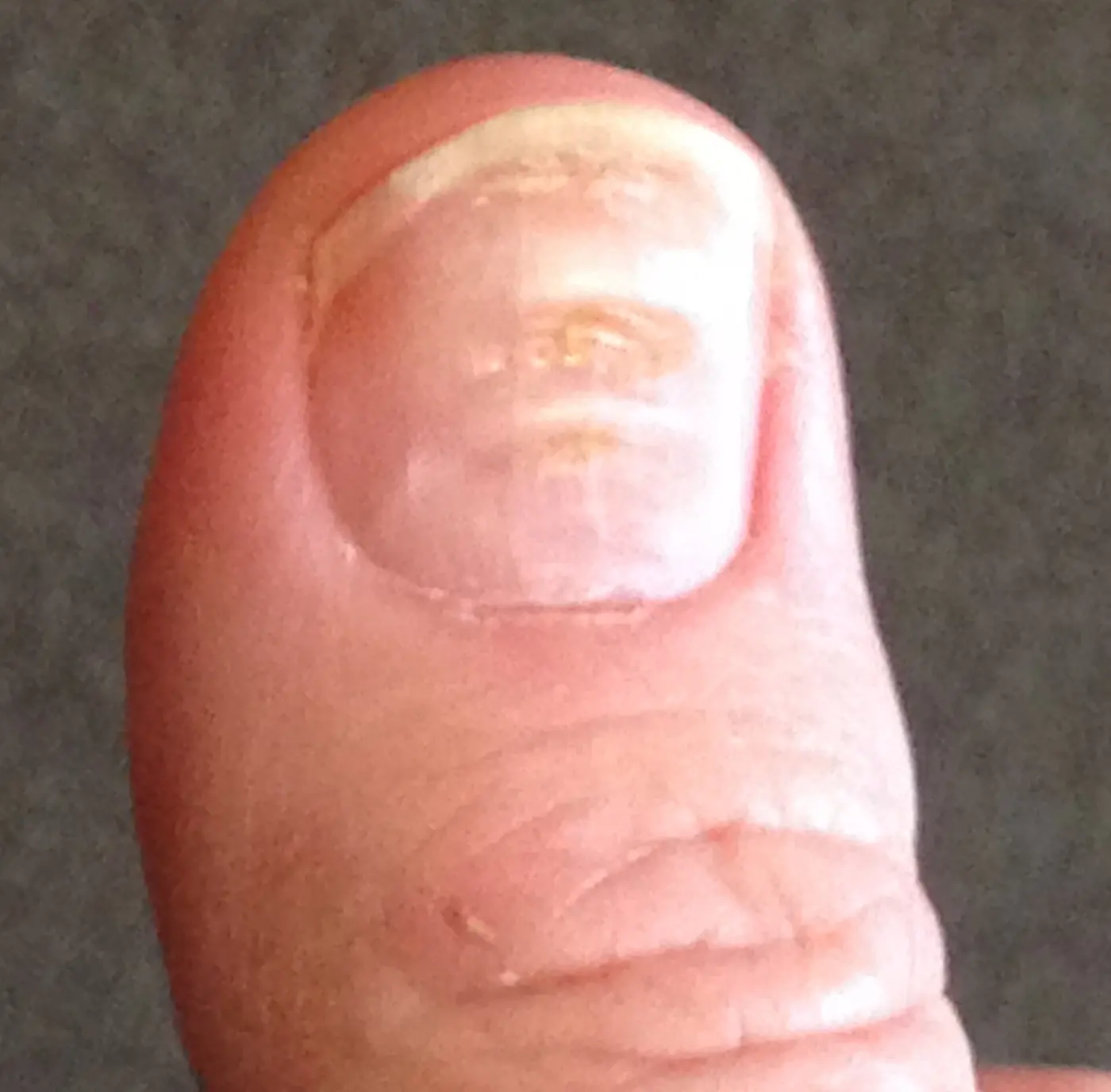

As the nail grows, the groove slowly travels toward the tip. If a fingernail grows about 0.1 millimeters a day, a groove one centimeter from the base must have formed roughly three months earlier. A nail, then, is also a little logbook, recording what has happened to the body as it grows.