Were mummies really sold as medicine?
Yes. Ground-up mummies were sold as medicine in Europe, and some even reached Japan in the Edo period.
Mention mummies and you probably picture ancient bodies resting quietly behind glass in a museum. A few hundred years ago in Europe, though, mummies were merchandise sold in apothecary shops. They were seriously prescribed as medicine, swallowed as a powder or rubbed onto wounds.
And this strange remedy traveled across the seas as far as Japan in the Edo period (1603–1868).
It began with a mix-up over a black medicine
The story starts with a black bitumen, a natural asphalt, that seeped from a mountain in Persia. Known in Persian and Arabic as mūmiyā, this substance was prized in Middle Eastern medicine as a precious remedy for wounds and fractures.
In ancient Egypt, meanwhile, black resins and bitumen were sometimes used in mummification. The black material that collected inside mummies looked just like mūmiyā. Starting around the 12th century, scholars translating Arabic medical texts into Latin began to confuse the two. The Latin word mumia came to mean “the black substance taken from mummies,” and eventually the bodies themselves. The English word “mummy” comes from it.
From Egyptian tombs to apothecary shelves
As mumia’s reputation spread through Europe, partly by way of the Crusades, demand kept growing. Mummies were dug out of Egyptian tombs, broken up, and exported. King Francis I of France is said to have always carried a mixture of mumia and rhubarb with him in case he was injured.
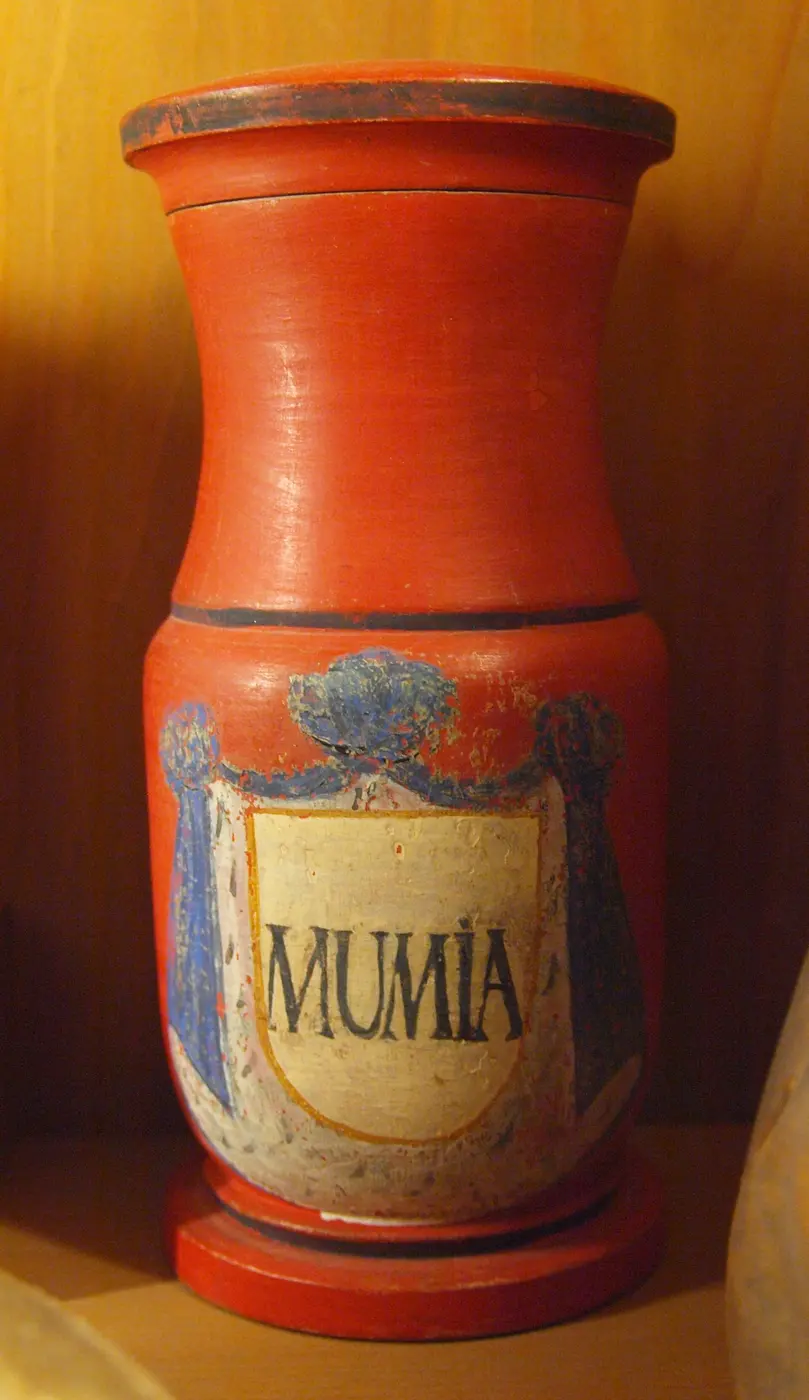

Genuine ancient mummies could not come close to meeting demand, so fakes flooded the market. Records from the time describe dealers who dried out the bodies of executed criminals and others and sold them as old mummies. Even in the 17th century, the English scientist Robert Boyle praised mumia as a medicine for falls and bruises.
The surgeon who called it useless
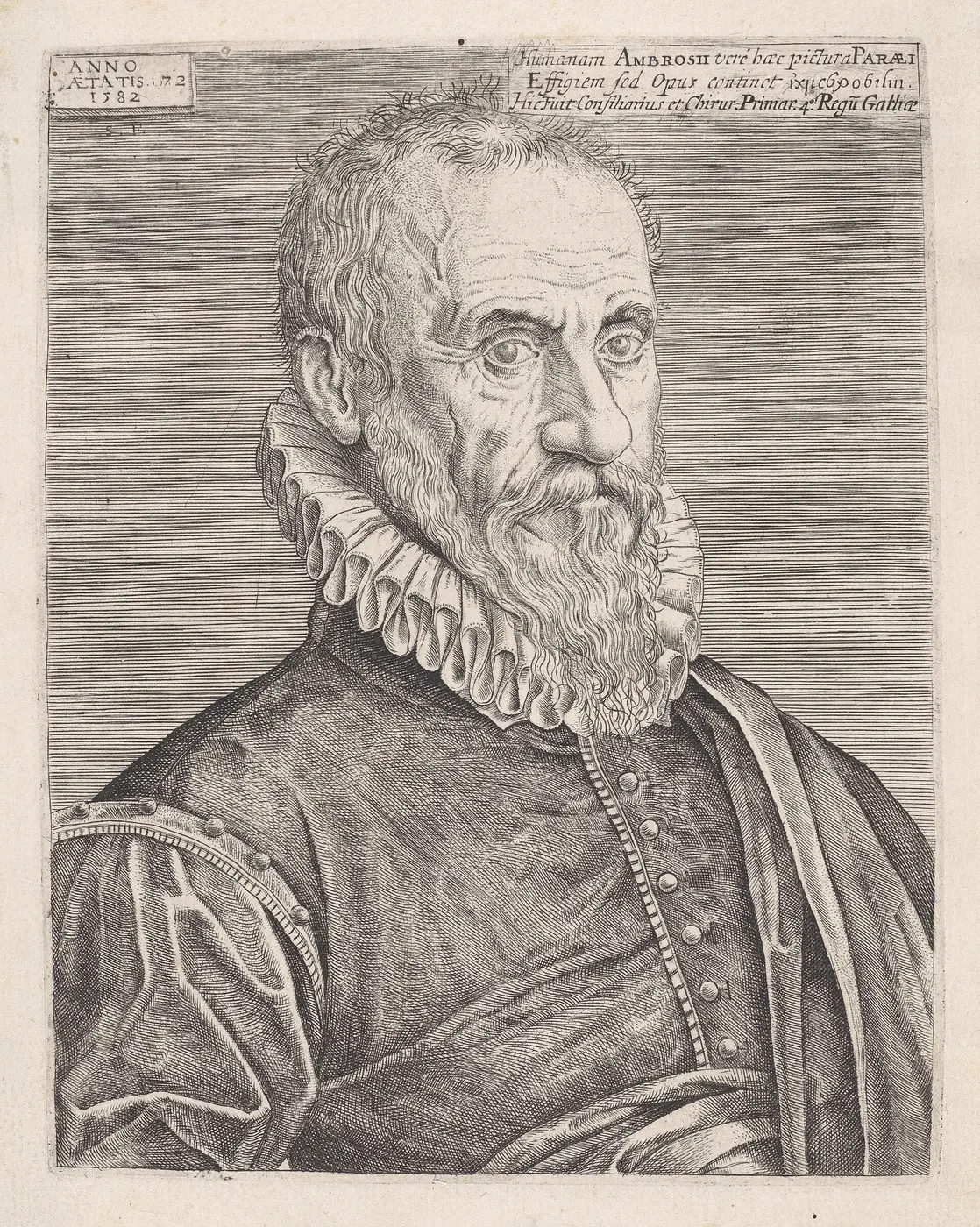
There were skeptics, of course. The 16th-century French surgeon Ambroise Paré admitted that he himself had given mumia to patients a hundred times, then declared that the drug did the sick no good at all, and stopped prescribing it. He also exposed how apothecaries in France stole the bodies of executed criminals, dried them in ovens, and sold them.

In the 18th century, doubts grew among physicians, and mumia was prescribed less and less. Even so, it never vanished entirely: the 1924 price list of the German pharmaceutical company Merck still offered mumia at 12 gold marks per kilogram.
Wanted by shoguns and feudal lords
Mummy medicine was known in East Asia, too. The Chinese characters used for “mummy” in Japanese, 木乃伊, appear in the 14th-century Chinese miscellany Chuogeng lu, which claims that a person with an injured hand or foot would be healed at once by eating it. The late-16th-century pharmacopeia Bencao gangmu, however, quotes this passage and adds that whether it actually works is unknown.
In Edo-period Japan, Dutch ships brought Egyptian mummies. Yamato honzō, a natural history by Kaibara Ekiken, a Confucian scholar of the Fukuoka domain, has an entry for 木乃伊. The scholar of Western learning Ōtsuki Gentaku, in Rokubutsu shinshi, whose preface he wrote in 1786, treated mummy as one of six medicinal substances and ranked Egyptian mummy as the finest. And the 1746 diary of the head of the Dutch trading post records an order for 200 pounds of mummy from the shogun and other feudal lords.
The Japanese word miira (ミイラ) itself arrived in the 16th and 17th centuries through trade with the Portuguese. It originally referred to myrrh, and one theory holds that its meaning shifted because myrrh was used to preserve mummies, and both were prized as medicine.