What is the oldest writing in the world?
The leading candidate is script on Mesopotamian clay tablets about 5,300 years ago, with Egypt close behind.
5300years ago
We read and write every day without giving it a second thought. Yet against the long span of human history, writing is a very recent invention. For tens of thousands of years after people began to speak, they lived without writing anything down.
So when and where did human beings first write?
The tablets of Uruk
The first name that comes up as a candidate for the oldest writing is Uruk, a city of ancient Mesopotamia in what is now southern Iraq. In its temple district, archaeologists found thousands of clay tablets inscribed with picture-like signs and numbers.
These tablets date from around 3350 to 3000 BCE, and researchers call their script “proto-cuneiform.” Signs were cut and pressed into damp clay with a pointed tool, and over time this writing developed into cuneiform, built from combinations of wedge-shaped strokes. Cuneiform would go on to be used for more than 3,000 years to write a number of languages, including Sumerian and Akkadian.
The first thing written down was accounts
When you hear about humanity’s first texts, it is tempting to imagine prayers to the gods or tales of heroes. In fact, roughly 85 percent of proto-cuneiform tablets are accounts recording barley, livestock, rations and the like. Most of the rest are word lists, cataloging the names of professions and objects.
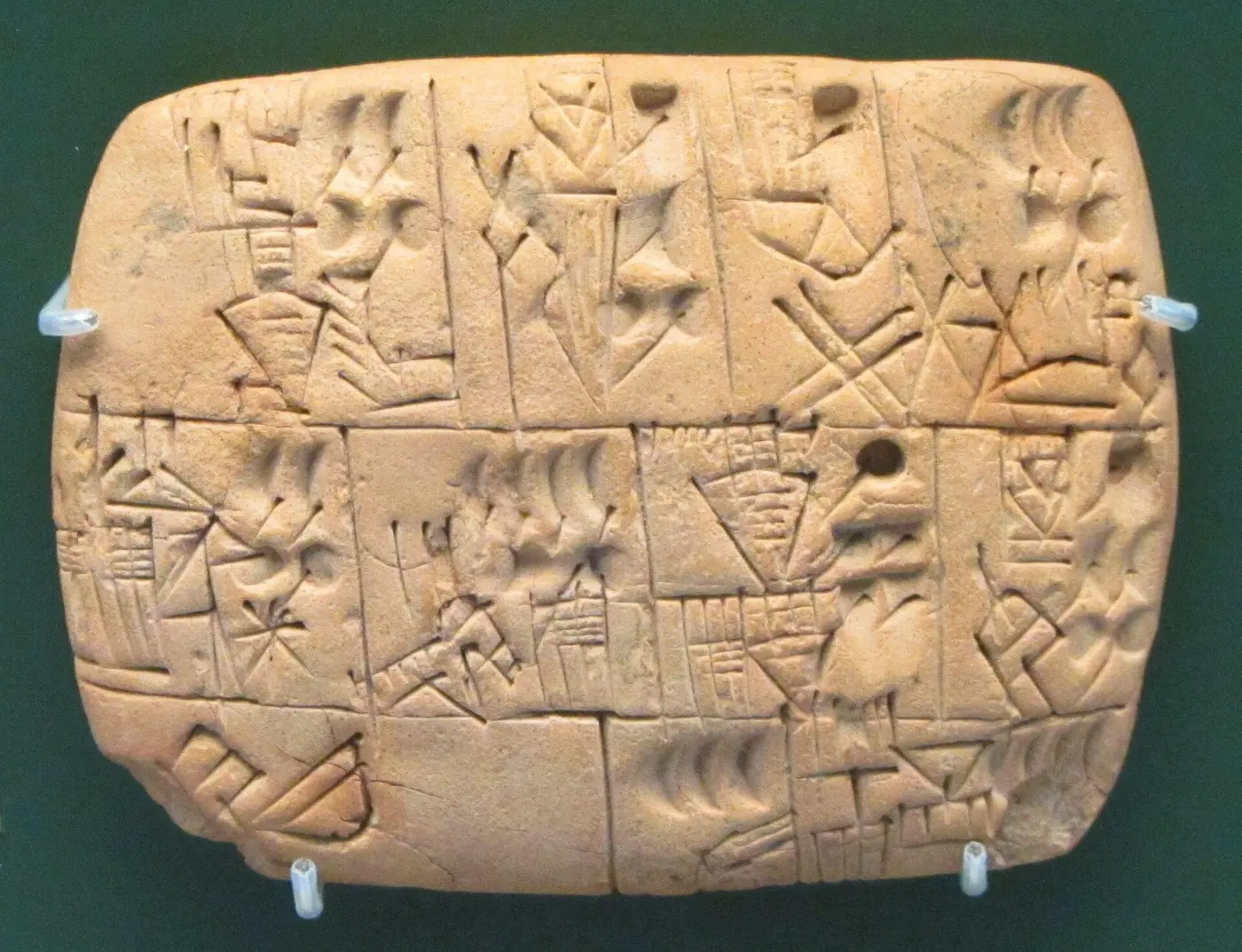

One tablet records a quantity of barley, a period of “37 months,” and the name “Kushim.” Kushim is sometimes said to be one of the first people in history whose name was written down, though some scholars think it was a job title rather than a personal name.
As for how writing began, a well-known theory links it to small clay “tokens” that had been in use for thousands of years before. People kept track of grain and sheep by counting with clay pieces of different shapes, the theory goes, and that habit was eventually replaced by cutting signs into clay tablets, giving birth to writing. Writing may have been invented first as a tool for counting and keeping records, long before anyone used it for poetry.
Egypt’s rival claim to “oldest”
Still, before declaring flatly that the oldest writing is Mesopotamian, there is an objection to consider. At Abydos in Egypt, in an early royal cemetery, a tomb known as U-j was excavated in the late 1980s. Inside were many small bone and ivory labels carved with signs that appear to be forerunners of hieroglyphs.
The tomb is dated to around 3300 BCE, roughly the same time as the oldest Uruk tablets and, by some reckonings, possibly a little earlier. The archaeologist who excavated it argues that some of the signs already represented sounds.
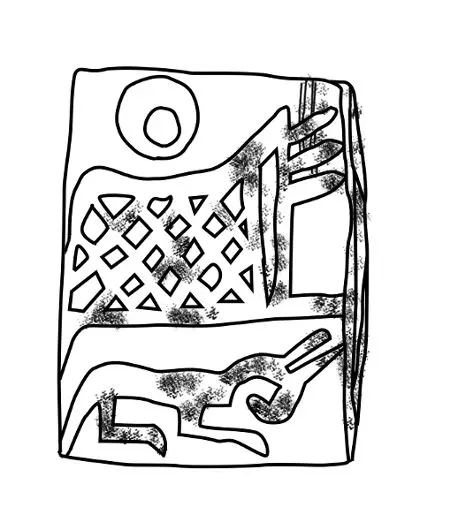

Soon afterward, writing down the names of kings and other things in signs spread across Egypt. On the Narmer Palette, a carved slate made around 3100 BCE, the king’s name appears as signs shaped like a catfish and a chisel.
Because the dating carries margins of error of several decades to about a century, it is hard to say which came first. Many researchers agree that writing appeared in the two regions at about the same time, but whether they influenced each other or each invented writing independently is still debated.
Writing was invented more than once
Other civilizations also created writing from scratch. In China, around the 13th century BCE, the kings of the Shang dynasty carved the results of divinations onto turtle shells and cattle bones. This oracle-bone script is the direct ancestor of today’s Chinese characters. In Mesoamerica, too, a writing system of its own emerged before the Common Era, and Maya script later developed to a high level of sophistication.
Signs carved on even older pottery and bones have been found in many parts of the world, but opinions differ on whether they are true writing that records language or just owners’ marks and decoration. Where do you draw the line and call something writing? That line is the hardest part of the question “What is the oldest writing in the world?”
The history of writing is also a history of what we choose to call writing.