Does the Moon have earthquakes?
Yes. Seismometers left by the Apollo astronauts recorded more than 10,000 “moonquakes” before 1977.
55minutes
The Moon hanging in the night sky always shows us the same face, and it is easy to think of it as an inert lump of rock. Its surface is not carved up into moving plates like Earth’s, and no volcanoes are erupting there. You could be forgiven for assuming it is a world that never shakes.
In fact, the lunar ground does tremble from time to time. These tremors are called moonquakes, and they turned out to behave in strange ways that are quite unlike earthquakes on Earth.
Seismometers left behind by astronauts
The first moonquakes were picked up by seismometers that Apollo astronauts set up on the lunar surface. In July 1969, Apollo 11’s Buzz Aldrin installed the first seismometer ever placed on the Moon. Apollo 12, 14, 15 and 16 followed with seismometers of their own, creating a network of stations across the lunar surface.
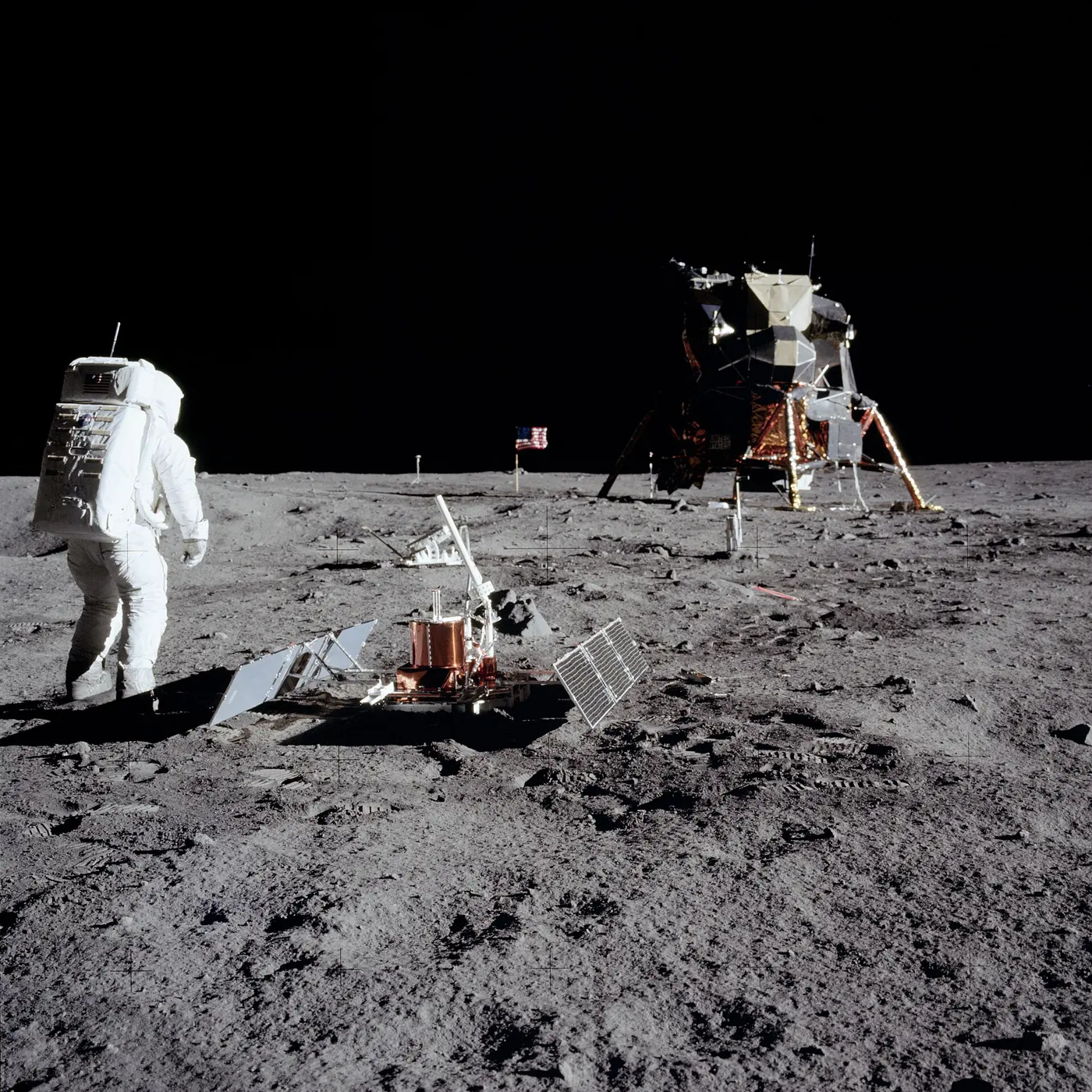

The network kept sending data back to Earth until it was switched off on September 30, 1977. Over that time it is said to have recorded more than 12,000 tremors. Far from being a “dead” world, the Moon turned out to shake surprisingly often.
Four kinds of moonquake
Studying the records, scientists sorted moonquakes into four main types.
First are deep moonquakes, which occur very far down, roughly 700 to 1,100 kilometers below the surface. They are tiny, but they repeat at the same spots in step with the Moon’s orbit around Earth. The trigger is thought to be Earth’s gravity tugging on the Moon and flexing it ever so slightly—the same kind of force that raises the tides.
Second are thermal moonquakes. Lunar day and night each last about two weeks, and near the equator the temperature swing between them can reach about 250°C (450°F). When the Sun rises after the long night, the frozen surface rock heats up abruptly, expands and creaks.
Third are tremors caused by meteorite impacts. With no air to burn them up, even small meteorites slam straight into the lunar surface.
Fourth are shallow moonquakes, which originate at comparatively shallow depths. Only 28 were detected during the observation period, but some exceeded magnitude 5 and reportedly shook for more than ten minutes. One likely cause is that the Moon is slowly shrinking as its interior cools, making the crust crack and slip. NASA estimates that the Moon’s diameter has shrunk by about 50 meters (150 feet) over the past several hundred million years.
Ringing like a bell
What surprised moonquake researchers most was how long the shaking lasted.
On November 20, 1969, the Apollo 12 crew deliberately crashed their lunar module’s ascent stage, which they no longer needed, into the Moon to see what kind of tremor it would produce. The seismometer kept recording vibrations for more than 55 minutes. The shaking built up gradually over about eight minutes and then took a long, long time to fade away. It was described as like the lingering sound of a struck bell.
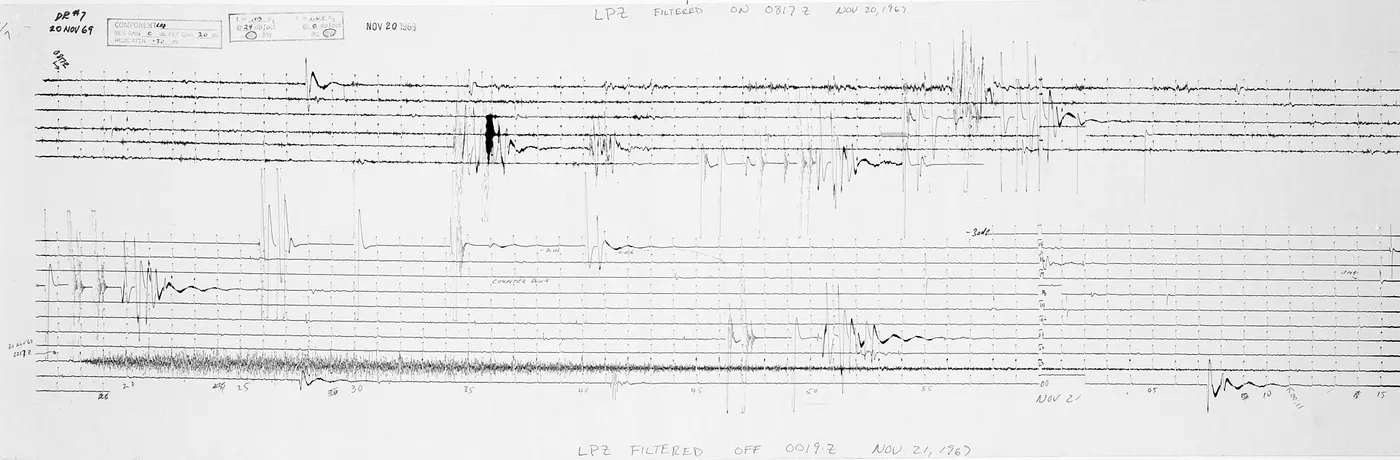

On Earth, even strong shaking usually dies down within a few minutes. The Moon’s tremors are thought to last so much longer because lunar rock is bone-dry. Rocks on Earth contain small amounts of water, which acts like a brake, soaking up the energy of the vibrations. Without water, lunar rock lets the shaking linger. On top of that, waves bounce around inside the surface layer, which has been shattered into fragments by meteorite impacts, and keep reverberating for a long time.
Anyone who builds a base on the Moon in the future will need to prepare for this kind of shaking. Half a century on, researchers are still mining the old Apollo data to understand moonquakes.