How long will footprints last on the Moon?
With no wind or rain they last a long time, but not forever. Tiny meteorites stir the soil and may erase them within tens of thousands of years.
81,000years
On July 20, 1969, Apollo 11’s commander Neil Armstrong and astronaut Buzz Aldrin became the first humans to walk on the Moon. By the time Apollo 17 left in 1972, twelve people in all had left their footprints there.
The Moon has almost no air, so no wind blows and no rain falls. That is why people often say that footprints on the Moon will last for millions of years. Will they really last that long?
A photo taken to study the soil
One of the most famous pictures from Apollo 11 shows a bootprint with every ridge of the sole sharply outlined. It wasn’t a souvenir snapshot. Aldrin photographed his own footprint as part of an investigation into the properties of the lunar soil.
The Moon’s surface is covered in fine sand and dust called regolith. About half the grains are smaller than 0.06 millimeters across, and the soil is full of tiny gaps, so it packs down firmly when stepped on. Aldrin’s bootprint was about 2.5 centimeters (1 inch) deep. The fine grains hold their shape well, preserving even the grooves of his boot sole.
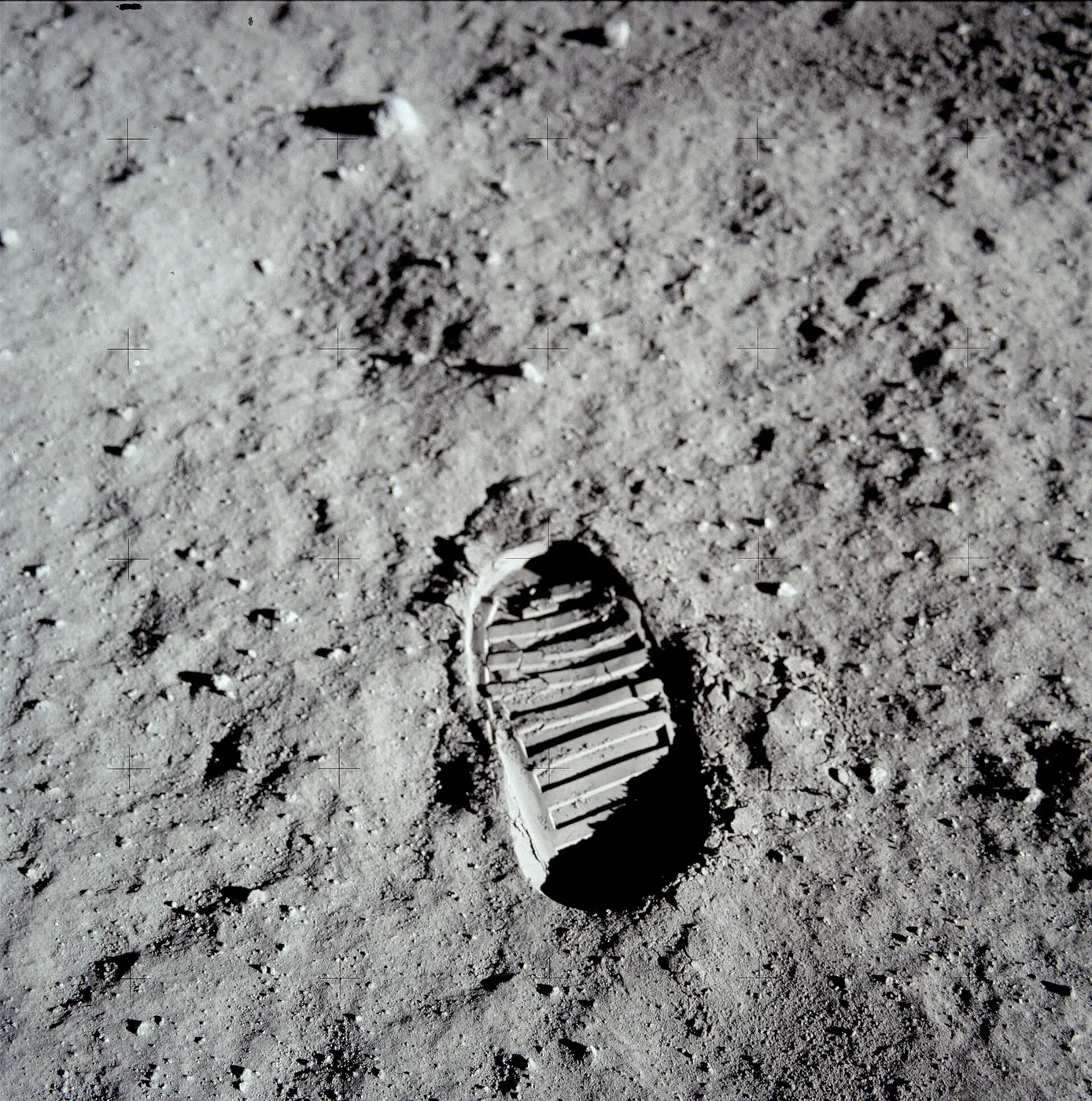

Still visible after 50 years
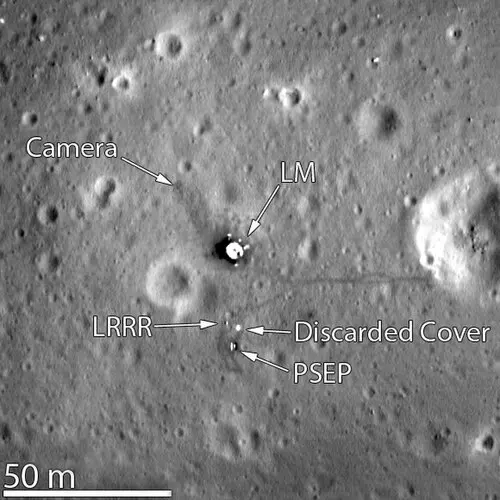
The Apollo footprints are still there. NASA’s Lunar Reconnaissance Orbiter (LRO), which has been circling the Moon since 2009, has photographed the Apollo landing sites from above, capturing parts of the landers and the experiments left behind, along with the astronauts’ trails as dark streaks.
In 2011, LRO dipped from its usual altitude of about 50 kilometers (30 miles) to as low as 21 kilometers (13 miles), and at the Apollo 12, 14 and 17 sites the astronauts’ footpaths and the tracks of the lunar rover came into much sharper view. At the Apollo 11 site, you can even see the trail Armstrong left when he walked about 60 meters (200 feet) east of the lander to a small crater.
The lunar soil is slowly being stirred
So will the footprints last forever? The Moon has no wind or rain, but that doesn’t mean nothing can erase them. Because there is no air, tiny meteorites from space don’t burn up on the way down. They rain straight onto the surface, and their impacts gradually stir up the soil.
It used to be thought that the surface soil took around 10 million years to be turned over. The claim that footprints will last millions of years rests on estimates like that.
In 2016, however, a research team led from Arizona State University compared more than 14,000 pairs of LRO images of the same places taken at different times and found 222 new craters. They also found many smaller disturbances caused by debris thrown out from impacts. Putting it all together, they estimated that the top 2 centimeters or so of soil is almost entirely churned over in about 81,000 years, more than 100 times faster than previously thought.

For a footprint about 2.5 centimeters deep, that figure matters. Meteorite impacts are hit-and-miss, so some prints may vanish sooner and others survive much longer. Still, rather than lasting millions of years, they may gradually fade within tens of thousands. That is an extremely long time by the measure of human history, but it isn’t forever.
Rules to protect the footprints
Meteorites aren’t the only threat. Future spacecraft landing on the Moon could blast the soil away with their engine exhaust.
In 2011, NASA published recommendations on how to approach the Apollo landing sites with care. In December 2020, the United States also passed a law to protect the Apollo sites, requiring companies and others that receive US government licenses for lunar activities to follow those recommendations.