Why is the Milky Way called a “river” in Japan?
East Asian peoples saw the band of light across the night sky as a river; in the West it was a road of milk.
Look up at the night sky somewhere far from city lights, and you can see a faint, whitish band stretching across the heavens. In Japan, it has long been called Amanogawa (天の川), “the river of heaven.” The name comes up most often on summer nights around Tanabata, the star festival held on July 7.
Yet when you think about it, it is a strange name. No water actually flows up there. So why a “river”? And what have people across the seas called the very same band of light?
East Asia saw a river in the sky
Japan was not the only place to see a river in that band of light. In ancient China, it was called Tianhe (天河, “heavenly river”), Tianhan (天漢) or Hehan (河漢), among other names. The character 漢 (han) is also the one used for the Han River, one of China’s great rivers. People likely compared the white stream lying across the night sky to a mighty river on earth. The word ginga (銀河), meaning a river shining like silver, is also a name that came from China. Across East Asia—in China, the Korean Peninsula, Japan and Vietnam—the image of a river has been widely shared.
The Amanogawa appears again and again in the Man’yōshū, Japan’s oldest anthology of poetry, compiled in the eighth century. It was written with characters such as 天漢 and 天河 and read as “amanogaha.”
A love story on opposite banks
That the Milky Way is a “river” is essential to the Tanabata story.
In a legend that came to Japan from China, a weaver girl skilled at the loom and a young cowherd are separated by the river of heaven. They can meet only once a year, on the night of the seventh day of the seventh month. According to one version, magpies spread their wings to form a bridge for them. The names of the Weaver Girl and the Cowherd already appear in the Shijing (Classic of Poetry), China’s oldest collection of poems, compiled before the Common Era.
In the night sky, the Weaver Girl is Vega in the constellation Lyra, and the Cowherd is Altair in Aquila. Look up on a summer night and you will see these two bright stars shining on opposite banks of the Milky Way.
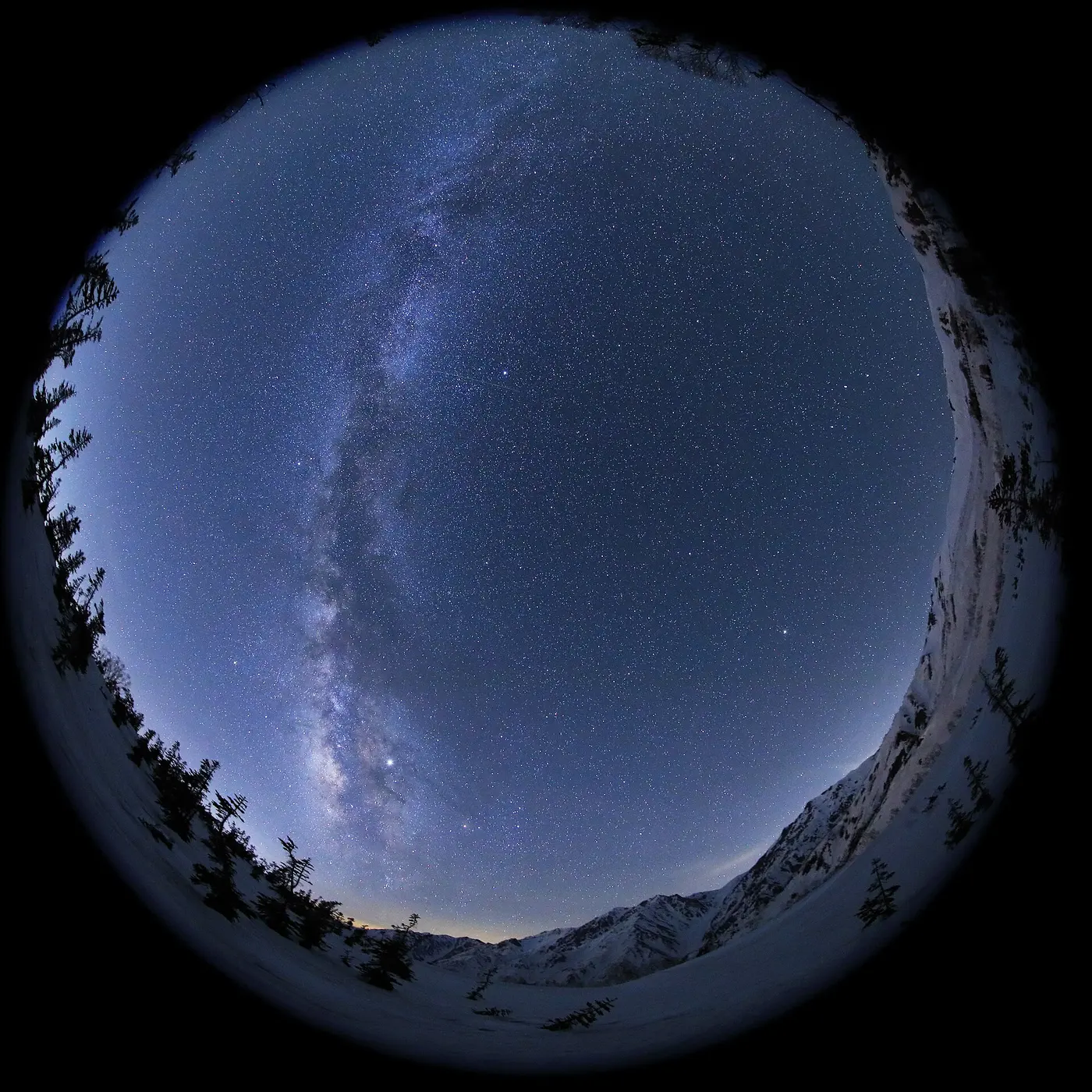

The story has been deeply loved in Japan too, and the Man’yōshū contains more than 100 poems about Tanabata. Many of them speak of crossing the river by boat or waiting by its shallows, which suggests that poets pictured the Milky Way as a real river.
In the West, a goddess’s spilled milk
In Europe, meanwhile, the same band of light looked like something else entirely. In English it is the Milky Way: a road of milk.
Behind this name lies a Greek myth. Zeus, king of the gods, wanted to make the baby Heracles—his son by a mortal woman—immortal, so he put the infant to the breast of his sleeping wife, Hera. When Hera awoke and, startled, pushed the unfamiliar baby away, her milk sprayed across the sky and became the white band of light.
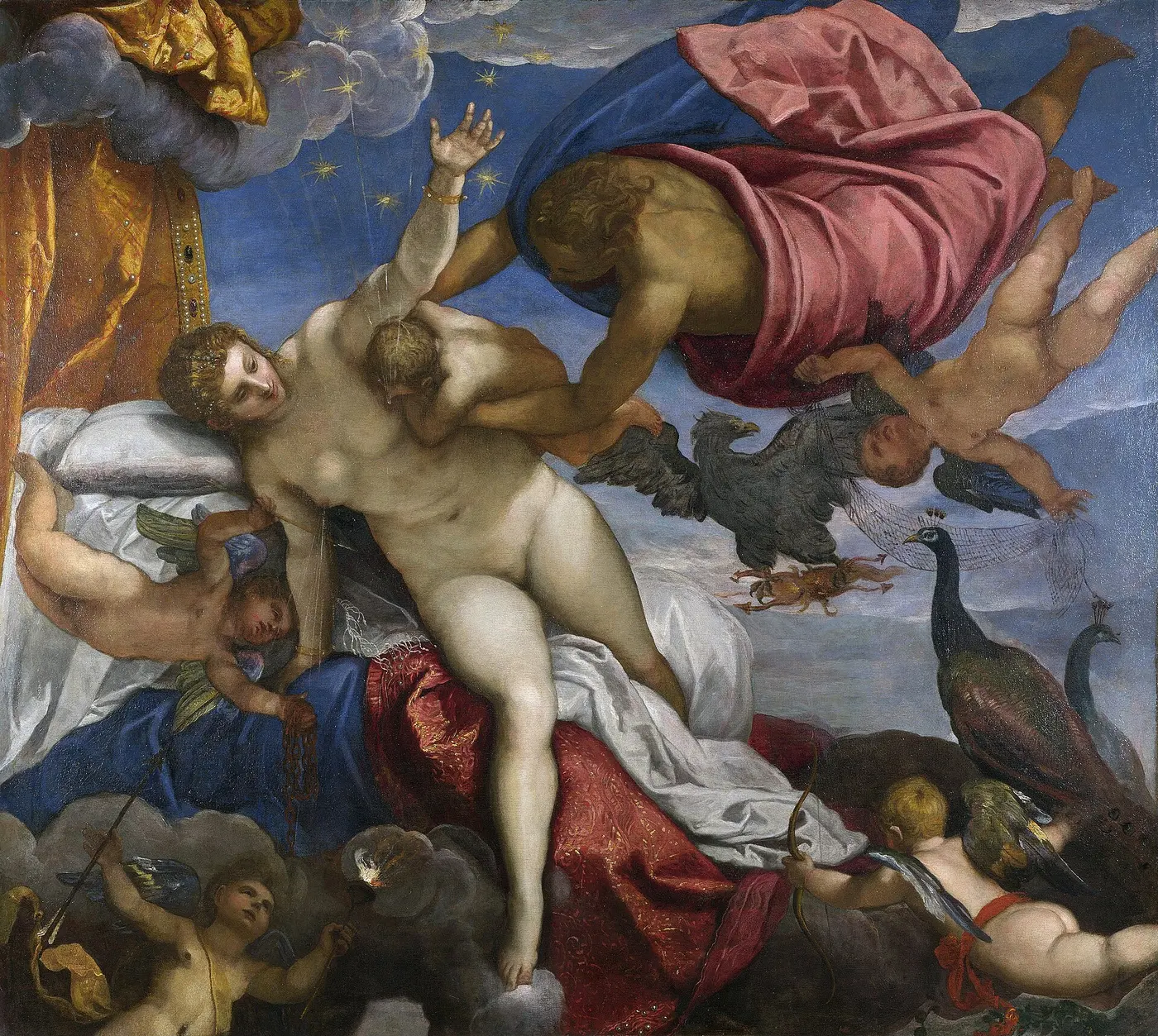

This story gave rise to a Greek name meaning “milky circle,” which was translated into Latin as via lactea, “the milky way.” And from gala, the Greek word for milk, came the word “galaxy.” Today it refers to vast collections of countless stars floating in space, but trace it back and you arrive at a drop of milk.
In truth, countless stars
The true nature of the Milky Way was revealed in the 17th century. In 1610, Galileo Galilei turned his homemade telescope toward it and discovered that it was made of a vast number of faint stars. Neither river nor milk, it was a band of stars too numerous to tell apart with the naked eye.
We now know that our solar system itself sits inside an enormous galaxy, a disk of stars said to number in the hundreds of billions. Seen from the inside, the densely packed part of that disk appears as a band circling the whole sky. That is the Milky Way. We are looking up at our own galaxy from within.