Did the name “Impressionism” begin as an insult?
Yes. It started with a word the critic Louis Leroy used in 1874 to mock an exhibition.
1874
Sunlit waterfronts, people dancing in dappled shade, a harbor softened by mist. The paintings of the Impressionists—Monet, Renoir, Degas and the rest—are crowd-pleasers in museums around the world today, and their exhibitions draw long lines.
But when the name “Impressionist” was born, it was no compliment. It came from a newspaper article that set out to ridicule an exhibition.
Painters who turned their backs on the Salon
In 19th-century France, almost the only way to be recognized as a painter was to be accepted into the Salon, the official exhibition judged by a jury drawn from the state academy of fine arts. Acceptance made paintings easier to sell; rejection drove buyers away. The Salon’s verdict could make or break a painter’s livelihood.
Yet the work of Monet and his circle, who tried to capture the shifting outdoor light quickly while leaving their brushstrokes visible, was rejected again and again. So they decided to put on an exhibition of their own. At the end of 1873, Monet, Renoir, Degas, Pissarro, Sisley, Morisot and others founded a cooperative, the “Anonymous Society of Painters, Sculptors, Engravers, etc.”
On April 15, 1874, its first exhibition opened at 35 Boulevard des Capucines in Paris, in a building that had housed the studio of the photographer Nadar. Thirty artists were listed in the catalog. They are said to have opened two weeks ahead of the Salon to show that this was not another “Salon of the Refused,” a show of works the Salon had turned down.
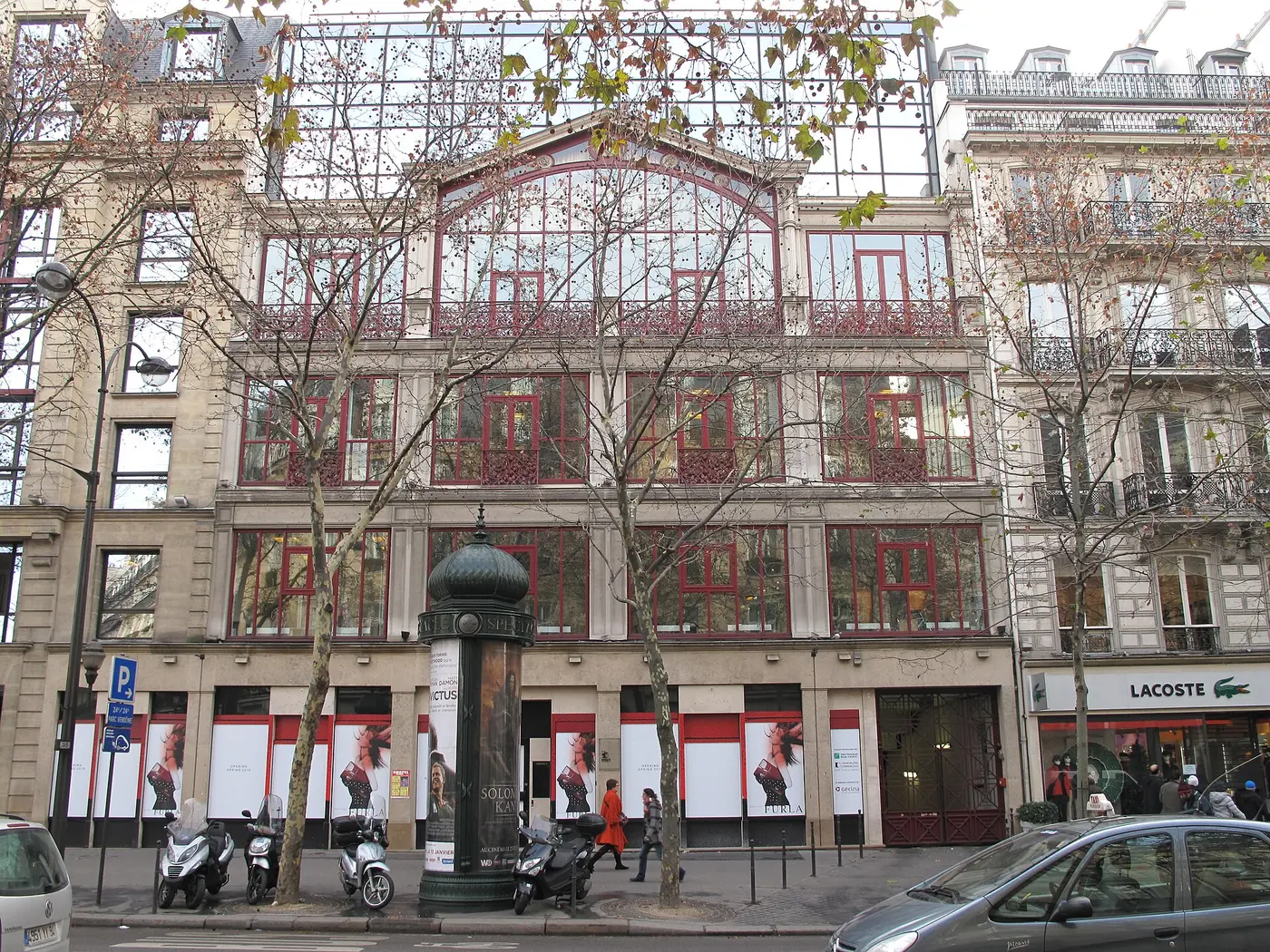

“Wallpaper is more finished than this”
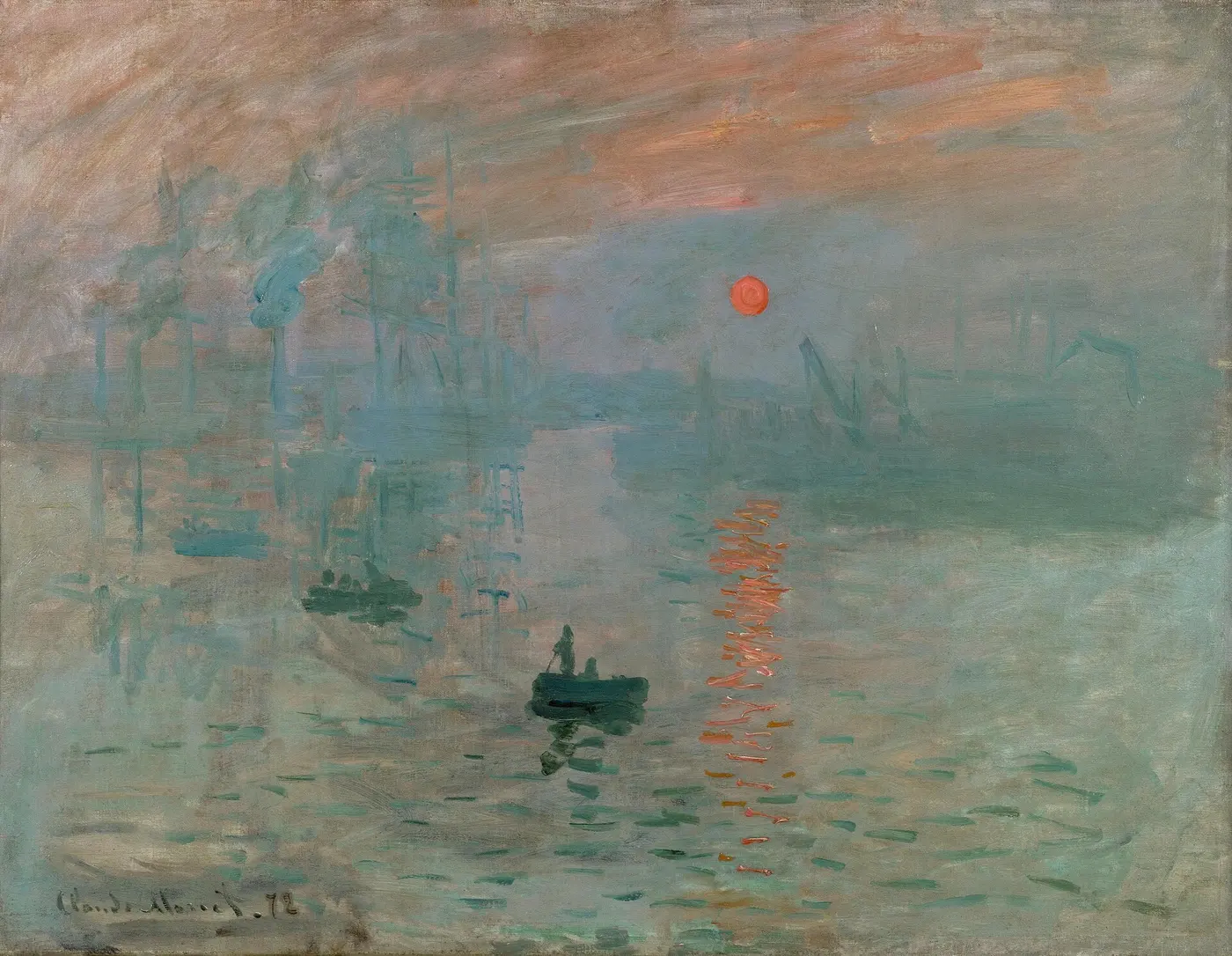
Among the works on show was a painting by Monet of the harbor of Le Havre, his hometown. In the morning mist, an orange sun casts a streak of light across the water, and small boats float as dark silhouettes. Asked for a title for the catalog, Monet later recalled, he replied that it could hardly pass as a view of Le Havre, so they should call it “Impression.” And so the painting became Impression, Sunrise.
On April 25, the satirical newspaper Le Charivari published a piece by the critic Louis Leroy titled “The Exhibition of the Impressionists.” It was a comic dialogue in which Leroy tours the show with an imaginary conservative landscape painter named Joseph Vincent.
Arriving in front of Impression, Sunrise, the two read the title and quip that since they were impressed, there must be some impression in it. Then comes the put-down:
A wallpaper pattern in its early stages is more finished than this seascape.
Borrowing the title of Monet’s painting, Leroy lumped all the exhibitors together as “Impressionists” and poked fun at them.

Wearing the insult with pride
Commercially, the exhibition was a failure. Over its month-long run it drew only about 3,500 visitors, while that year’s Salon is said to have attracted about 400,000. The gap could hardly have been wider.
Even so, the painters did not give up. They held eight exhibitions in all, up to 1886, and came to accept the half-mocking label “Impressionist” as a name for themselves. During the third exhibition in 1877, the critic Georges Rivière even published a weekly paper called L’Impressionniste.
Not everyone liked the name, though. Degas, for one, a painter who valued drawing over color, is said to have disliked being called an Impressionist. But the name took on a life of its own and settled in as the term for the whole new movement in painting. A name born as an insult became one of the defining words of art history.