What is the G string in “Air on the G String”?
The lowest-pitched of a violin’s four strings. The title comes from an arrangement that lets the whole tune be played on that one string.
Over a slowly walking bass line, a long-breathed melody sings quietly. Johann Sebastian Bach’s “Air on the G String” is a piece that even people who rarely listen to classical music have almost certainly heard somewhere.
Yet surprisingly few people know what the “G string” in the title refers to. And in fact, Bach himself never called the piece by that name.
Originally, the second movement of a suite
The music comes from Bach’s Orchestral Suite No. 3 in D major (BWV 1068), a set of movements that are mostly dances. Its second movement is headed “Air,” a term for an instrumental piece with a song-like melody.
The suite is thought to date from around 1730. Amid the trumpets and timpani that make the rest of the suite so festive, this second movement is played by the strings and continuo alone, creating a pocket of calm.
The G string is the violin’s lowest
A violin has four strings, tuned from bottom to top to G, D, A and E. The G string is the thickest and produces the lowest notes. Played open, without a finger pressing it down, it sounds the G just below middle C on the piano, vibrating about 196 times a second.
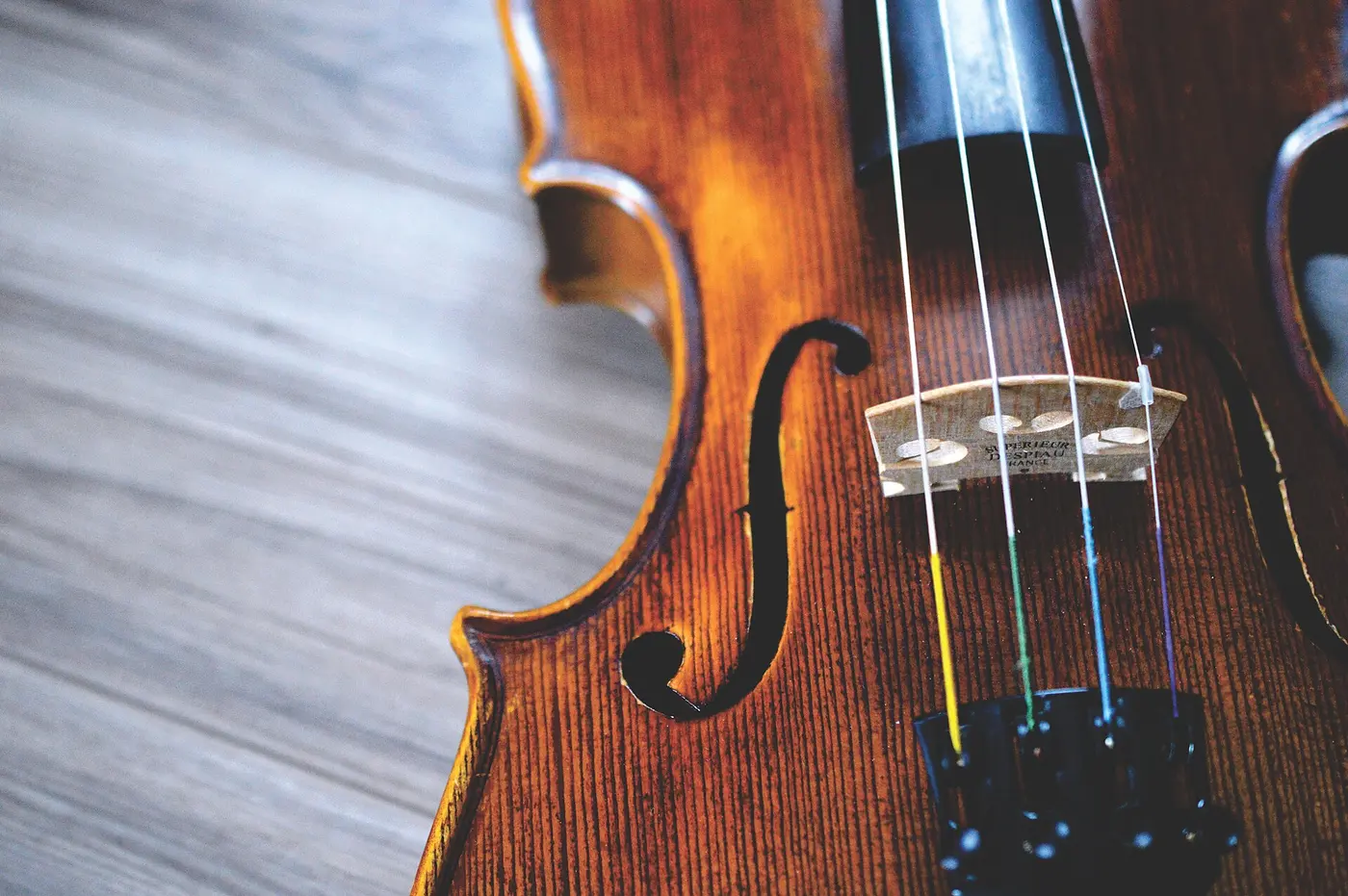

Normally a violinist moves back and forth across several strings to play a melody. The “Air on the G String,” as its name says, was reworked so that the whole melody can be played on the G string alone.
Named by a nineteenth-century violinist
In 1871, more than a century after Bach’s death, the German violinist August Wilhelmj arranged the Air for violin and piano. Wilhelmj was a virtuoso sometimes called “the German Paganini,” and in 1876 he was concertmaster of the orchestra when Wagner’s Ring cycle was first staged at Bayreuth.
Wilhelmj moved the piece from D major down to C major and dropped the melody a further octave. That put every note within the range of the G string, so the tune could be played on that single string, letting the melody sing with the G string’s rich, dark sound. His arrangement spread under the name “Air on the G String” and became a famous piece in its own right, apart from the original suite.


Incidentally, in Japan the piece is known as “Aria on the G String,” using the Italian word aria. The two words are close in meaning, both suggesting a song-like piece, but Bach’s own heading is “Air.”
Masterpiece or falsification?
Today almost everyone knows the “Air on the G String,” but opinions were divided at the time. The Hungarian-born violinist Joseph Joachim, a close friend of Brahms, is said to have condemned it as a shameless falsification of a work by Bach. Given that it changed both the key and the register, his reaction is perhaps understandable.
Today orchestras play Bach’s original, and violinists also perform the version on the G string alone. Listen to both side by side, and the difference in sound is striking.