When was the Great Wall of China built?
Not all at once. It was built and rebuilt over more than 2,000 years, from around the 7th century BCE to the Ming dynasty of the 17th century.
21,196km
A rampart lined with watchtowers winds over green mountain ridges. The Great Wall is China’s best-known landmark, and it was added to UNESCO’s World Heritage List in 1987.
Ask who built the Great Wall and many people will name Qin Shi Huang, the First Emperor of China. He is indeed central to the wall’s story. But the Great Wall was not the work of one emperor in one lifetime. It began long before him and was finished long after.
It began as border walls between rival states
China began building long defensive walls around the 7th century BCE. The country was then split into many rival states, and states such as Chu and Qi built walls to guard their borders.
Later, in the Warring States period, the northern states also built walls against the mounted armies of nomadic peoples to the north, not just against their neighbors. At this stage, the “Great Wall” was still a scattering of separate walls belonging to different states.
The First Emperor’s “ten thousand li”
When Qin Shi Huang unified China in 221 BCE, he joined and extended those walls that were needed to defend the north. The work was led by the general Meng Tian. After driving back the Xiongnu, a nomadic people of the northern steppes, he built a vast wall from Lintao in the west to Liaodong in the east.
The Records of the Grand Historian, written by the Han-dynasty historian Sima Qian, describes this wall as stretching “more than ten thousand li,” the li being a traditional Chinese unit of distance. That is said to be the origin of the wall’s Chinese name, Wanli Changcheng, “the long wall of ten thousand li.” The “ten thousand,” though, is best read as a way of saying “immeasurably long” rather than as a precise distance.
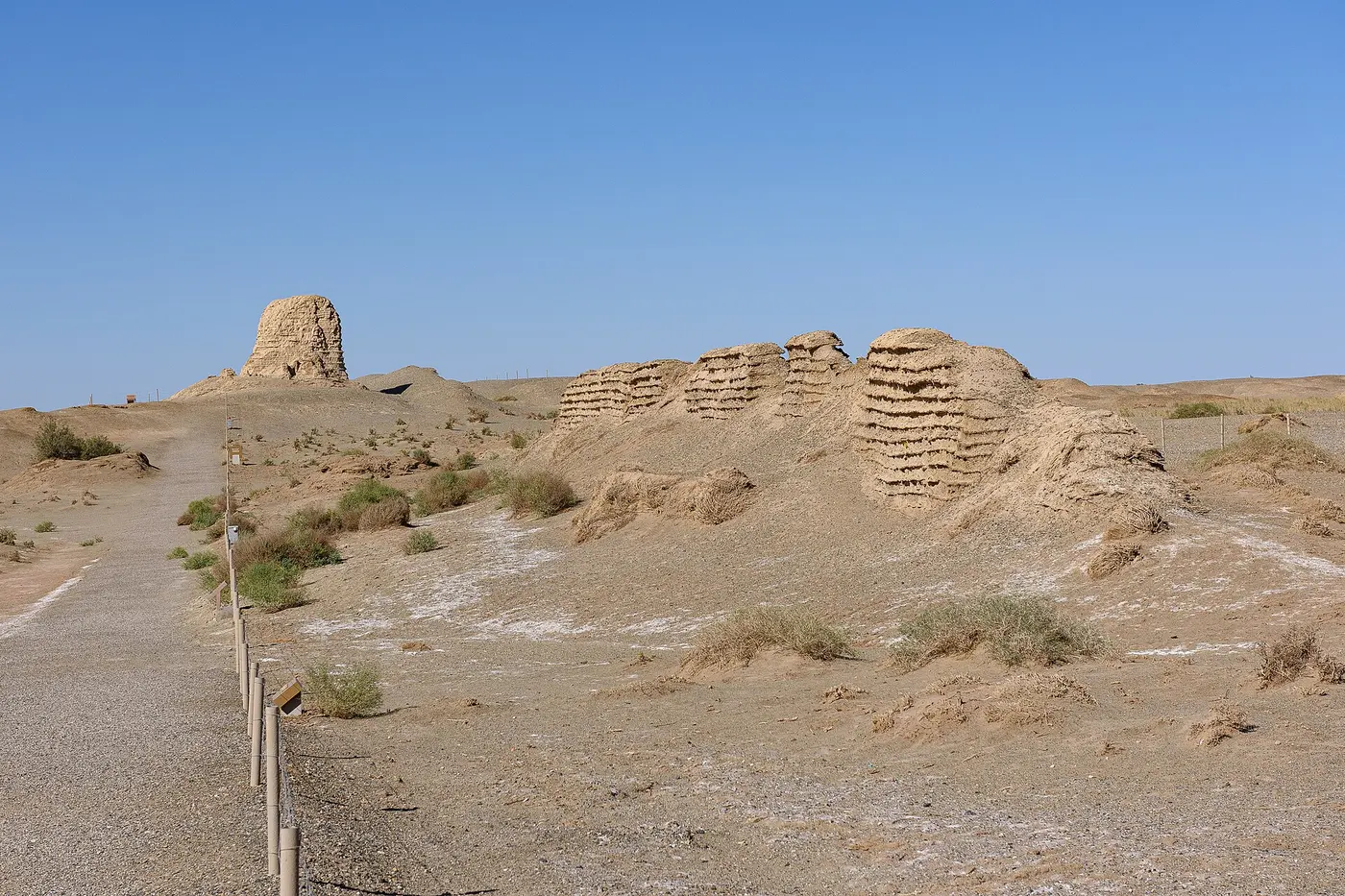
The Qin wall was mostly made of earth, built by ramming soil into wooden frames, a technique known as rammed earth. It looked very different from the grand brick ramparts we see in photographs.

From the Han to the Ming
The Han dynasty, which followed the Qin, pushed the wall farther west into present-day Gansu Province, the gateway to the Silk Road. Near the oasis town of Dunhuang, Han walls built from alternating layers of reeds or willow branches and gravel still survive, preserved by the dry climate. Many later dynasties, including the Northern Wei and the Jin, also built walls along the frontiers of their own times.
The wall’s present form, though, was shaped by the Ming dynasty, which ruled from the 14th to the 17th century. Harassed by Mongol forces to the north, and especially after a crushing defeat in 1449 in which the emperor himself was captured (the Tumu Crisis), the Ming poured effort into strengthening the wall. Sturdy ramparts of fired brick and cut stone went up over many decades. The pass at Badaling, outside Beijing, was built in 1505, and over a few years from 1567, the general Qi Jiguang oversaw the construction of some 1,200 watchtowers.
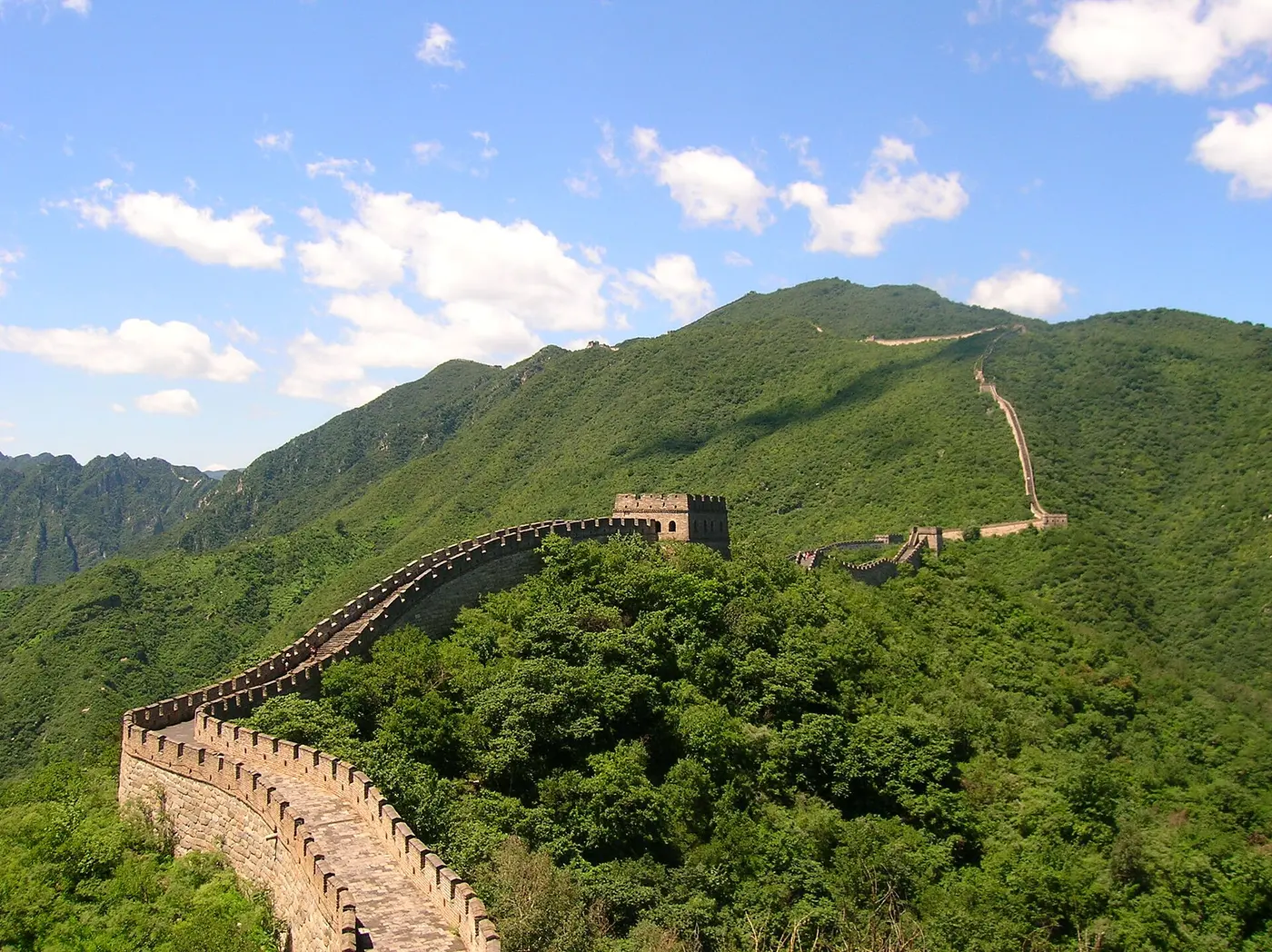

The brick ramparts and watchtowers that come to mind when we hear “the Great Wall” were, for the most part, built under the Ming, some 1,700 years after the First Emperor.
21,196 kilometers in all
So how long is the Great Wall altogether? China’s National Cultural Heritage Administration surveyed the remains of the wall across the country from 2007, and in 2012 it announced a combined length for the walls of all dynasties of 21,196.18 kilometers (13,171 miles). That spans 15 provinces, autonomous regions and municipalities, and is more than half the circumference of the Earth. The Ming walls alone account for about 8,850 kilometers (5,500 miles).
From the 7th century BCE to the 17th century CE, more than 2,000 years: the Great Wall is a remarkably long-running building project, one that dynasty after dynasty built, linked and rebuilt to suit the needs of its own time.