What is the oldest company in the world?
Kongō Gumi, a temple builder in Osaka. Tradition says it began in 578 by helping build Shitennō-ji temple.
578
A business that has been going for 100 years is impressive enough. Handing the trade down from parent to child to grandchild, weathering economic booms and busts and wars, and keeping the name over the door all the while is no small feat.
So when was the longest-running company in the world born? Follow the trail, and it leads not to an ancient European city or a great Chinese merchant house, but to the streets of Osaka.
Temple carpenters since the age of Prince Shōtoku
The name that most often comes up as the world’s oldest company is Kongō Gumi, a builder of temples and shrines headquartered in the city of Osaka. It is said to have been founded in 578, during Japan’s Asuka period.
According to tradition, when Prince Shōtoku, the statesman revered as a founding patron of Japanese Buddhism, set out to build the temple Shitennō-ji, he invited three master craftsmen from Baekje, a kingdom on the Korean Peninsula. Kongō Gumi traces its line back to one of them, Kongō Shigemitsu, as its first head. The year 578 rests on records and oral tradition, but surveys by the Japanese credit research firms Teikoku Databank and Tokyo Shoko Research also treat Kongō Gumi as the oldest company in Japan.
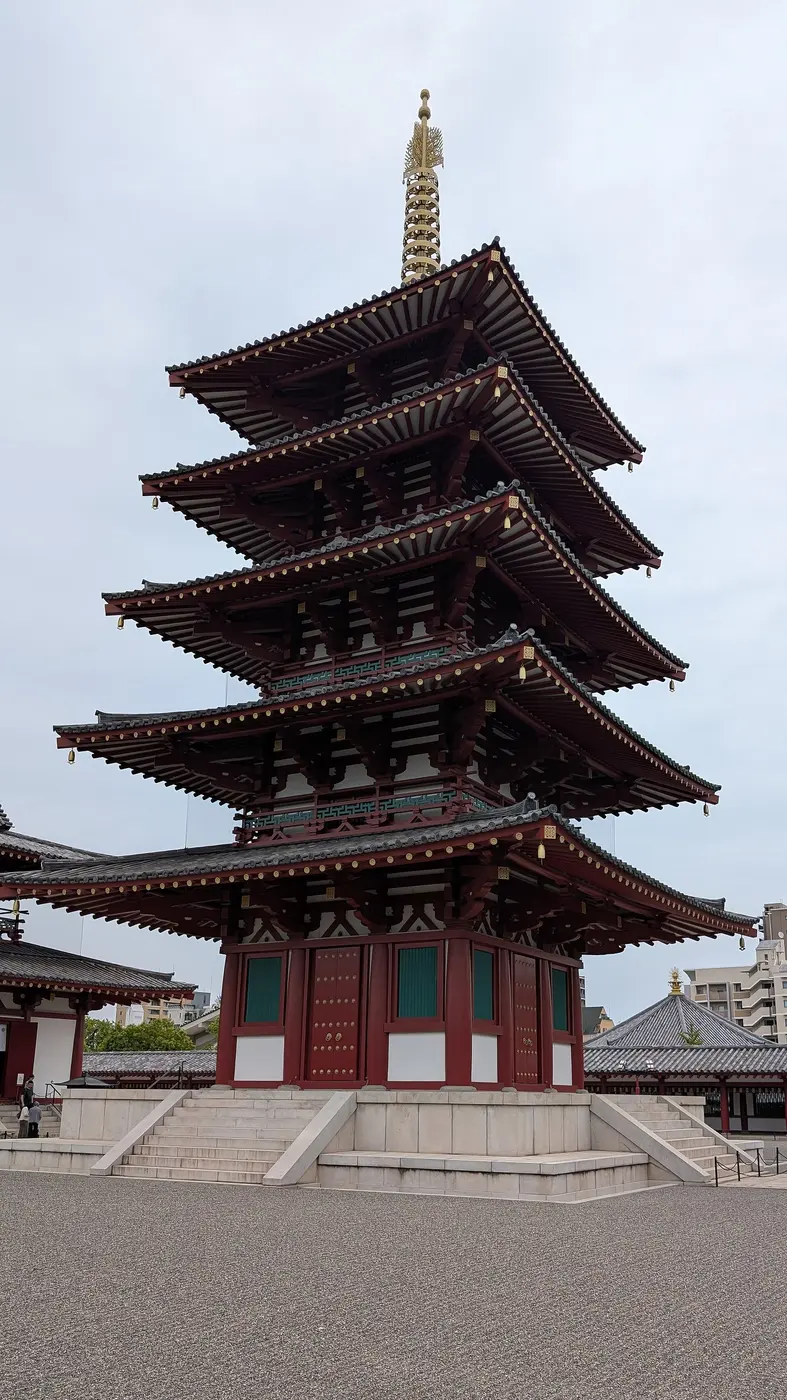

The year 578 was a time when Islam had not yet arisen and, in Europe, only about 100 years had passed since the fall of the Western Roman Empire. Work that began back then is still going on today, though in changing forms.
Fourteen hundred years alongside a temple
Right up to the early modern era, the master carpenters of the Kongō family served Shitennō-ji as its retained temple builders, looking after the temple generation after generation. Shitennō-ji was burned or toppled many times by lightning, war and typhoons, and each time it was the Kongō family who helped rebuild it. They are said to have received a stipend from the temple until its lands were confiscated after the Meiji Restoration of 1868.
One reason often given for the family’s remarkable longevity is the way it chose successors. Because a master carpenter needed both the skill and the leadership to direct a team of craftsmen, it is said that even an eldest son would be passed over if he wasn’t up to the job, and that a talented carpenter was sometimes adopted into the family instead. In the late Edo period (1603–1868), the 32nd head, Kongō Yoshisada, left a testament setting down the principles of a craftsman’s household, among them never neglecting practice in reading, writing and the abacus, and always giving honest estimates.
One brush with extinction after another
Of course, more than 1,400 years of history was not all smooth sailing. In the early years of the Shōwa era (1926–1989), the business ran into serious trouble, and in a tragic turn, the 37th master carpenter took his own life at his ancestors’ grave. His wife, Yoshie, took over, becoming Kongō Gumi’s first female head. When the Muroto Typhoon of 1934 brought down Shitennō-ji’s five-story pagoda, Kongō Gumi rebuilt it under her leadership, completing the work in 1940.
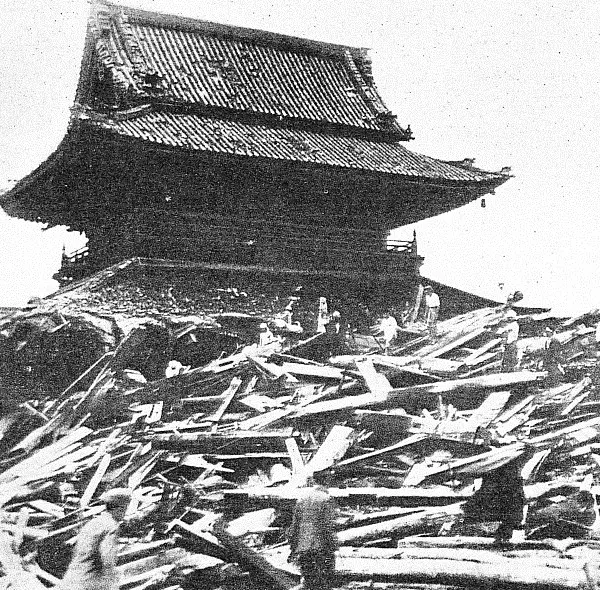

After World War II, the business became a joint-stock company and took on reinforced-concrete temple construction as well. But after Japan’s economic bubble burst in the early 1990s, its debts ballooned and it ran into trouble once again. In 2005, the Osaka builder Takamatsu Construction stepped in, setting up a new company to take it over, and in 2006 the business and its temple carpenters were transferred to it.
The old company was liquidated, but the Kongō Gumi name and its craft live on today as part of the Takamatsu Construction Group. If you are strict about the continuity of the legal entity, there is room for debate. Still, the fact that the same work has carried on under the same name for more than 1,400 years is nothing short of astonishing.
Japan, land of old businesses
Kongō Gumi is not a lone exception. According to Teikoku Databank, more than 45,000 Japanese companies had been in business for over 100 years as of 2024. There are even a handful of companies said to have histories stretching back more than 1,000 years.
The reasons commonly given for Japan’s wealth of long-lived businesses include the fact that its society was rarely uprooted wholesale by foreign rule or changes of dynasty, and the custom of carrying on the family line and its business, even by adopting an heir rather than insisting on blood ties. Kongō Gumi’s story may be the example that shows this “staying power” on the longest possible scale.