Is your earwax type decided by your genes?
Yes. A single-letter difference in one gene decides whether your earwax is dry and flaky or wet and sticky.
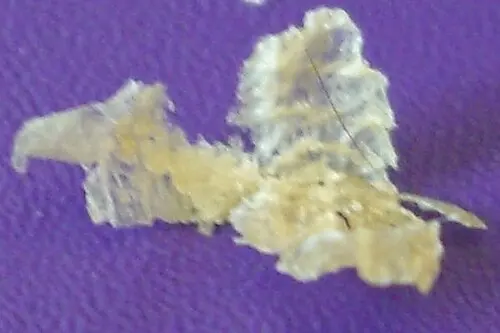
For some people, earwax comes out as dry, papery flakes. For others, it is moist and sticky and clings to a cotton swab. In Japan the dry type is the majority, and the wet kind is sometimes jokingly called ame-mimi, literally “candy ears.”
The difference has nothing to do with lifestyle or how often you clean your ears. It is inherited, written into your genes from birth. And what decides it is a difference of just one letter in an enormous genetic code.
One letter makes the difference
In 2006, a research group led by Koh-ichiro Yoshiura and Norio Niikawa of Nagasaki University in Japan reported in the journal Nature Genetics that they had found the gene that determines earwax type.
The gene is ABCC11, on chromosome 16. It carries the instructions for a protein that works like a pump, carrying substances out of cells. At position 538 of this gene, a person has either a G (guanine) or an A (adenine), and that one-letter difference splits earwax into two types.
We inherit one copy of each gene from each parent. People with A from both parents, the AA type, have dry earwax, while those with at least one G, GA or GG, have wet earwax. The researchers also found that cells carrying the A version are less good at pumping substances out. They described it as the first example of a single-letter DNA difference shown to determine a visible human trait.

Wet is dominant
In genetic terms, wet earwax is dominant and dry earwax is recessive. So if both parents have dry earwax, their children will too. But if both parents have wet earwax and both are GA, each child has a one-in-four chance of having dry earwax.
A map of earwax
Across the world as a whole, wet earwax is actually the majority. Dry earwax is common among East Asian people, while nearly everyone of African or European descent has the wet type.
Data from the 1000 Genomes Project, an international genetics study, show that the AA type, which gives dry earwax, was found in about 94 percent of Han Chinese people sampled in Beijing and about 78 percent of Japanese people sampled in Tokyo, compared with about 1 percent of people in Britain and none of the Yoruba people sampled in Nigeria (each sample was around 100 people).
In the same data, about nine in ten of the Tokyo participants with wet earwax were GA. So in Japan, it is not at all unusual for two parents with wet earwax to have a child with dry earwax.
The 2006 study also found that the A version is most common among Chinese and Korean people and becomes rarer the farther you go from there. The researchers concluded that the dry-earwax variant arose in northeast Asia and spread around the world as people migrated. A tiny flake from your ear carries a trace of humanity’s travels.

More than earwax
ABCC11 does more than shape earwax. It is also involved in apocrine sweat glands, such as those in the armpits, and people with wet earwax tend to have stronger underarm odor. The moistness of wet earwax itself comes from glands in the ear canal that are a modified kind of sweat gland.
Earwax, by the way, is not just dirt. It protects the skin of the ear canal and helps guard against bacteria and fungi. The skin of the ear canal slowly migrates outward, carrying earwax out with it. Pushing a cotton swab deep into your ear can actually shove earwax farther in, so there is no need to overdo the cleaning.