Why does an ambulance siren change pitch as it passes?
An approaching siren’s sound waves bunch up and sound higher; as it recedes, they stretch out and sound lower.
“Pee-poh, pee-poh” is how Japanese people imitate an ambulance siren. A siren approaching from the distance drops to a lower pitch the instant it passes you. The people inside the ambulance hear the same pitch the whole time, yet to us at the roadside it shifts from high to low. Have you ever wondered why?
This is called the Doppler effect, named after the 19th-century Austrian physicist Christian Doppler.
Sound waves that bunch up and stretch out
Sound is vibration in the air, traveling as waves. The shorter the distance between one wave crest and the next, in other words the more waves reach our ears each second, the higher the sound we hear.
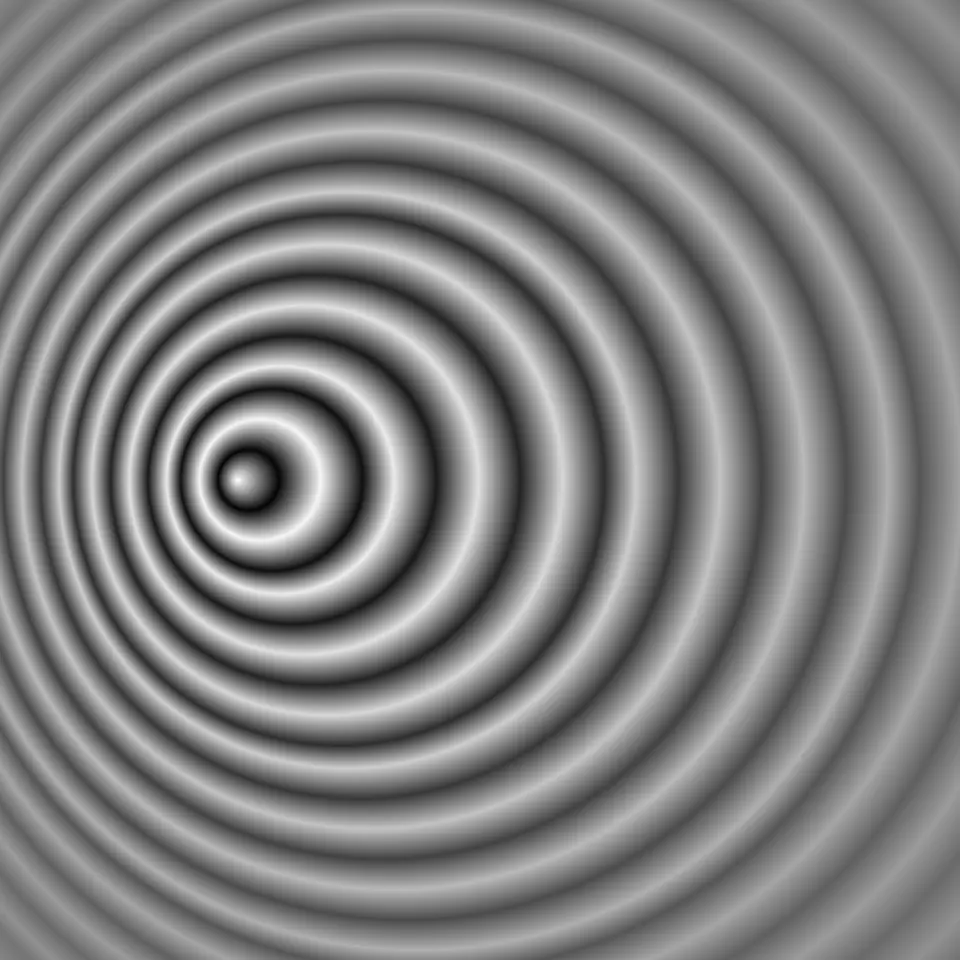
From a siren standing still, sound waves spread out evenly in all directions. But when the siren moves while sounding, then in front of it, by the time it sends out the next wave it has already moved forward a little, so the waves are squeezed closer together and sound higher. Behind it, the waves are stretched apart and sound lower.
Sound travels through air at about 340 meters per second. For an ambulance driving at 60 kilometers per hour (about 17 meters per second, or roughly 37 miles per hour), the math says the siren sounds about 5 percent higher than its true pitch as it approaches and about 5 percent lower as it moves away. As it passes, the pitch drops by a little less than a whole step, the gap between do and re.

It was originally about the colors of stars
Doppler presented his idea in 1842, at the Royal Bohemian Society of Sciences in Prague. Only five regular members are said to have been in the audience. His paper was titled “On the Colored Light of the Binary Stars and Some Other Stars of the Heavens.” What he was trying to explain was not sound at all but the color of starlight. Light from a star moving toward us, he reasoned, should have its waves squeezed together and look bluish, while light from a star moving away should look reddish.
As an explanation for differences in star colors, the idea was wrong: stars don’t move fast enough to shift their overall color by a visible amount. But the underlying principle, that the frequency of waves from a moving source changes, was correct.
Musicians on a train
The person who set out to test the theory with sound was the Dutch meteorologist Buys Ballot. In 1845, he carried out an unusual experiment on the railway line between Utrecht and Maarssen.
He put brass players on an open railway car, sent the train along the track, and had them hold a steady note. Beside the track stood musicians who could identify pitches by ear, listening to how the note sounded as the train went by. The first attempt, in February, was spoiled by hail and snow, and the experiment is said to have been repeated in June. The result: the approaching note sounded about a half step higher, and the receding note about a half step lower.
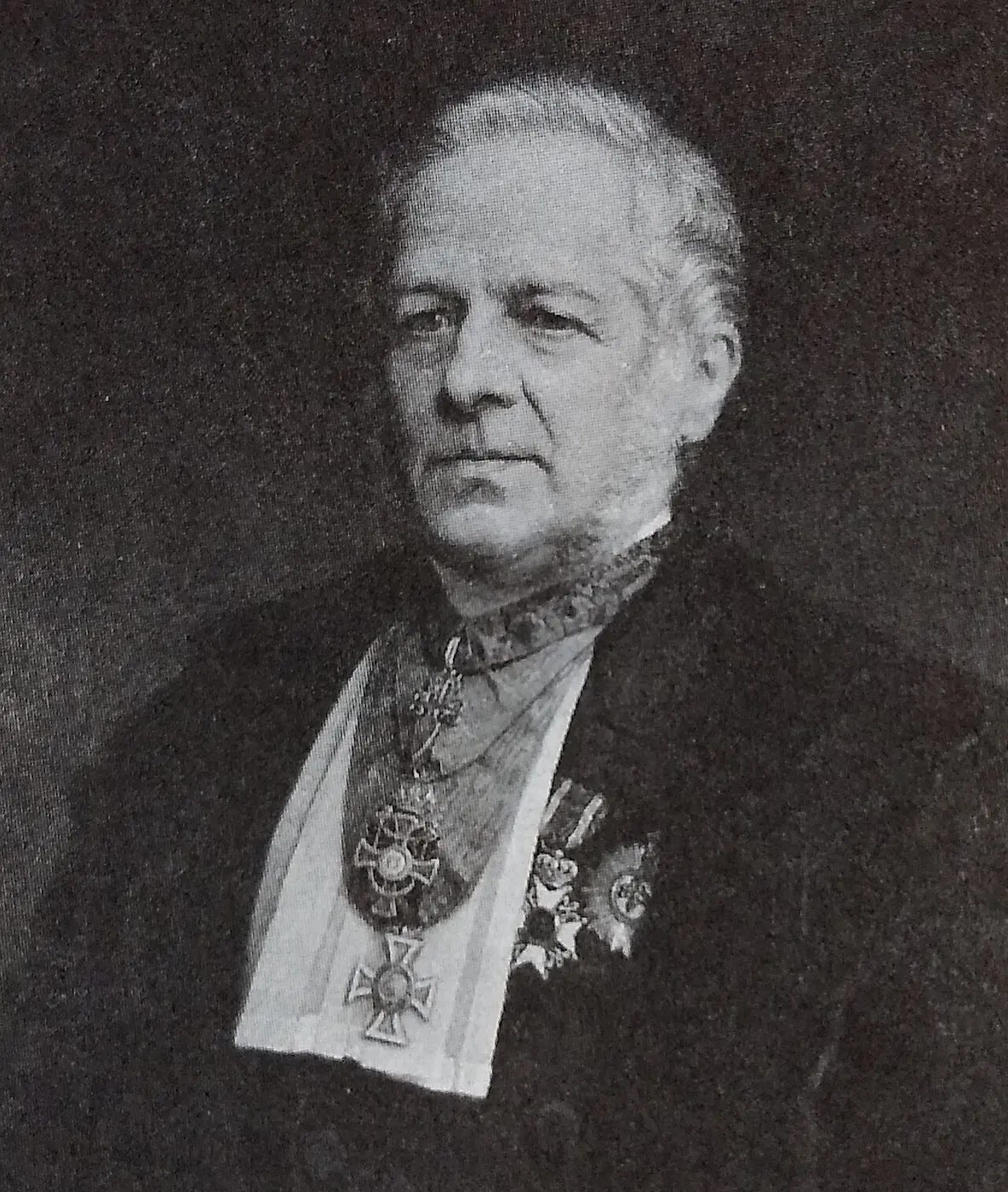

Interestingly, Buys Ballot had originally doubted Doppler’s theory. Even after it was confirmed with sound, he is said to have been reluctant to accept that light could change color.
From an expanding universe to the weather forecast
The Doppler effect happens with light too. Light from something moving away shifts toward the longer-wavelength, red end of the spectrum, which is known as redshift. In the 1920s, the American astronomer Edwin Hubble and others found that the farther away a galaxy is, the more its light is shifted toward red, meaning that it appears to be receding faster. This became a major clue that the universe is expanding.
Closer to home, the Doppler effect is used in police speed guns, in weather radar that tracks the movement of rain and wind, and in ultrasound scans that examine blood flow. The changing pitch of an ambulance siren works on the same principle as a way of measuring the expanding universe.