Why do we see lightning before we hear thunder?
Light covers about 300,000 kilometers a second, sound only about 340 meters. Light is roughly 880,000 times faster.
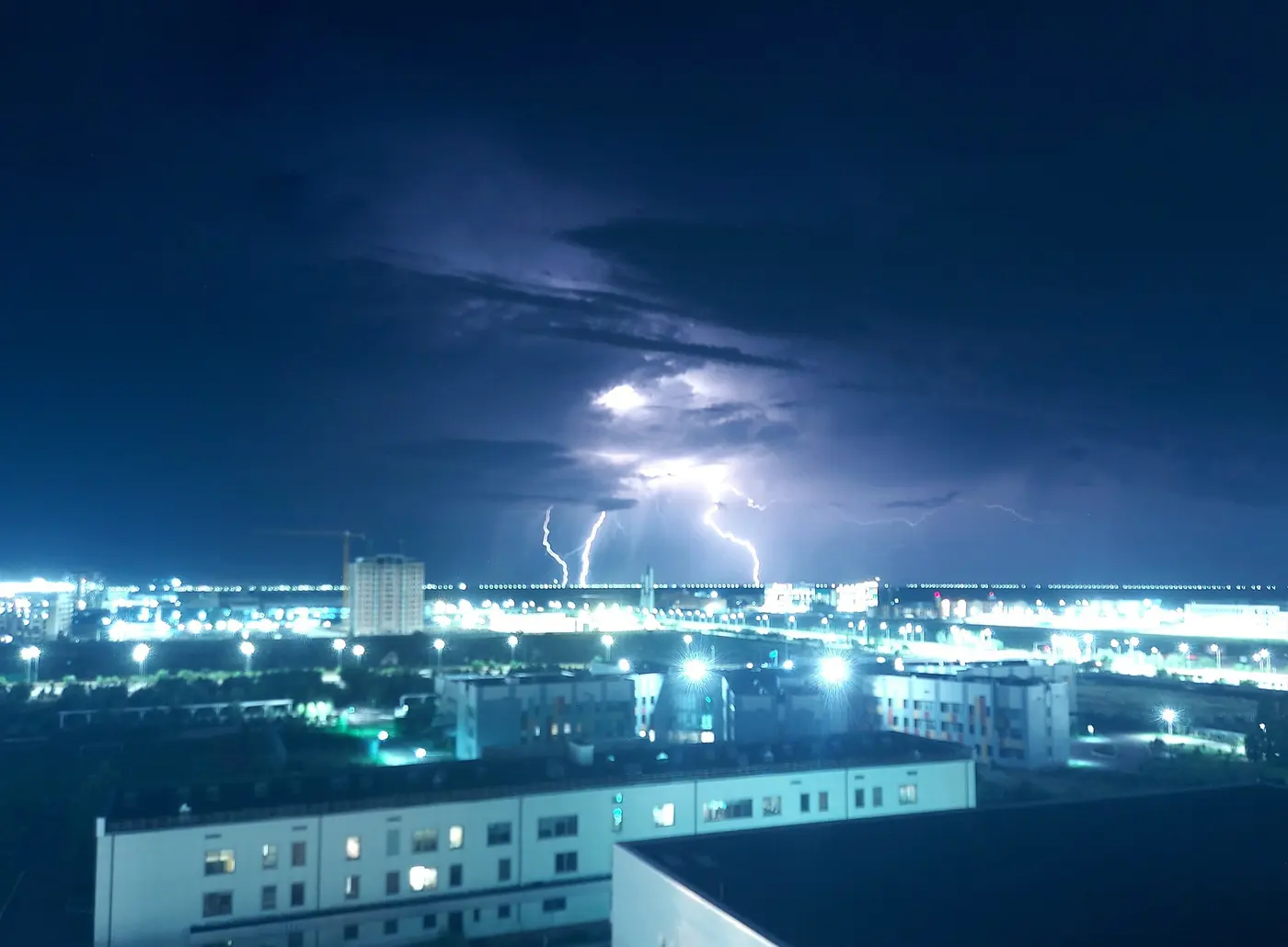
On a summer evening, the distant sky flashes. One, two, three… and a moment later comes the rumble of thunder. Most of us know from experience that lightning and thunder arrive out of step.
Yet the light and the sound are created at the very same moment, in the very same place, as the bolt strikes. Even so, they reach us separately. The difference comes down to how fast each one travels.
A speed gap of 880,000 times
Light travels about 300,000 kilometers (186,000 miles) every second, fast enough to circle the Earth seven and a half times. Sound in air, by contrast, travels about 340 meters (1,100 feet) per second. Light is roughly 880,000 times faster.
Suppose lightning strikes 10 kilometers (6 miles) away. Its light covers that distance in about 1/30,000 of a second, which to us is the same as instantly. The sound, though, takes almost 30 seconds. The gap between flash and thunder is, in effect, the time the sound spends traveling.
That gap tells you roughly how far away the lightning is. Multiply the number of seconds between flash and thunder by 340 and you have the distance in meters. Three seconds means about one kilometer; in miles, count about five seconds per mile.
You can see the same thing with fireworks. Watch from a distance and the burst blooms in the sky first, with the boom arriving a beat later.

The speed of sound depends on temperature
That figure of 340 meters per second is only approximate. Sound is a wave passed along as air molecules jostle one another, so it travels faster in warm air, where the molecules move more energetically. In dry air, sound travels at about 331 meters per second at 0°C (32°F) and about 343 meters per second at 20°C (68°F), speeding up by roughly 0.6 meters per second for each degree Celsius.
The speed of light barely changes, so over the same distance, the gap between flash and thunder works out very slightly shorter in summer than in winter.
Using the gap to measure sound
For early scientists, the delay between a flash and its sound was a perfect tool for measuring the speed of sound. In 17th-century France, the friar Marin Mersenne and others tried timing the interval between a cannon’s flash and the arrival of its boom.
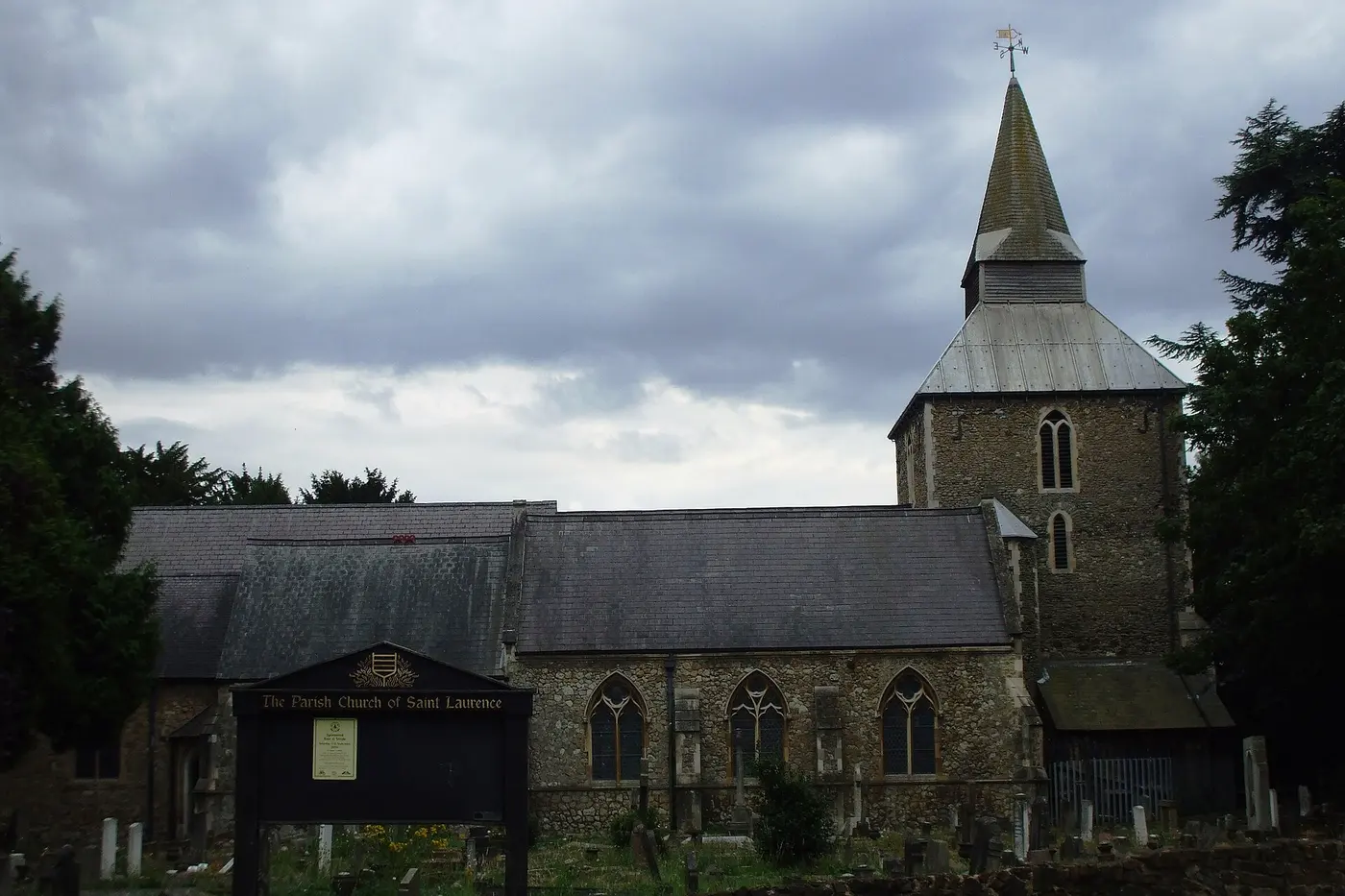
In 1709 the English clergyman William Derham climbed the tower of his own church, watched for the flash of a distant gun through a telescope, and timed the arrival of the bang with a pendulum. His result works out to about 348 meters per second.

Then in 1738, the Paris Academy of Sciences staged a large experiment, firing cannons at night and timing the gap between flash and report. It found that with no wind, sound travels at 332 meters per second at 0°C, within 1 percent of today’s accepted value. The same flash-then-bang delay we notice in thunderstorms became a key to understanding sound itself.
Lightning without thunder
Sometimes lightning flickers on the horizon and no thunder ever comes. In English this is called heat lightning, and it has sometimes been taken for a special, silent kind of lightning produced by summer heat. According to the US National Weather Service, though, it is simply the light from an ordinary thunderstorm too far away for its thunder to be heard.
Thunder can normally be heard only up to about 16 kilometers (10 miles) from a strike. As sound travels, it spreads out, weakens and is absorbed by the air. On top of that, the air near the ground is often warmer than the air above, so sound gets bent upward as it travels and passes over the heads of people on the ground. The flash, meanwhile, can be seen from more than 100 kilometers (60 miles) away when conditions are right. That is why the light reaches us while the sound does not.