How far can dandelion seeds fly?
Most land within a few meters of the parent, but with the right wind some are said to travel a kilometer or more.
100bristles
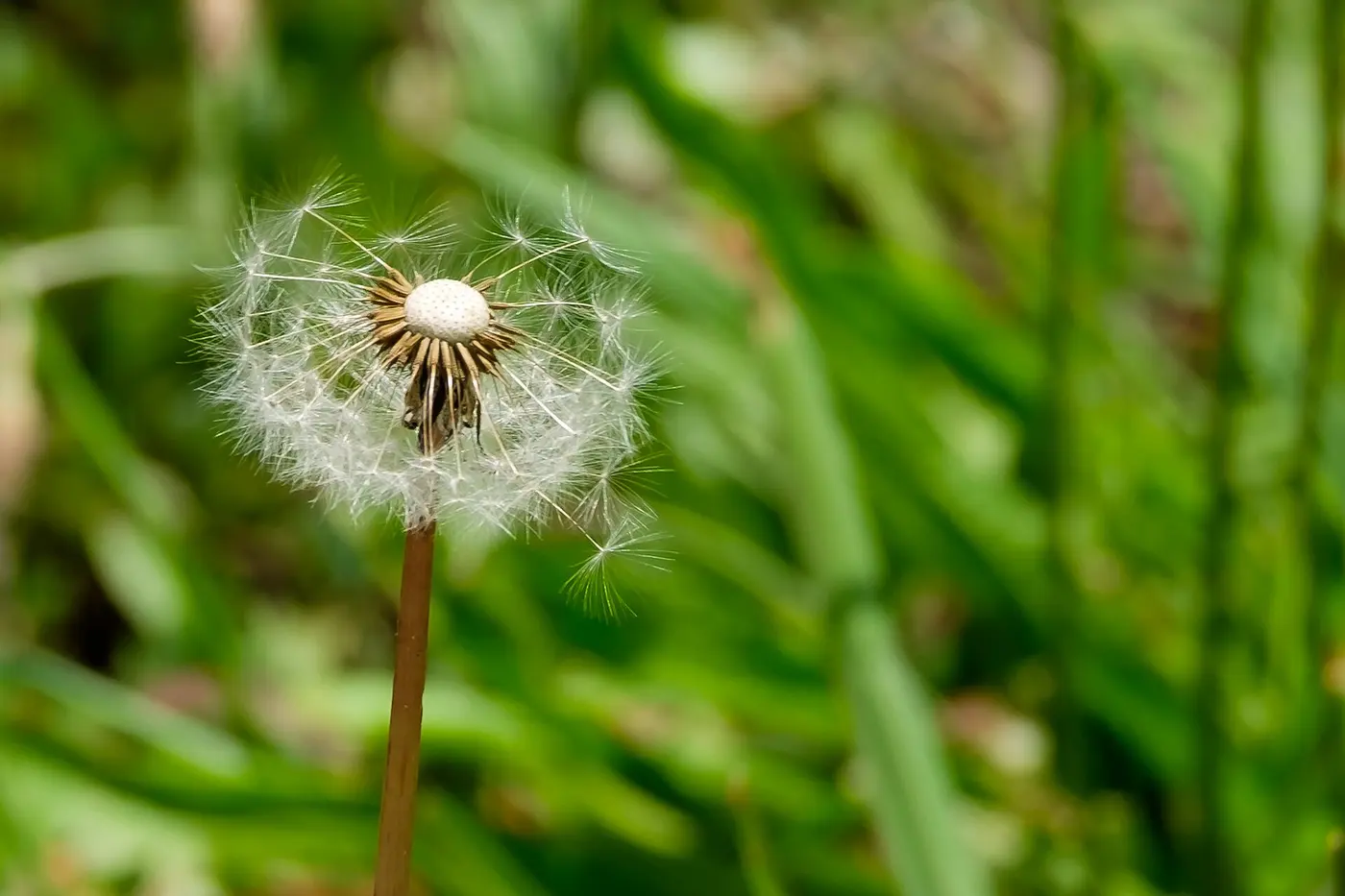
Come across a perfectly round dandelion seed head by the roadside in spring, and it is hard to resist picking it and blowing. The white fluff comes apart all at once and floats off, drifting on the breeze.
Many of us chased those drifting seeds with our eyes as children. So how far do they actually go? In recent years, physics has offered some new answers to this everyday question.
One parachute, one seed
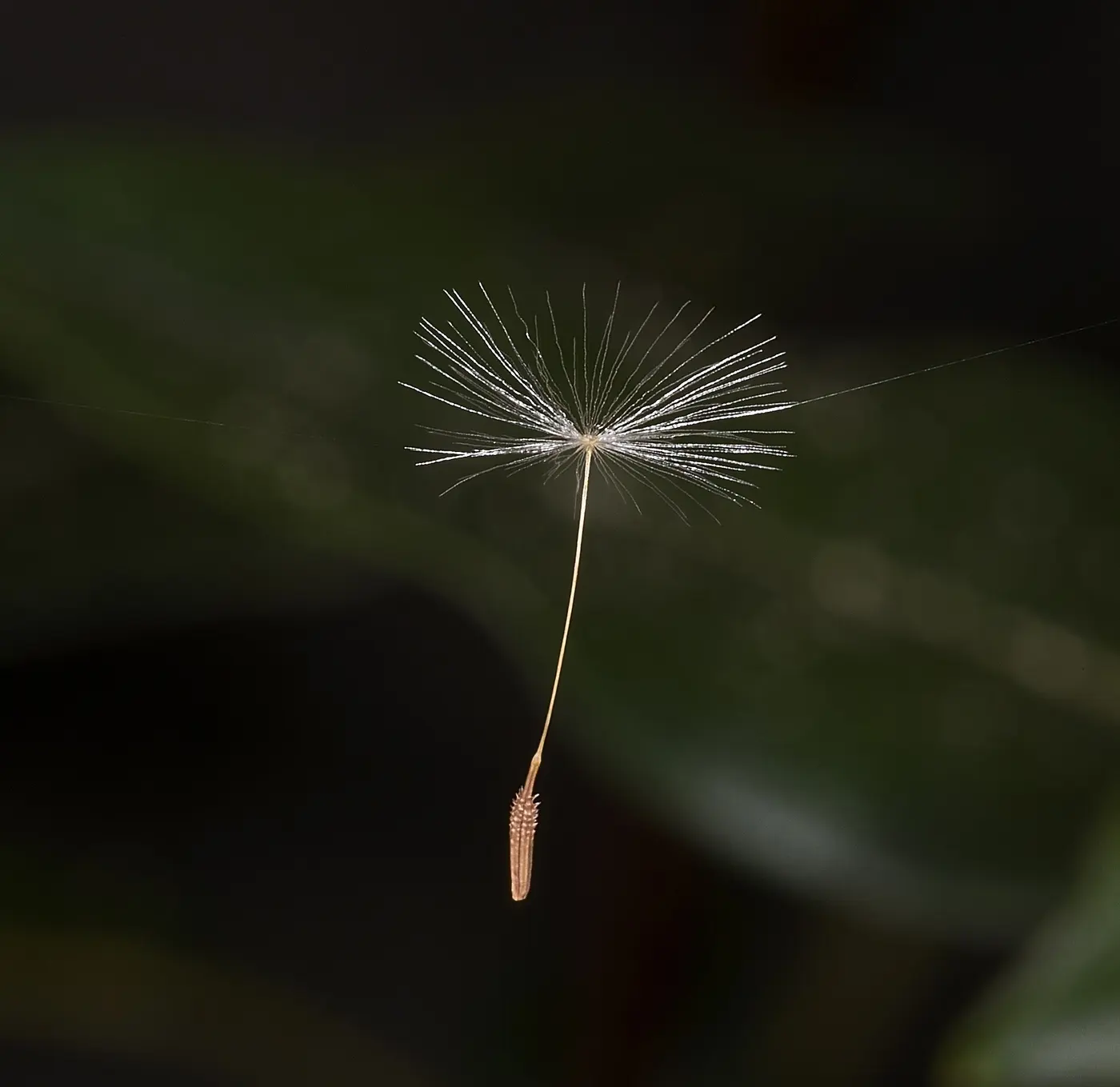
The round, fluffy ball is a collection of many tiny parachutes. Look at one up close and you will see a slender fruit (the seed) at the bottom, a thin stalk rising straight up from it, and an umbrella of fine hairs spreading out at the top.
That umbrella is called the pappus. It is made of about 100 fine bristles and is thought to be a modified form of the flower’s calyx, the ring of sepals at its base.

The pappus, though, is nothing like the fabric of a parachute. It is full of gaps between the bristles; by some accounts, about 90 percent of it is empty space. How can such a flimsy, see-through umbrella keep a seed aloft?
A ring of air holds the seed up
The puzzle was solved by a research team at the University of Edinburgh in Scotland. Cathal Cummins, Naomi Nakayama and their colleagues made the airflow around dandelion seeds visible and published their results in the journal Nature in 2018.
They found a doughnut-shaped vortex of air forming above the pappus. Normally, the vortex behind a disk stays attached to it, but the dandelion’s vortex floats a short distance away from the bristles. Because air passes through the gaps between the bristles, the vortex stays detached from the pappus yet remains stable. The team named it a “separated vortex ring.” When they made small artificial disks with gaps of different sizes and compared them, a disk with gaps similar to a real pappus produced the same kind of vortex.
The spacing of the bristles appears to be finely tuned to keep this vortex stable. According to the researchers’ announcement, this way of flying is four times more efficient than what is possible with conventional parachute design. Using very little material, the seed falls slowly and for a long time. That is the trick the dandelion has mastered.
Most stay close, a few go far
So how far do the seeds actually fly? In 2022, the same research group published results from 10,000 computer simulations of seed flights using British weather data.
With winds typical of dry weather, the median distance was 4.3 meters (14 feet). In other words, about half the seeds landed close to the parent plant. Even so, around 17.5 percent were carried more than 100 meters. In the simulations, a very few even traveled enormous distances. In reality, with the right conditions, seeds are said to be carried a kilometer (more than half a mile) or more.

The study also focused on how the seeds change shape with the weather. When fog or rain dampens them, the pappus closes up, so the seed falls faster and is less likely to break away from the parent plant. Damp days also tend to be less windy. Even assuming the pappus stayed open, simulations with damp-weather winds gave a median distance of just 1.5 meters, and only about 5.6 percent of seeds traveled beyond 100 meters. Dandelion seeds, it seems, wait for dry, breezy days to set off.