Is there a lake where the lightning never stops?
Yes: Lake Maracaibo in Venezuela, where lightning can flash for hours on end through the night.
233flashes
Lightning is usually something that comes and goes, like a summer cloudburst that rages for a while and then moves on. If thunder rumbled all night long, nobody would get any sleep.
But in Venezuela, in South America, there is a place where lightning starts flashing after dark and keeps going for hours. And it happens on a great many nights of the year. The phenomenon is called Catatumbo lightning, after a river that flows nearby.
The world’s lightning capital
The place is Lake Maracaibo, in northwestern Venezuela. It is one of the largest lakes in South America, and at its northern end a narrow channel connects it to a bay of the Caribbean Sea. The heart of the action is the southwestern part of the lake, where the Catatumbo River flows in.
In 2016, a research team led by NASA analyzed 16 years of data gathered by a lightning sensor aboard a satellite and published a ranking of the places on Earth with the most lightning. Lake Maracaibo came out on top, with an average of about 233 flashes per square kilometer per year. It took first place from Africa’s Congo Basin, which had long been considered the world leader. Guinness World Records also lists it as the place with the highest concentration of lightning.
How many nights a year the lightning appears depends on the source. Some put it at around 140 to 160 nights a year, while the NASA study found nighttime thunderstorms on an average of about 297 days a year, and Guinness World Records says “up to 300 nights a year.” Either way, lightning clearly flashes on a great many nights. Once it starts, it can flash anywhere from a dozen or so to several dozen times a minute and is said to go on for as long as nine hours.
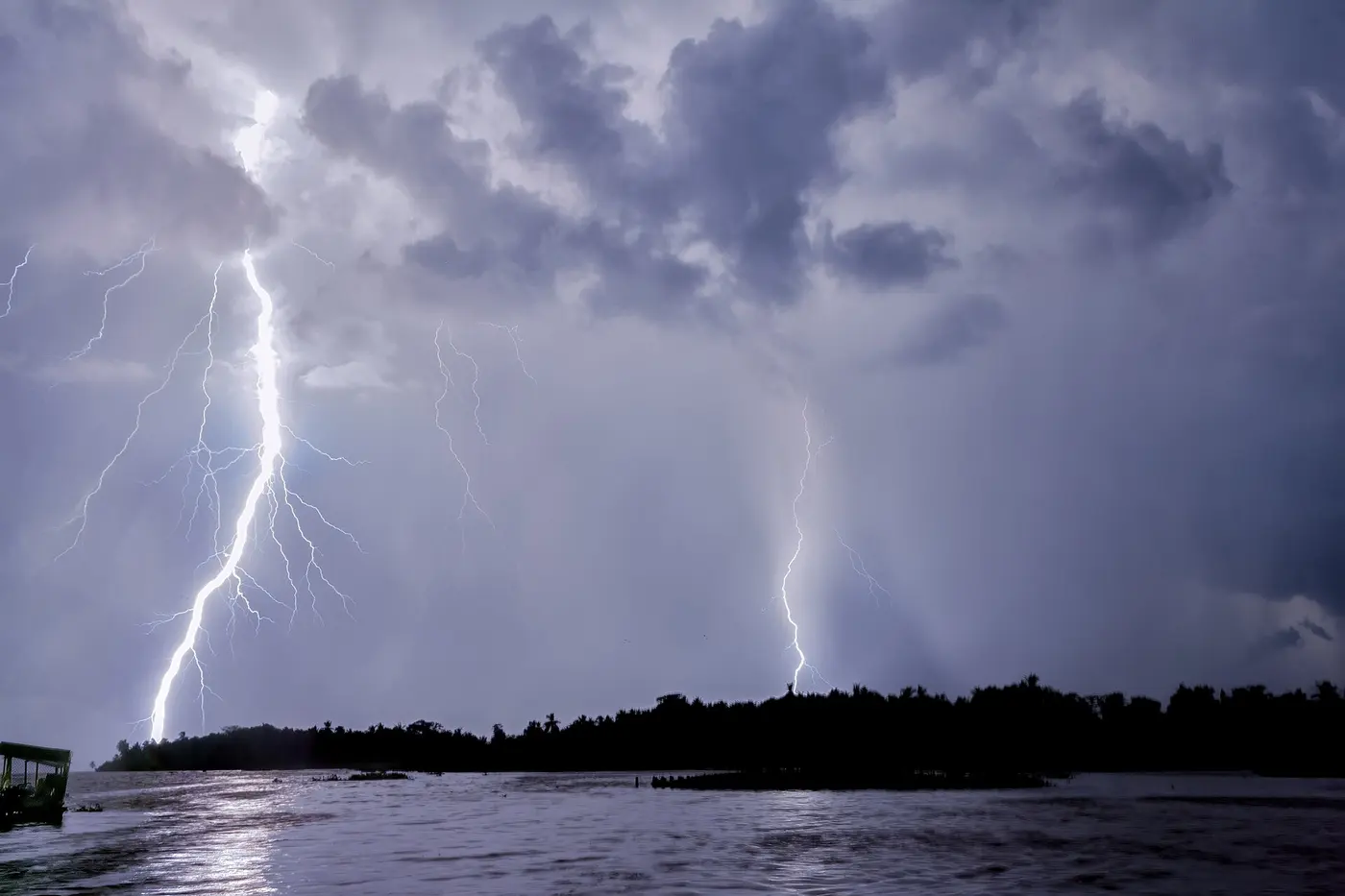

Mountain winds meet a steamy lake
Why does this lake get so much lightning? The key is the landscape.
Lake Maracaibo sits in a lowland squeezed between the Perijá Mountains to the west and the Mérida range, an extension of the Andes, to the southeast. During the day, the strong tropical sun beats down on the lake, sending up plenty of water vapor and building up a layer of warm, moist air over the water. At night, air cooled on the mountain slopes flows down toward the lake as mountain breezes. These winds collide over the lake and force the warm, moist air upward. In that rising air, towering thunderclouds grow and spawn lightning.
Over land, lightning usually peaks in the afternoon, after the ground has warmed up. The way Lake Maracaibo’s lightning concentrates at night is a signature of this particular pairing of mountains and lake.
There was once a theory that methane rising from the surrounding wetlands and oil fields set off the lightning. But it doesn’t fit well with the way the lightning rises and falls with the seasons, among other things, and it has since been rejected. The lightning does seem to respond to large-scale swings in climate, however: in 2010, apparently because of a drought linked to El Niño, it all but stopped from January to March.
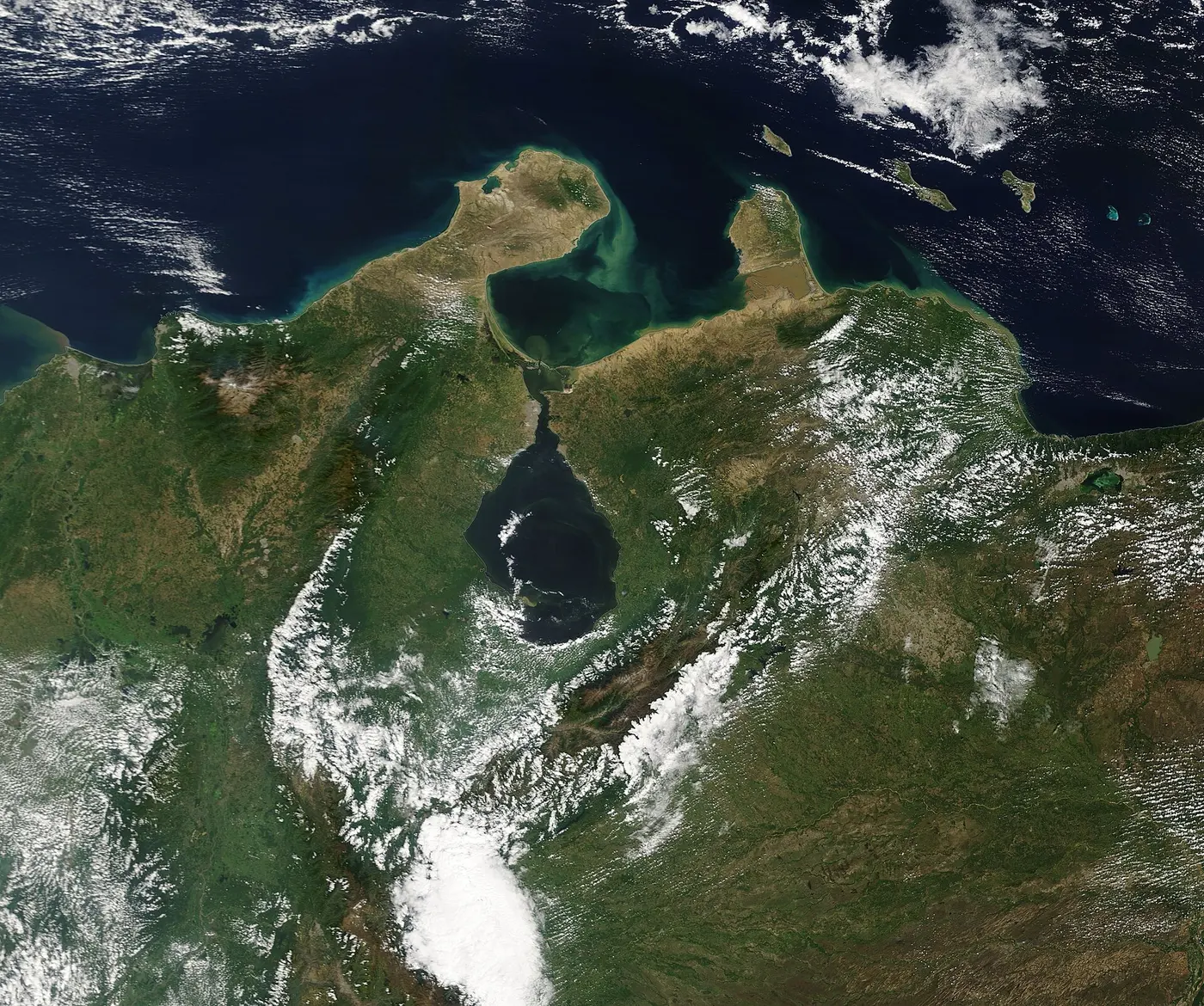

A “lighthouse” for sailors
Even from so far away that no thunder can be heard, the flashes are clearly visible. So for a long time, the lightning has served sailors as a landmark in the night. It has even been called the “Lighthouse of Maracaibo.”
In 1841, Agustín Codazzi, an Italian-born geographer who worked in Venezuela in the 19th century, described the light as being like continuous lightning and wrote that it guided navigators like a lighthouse.
A popular legend, however, should be taken with caution. The story goes that in the 16th century, the Englishman Francis Drake tried to launch a night attack but was spotted when the lightning lit up his ships. Scholars point out that this comes from a misreading of a passage in an epic poem by the Spanish playwright Lope de Vega. The original scene, they say, describes the 1595 attack on San Juan, Puerto Rico, and the light in the night sky was the glow of burning ships.