Was the can opener invented after the can?
Yes. Cans were patented in 1810, but dedicated can openers only appeared in the 1850s, nearly 50 years later.
Cans and can openers seem like a natural pair. Yet the two were born far apart. From the invention of canned food to the arrival of the first dedicated can opener took roughly half a century.
So why sell canned food if there was nothing to open it with? The answer turns out to involve a surprising amount of brute force.
Canned food was born in Napoleon’s era
The technology of preserving food was closely tied to war. In 1795, France offered a prize of 12,000 francs for a new way to preserve food for its armies on campaign. Among those who took up the challenge was Nicolas Appert, a confectioner in Paris. By sealing food in glass bottles, stopping them, and heating them in boiling water, he succeeded in keeping soups, vegetables, fruit and more for long periods. In 1810, Appert accepted 12,000 francs from the government on condition that he publish his method, and he did so in a book.
That same year, 1810, in Britain, Peter Durand obtained a patent for a preservation method that used containers of tinplate (iron coated with tin) instead of glass bottles. Compared with heavy, fragile glass, metal cans were tough and easy to carry. Bryan Donkin and John Hall bought the patent, built a canning factory in London, and from around 1813 began supplying canned food to the Royal Navy and others.
“Cut round the top with a chisel and hammer”
Early cans, however, were nothing like the ones we know. The iron was thick, and the can itself sometimes weighed more than the food inside. Naturally, there were no can openers. One can bore these instructions: “Cut round the top near the outer edge with a chisel and hammer.”
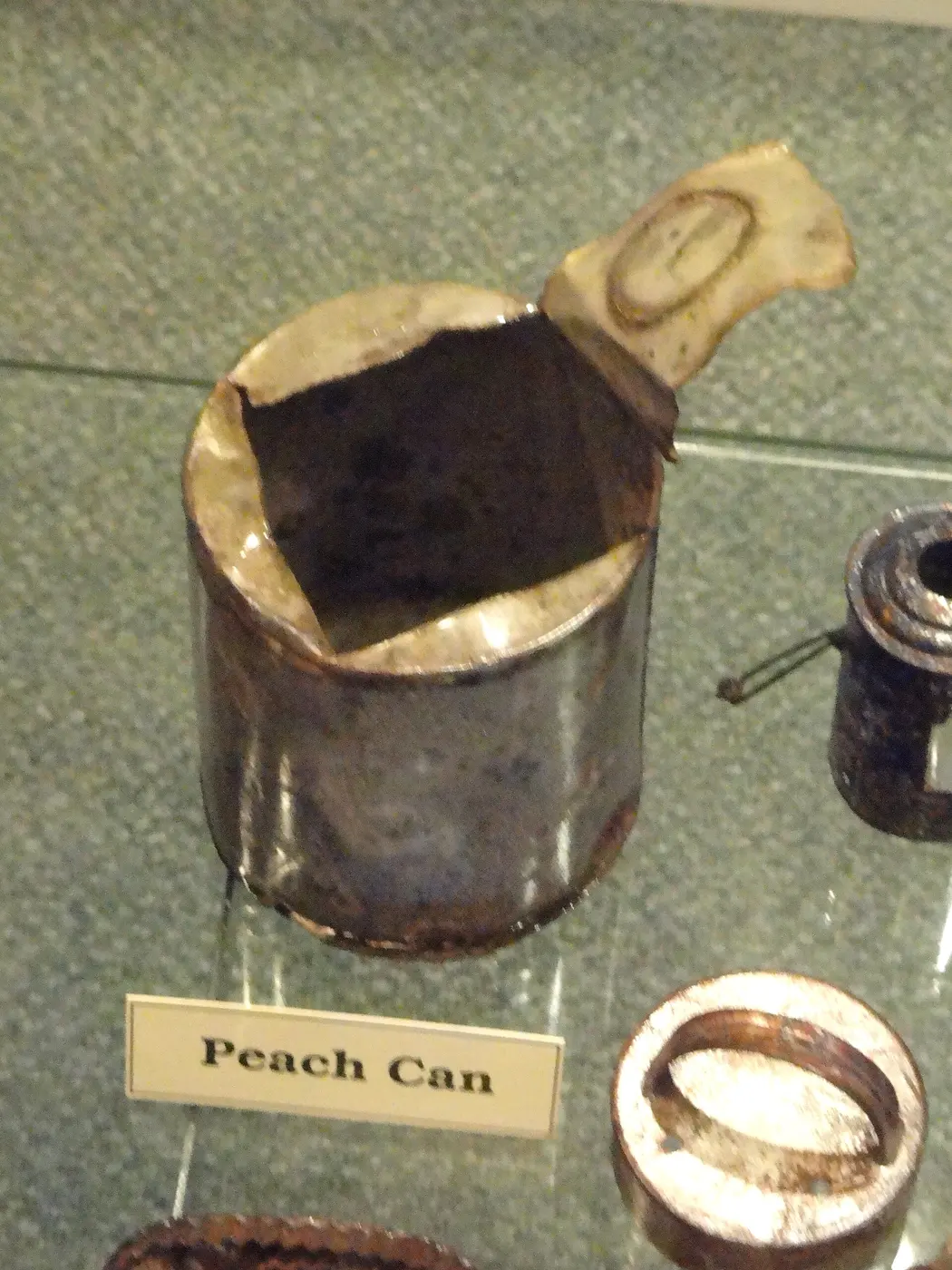

On the battlefield, soldiers stabbed cans open with knives and bayonets. During the War of 1812, British soldiers are said to have opened their cans with bayonets. At home, too, people had to make do with whatever blades or tools were at hand. Even so, no dedicated tool appeared for a long time. Because everyday tools could do the job, it is thought, there was little reason to bother developing a new one.
The can opener finally arrives
The change came from the can itself. In the 1850s, cans began to be made from thinner iron, making it practical to cut them open with a purpose-built tool.
In 1855, Robert Yeates, a London maker of cutlery and surgical instruments, devised a lever-style opener with a claw-shaped tip. In 1858, Ezra Warner of Connecticut patented an opener with a sickle-like blade that was jabbed into the can and worked around the rim. That was roughly half a century after canned food was born. Warner’s opener was used by the U.S. Army in the Civil War, but its exposed blade was dangerous and unsuited to the home.
A turning blade and a serrated wheel
The now familiar type, which runs a cutting wheel around the rim, began with a patent taken out by William Lyman of the United States in 1870. But you first had to punch a hole in the center of the can to fix its pivot, so it was not very convenient.
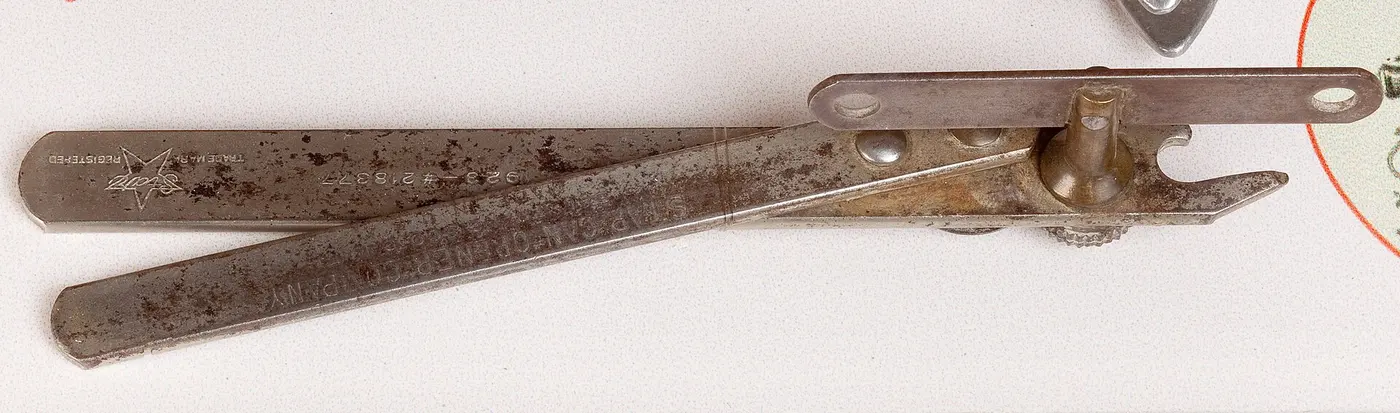

The breakthrough came in 1925. The Star Can Opener Company of San Francisco added a serrated wheel opposite the cutting wheel to grip the rim firmly. Thanks to this, you could open a can simply by turning a handle. Nearly a hundred years later, the same basic design lives on in many can openers.