What does “tanpo” mean in yutanpo, the Japanese hot-water bottle?
It comes from the Chinese tangpo, “hot-water wife.” Japanese later added its own word for hot water, yu, so the name says “hot water” twice.
On a freezing winter night, you slip under the covers and find your feet bathed in warmth. In Japan, the humble yutanpo, a hot-water bottle, has been doing that job for centuries. No electricity needed: fill it with hot water, and it gives off gentle heat for hours.
But what does the name mean? Yu is easy: it is the Japanese word for hot water. Tanpo, though, is a word you hardly hear anywhere else. It turns out to be a borrowing from Chinese, and a rather playful one.
Hot water, hot water, wife
In Chinese characters, yutanpo is written 湯湯婆. The first two characters are the same: both mean hot water.
According to the Nihon Kokugo Daijiten, Japan’s largest dictionary, tanpo was originally written 湯婆, with tan as the reading of 湯, “hot water,” and po as the reading of 婆. These are tōsō-on readings, later Chinese pronunciations of characters that reached Japan from around the middle of the Heian period, especially through Zen monks and merchants from the Kamakura period (1185–1333) onward. In other words, tanpo on its own already meant “hot-water vessel.”
Over time, though, tanpo seems to have spread simply as the name of the object, and people no longer thought of tan as meaning hot water. So the native Japanese word yu was added in front, giving yutanpo. The dictionary describes 湯湯婆 as tanpo with “hot water” stacked on top. Strictly speaking, the name says “hot-water hot-water wife.”
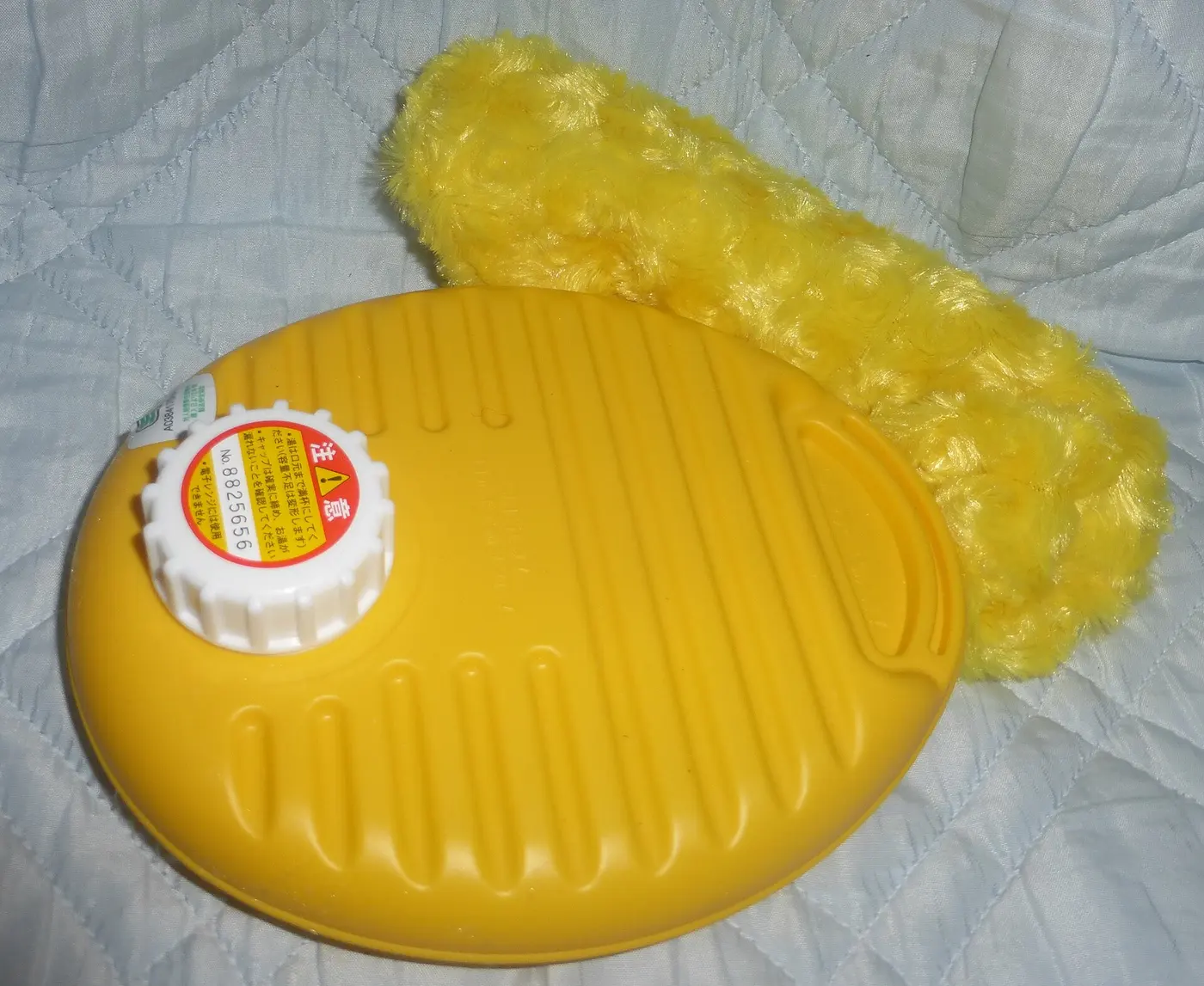

The “old woman” is a wife
Why 婆, a character that usually means “old woman” or “grandmother”? Because the bottle keeps you company in bed like a granny? Because its wavy surface looks wrinkled?
According to the Heibonsha World Encyclopedia, the Chinese name tangpozi meant “hot-water wife.” A thing you hug in bed to keep warm was jokingly compared to a spouse.
There was a summer counterpart, too. In China, people slept hugging a long, hollow basket of woven bamboo to stay cool, and from the Song dynasty it was popularly called the “bamboo lady,” zhufuren. The encyclopedia says its name was coined in exactly the same spirit. In winter you had a “hot-water wife,” in summer a “bamboo lady.” In English, a bamboo or rattan bolster like this is sometimes called a “Dutch wife.”
The Northern Song poet Huang Tingjian wrote a joking poem about a foot warmer he called jiaopo, “foot wife,” with a line that runs roughly, “I paid a fortune for a foot wife, and now I sleep soundly till dawn every night.”
In Japan by the 1400s
The hot-water wife appears in Japanese records in the Muromachi period (1336–1573). One early example cited by the Nihon Kokugo Daijiten comes from the diary of Kikō Daishuku, a Zen monk who had served as head of Tōfukuji temple in Kyoto. In an entry from 1486, he notes that a lay Buddhist lent him a tanpo. More than 500 years ago, it seems, a Zen monk was getting through the winter nights with a hot-water bottle.
Incidentally, in Kyoto and Osaka, a tube-shaped copper or brass vessel used to warm sake was also called a tanpo.
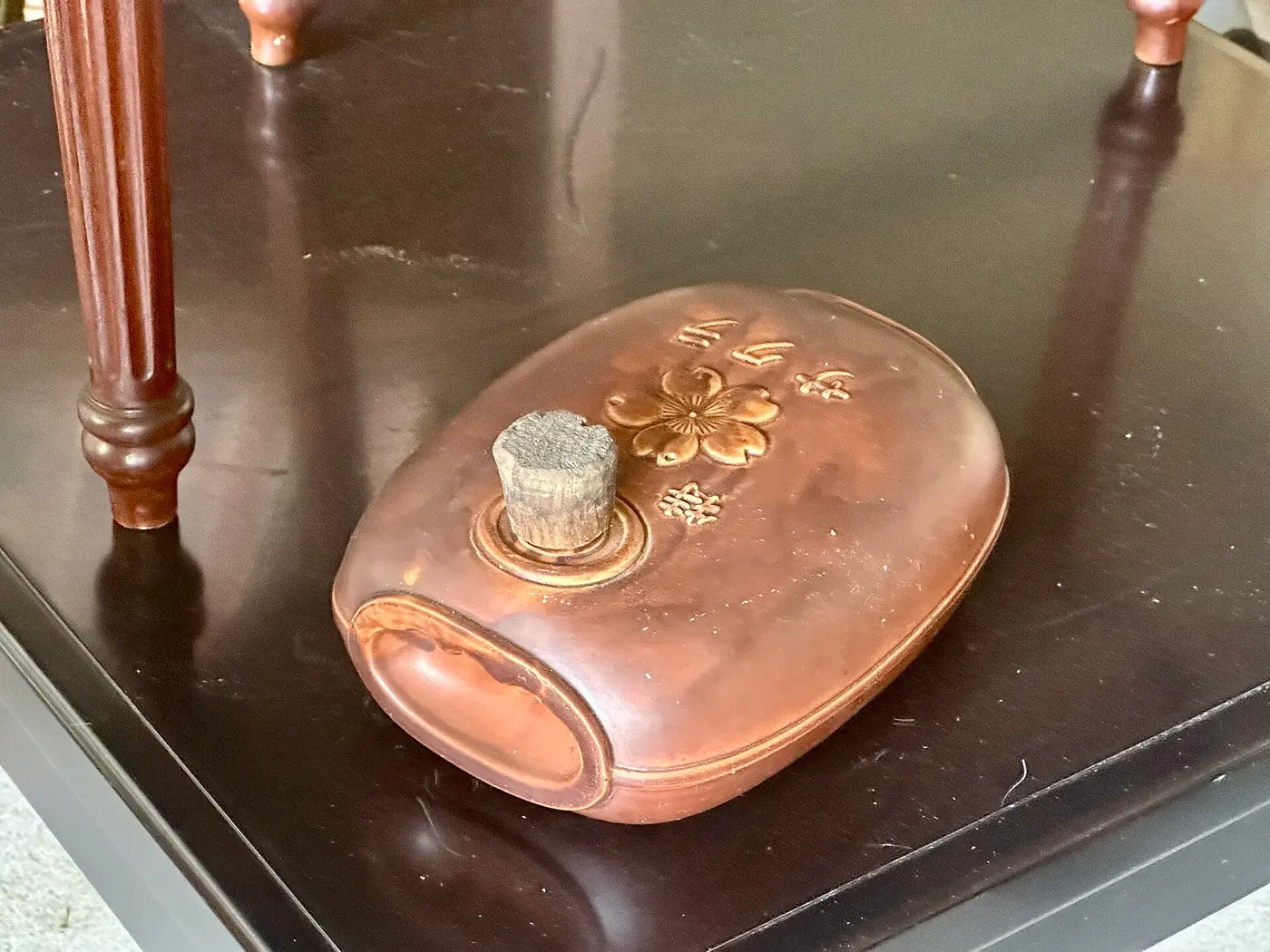

Beware of low-temperature burns
A hot-water bottle’s great virtue is its gentle, gradual warmth. But if it rests against the same spot on your body for a long time, it can cause a burn even when it does not feel very hot. The Nipponica encyclopedia warns that burns from hot-water bottles often reach deep into the tissue and are slow to heal.
Wrap a hot-water bottle in a cover or towel, and do not keep it pressed directly against your skin. The Heibonsha World Encyclopedia recommends placing it about 30 to 50 centimeters (12 to 20 inches) away from your feet when you put it in bed.