Was “aisatsu,” the Japanese word for greeting, once a Zen term?
Yes. Both of its characters mean “push,” and in Zen the word described monks pushing at each other in dialogue to test how deep their enlightenment went. In Japan it grew to cover replies, manners and greetings.
The ohayō of the morning, the sayōnara at parting, a guest’s speech at a wedding: in Japanese, all of these are aisatsu, greetings. It is one of the most common words in the language, yet its two characters, ai and satsu, hardly appear anywhere else.
Both characters originally meant “push.” In Chinese Zen Buddhism, the word made from them described the verbal pushing and shoving of a dialogue between monks. In Japan, it gradually spread to cover almost every kind of exchange between people.
A shoving match
The Digital Daijisen dictionary says the first character means “push” and the second “press.” The Nihon Kokugo Daijiten, Japan’s largest dictionary, says both mean to push, so together they mean “to push against each other.”
According to the character dictionary Jitsū by the scholar Shirakawa Shizuka, aisatsu first described a crowd pressing together. A Song-dynasty text, it notes, says that when the emperor climbed Mount Tai to perform the great sacrifice to heaven and earth, officials and commoners alike “aisatsu’d,” jostling one another. The Nihon Kokugo Daijiten likewise says that the Chinese word originally meant to push aside whatever was in front and step forward.
The “one push, one shove” of the Blue Cliff Record
Zen gave the word a very different setting. According to the Nihon Kokugo Daijiten, the phrase ichiai issatsu, “one push, one shove,” describes how a Zen master and a student, or two students, test each other’s depth of understanding through words and gestures when they meet.
Its source is the Blue Cliff Record, a collection compiled by the Song-dynasty Zen master Yuanwu Keqin (1063–1135). Completed in 1125, according to the Digital Daijisen, it adds Yuanwu’s commentary to 100 kōans, the stories of encounters between masters and students used in Zen training, chosen by the monk Xuedou Chongxian. It is considered the most important text of the Rinzai school of Zen.
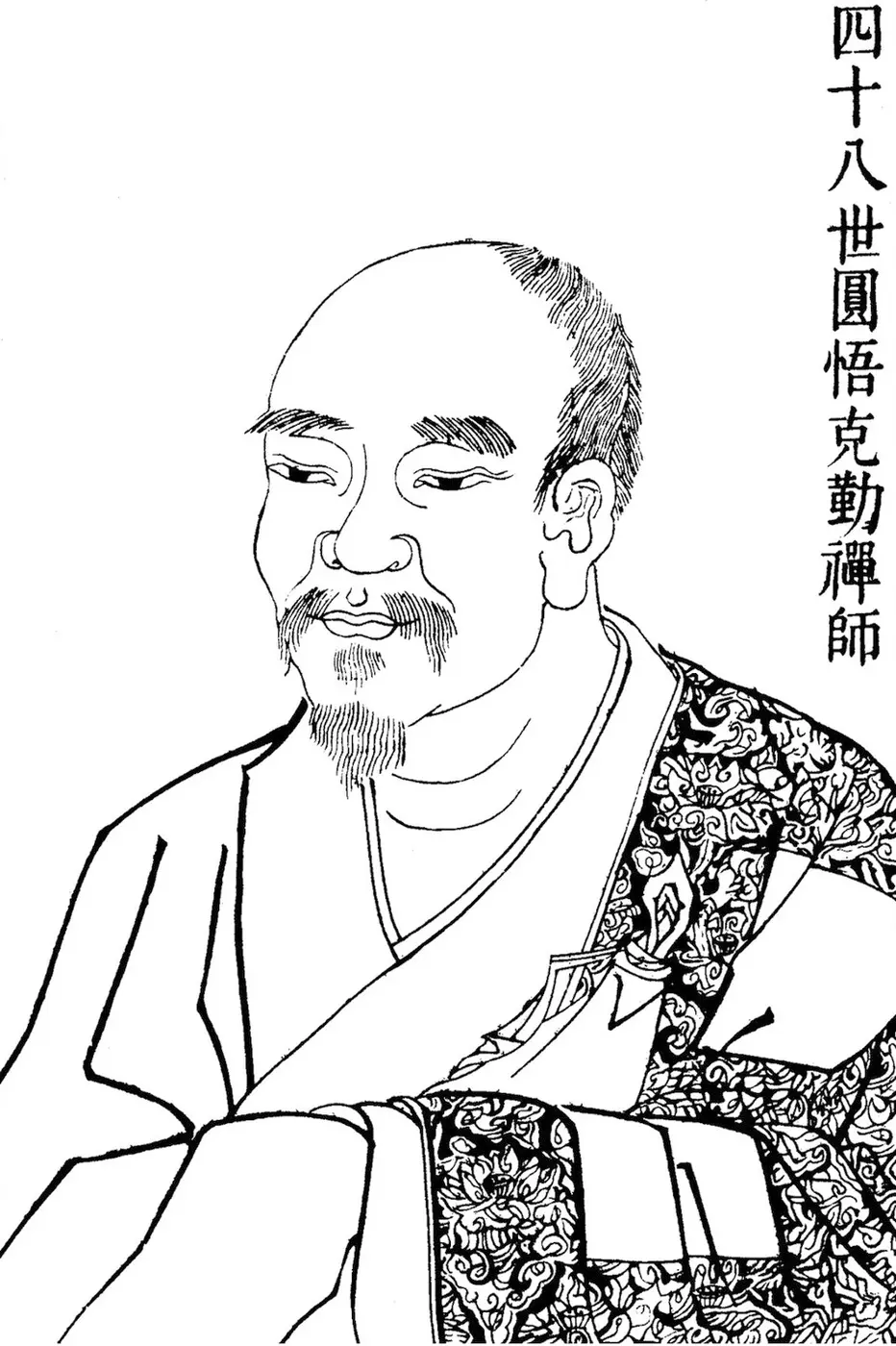

The introduction to Case 23 begins: “Jade is tested with fire, gold with a touchstone, a sword with a hair, water with a pole.” Among Zen monks, it continues, every word and phrase, every going out and coming in, every push and shove is a chance to see how deep or shallow someone is, and which way they are facing. So what will you test them with?
Case 49 shows what such a contest looked like. The monk Sansheng asked the master Xuefeng, “When a golden fish has broken through the net, what does it eat?” Xuefeng replied, “When you have got out of the net, I’ll tell you.” Sansheng pressed him: “The teacher of 1,500 monks, and you can’t even follow the question?” Xuefeng shrugged it off: “This old monk is busy running the temple.” Yuanwu comments that the two went in and out and pushed and shoved, yet neither had won. That is what aisatsu originally meant.
From replies to manners
According to the encyclopedia Britannica Kokusai Daihyakka Jiten, aisatsu came into Japanese as a Chinese loanword in the medieval period. The Nihon Kokugo Daijiten shows that a Japanese dictionary from the mid-Muromachi period (1336–1573) records it in its Zen sense.
In Japan, though, the word soon wandered out of the monastery. In the dictionary’s examples, the first new meaning is a reply, in a letter or in speech: a samurai of the Muromachi period complains in a letter that despite repeated requests he has had no aisatsu, no answer yes or no.
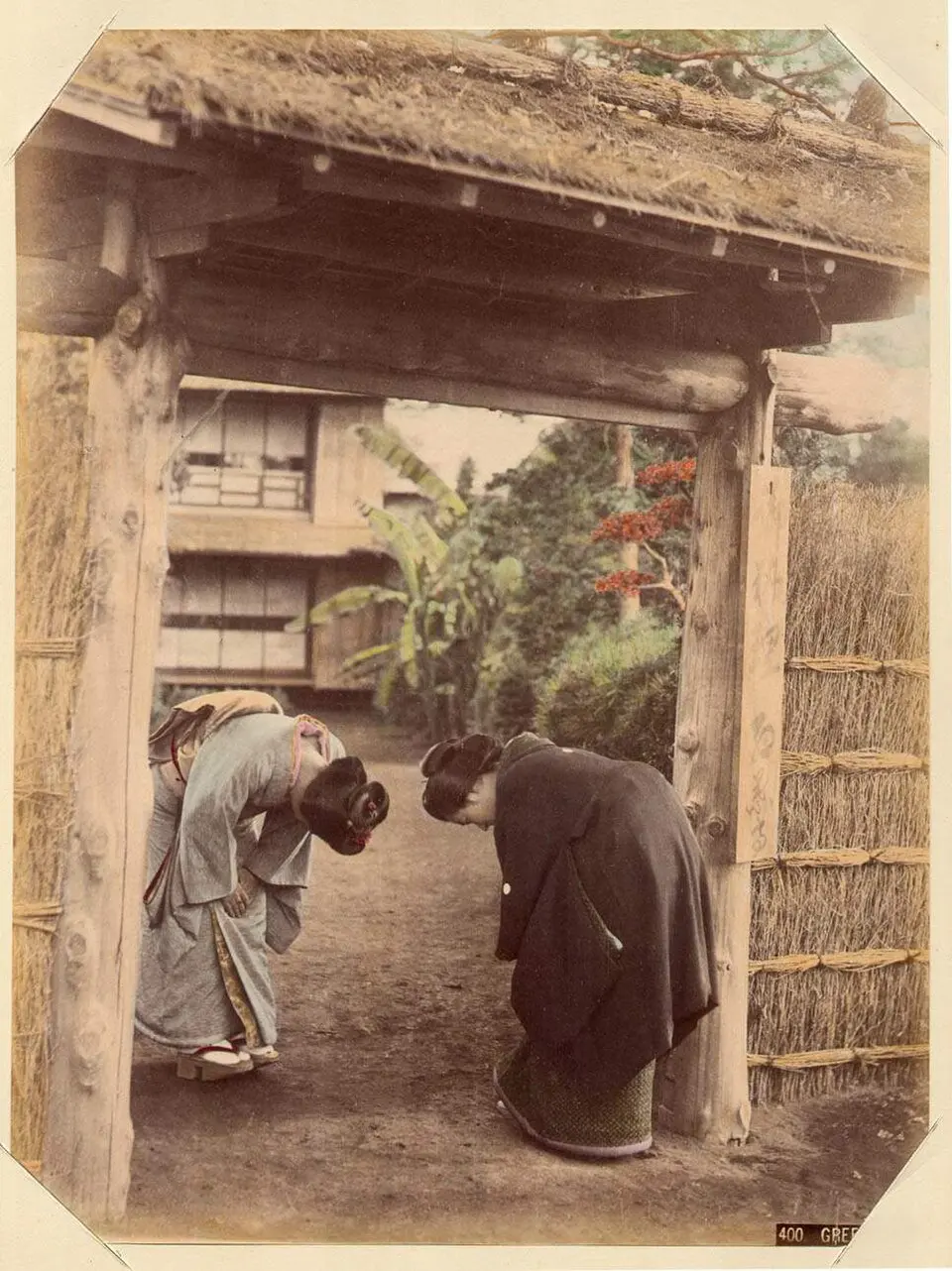
In 1430, Sarugaku Dangi, the talks of the Noh master Zeami as recorded by his son Motoyoshi, advises that “one’s aisatsu toward people is important,” meaning how one treats and responds to others. By the time of kyōgen scripts from the late 16th or early 17th century, the word meant the words and gestures exchanged when people meet, much as it does today. The Jesuits’ Japanese-Portuguese dictionary of 1603–04 lists aisatno yoi fito, a person good at aisatsu, translated as someone who receives guests well, or a congenial companion.

Peacemaking, and payback
In the Edo period (1603–1868), stepping in between two people was aisatsu too. The Nihon Kokugo Daijiten finds examples meaning mediation and arbitration in works such as Ihara Saikaku’s Nippon Eitaigura (“The Japanese Family Storehouse,” 1688). A proverb calls aisatsu “the guardian god of the moment”: whoever steps in to settle a quarrel is as welcome as the local deity, so accept their mediation.
Today, “That’s quite an aisatsu” is also a sarcastic retort to a rude remark. And according to the same dictionary, a 1952 glossary of slang records aisatsu as delinquents’ jargon for revenge. A word that began as a shoving match of Zen dialogue has, over the centuries, come to cover everything from the politest bow to a threat.