Is “kabocha” named after Cambodia?
Yes, the name is thought to come from “Cambodia.” But the pumpkin itself comes from the Americas, not Cambodia.
Simmered in soy and dashi, fried as tempura or blended into soup, sweet and starchy kabocha is one of the most familiar vegetables on the Japanese table. There is even a custom of eating it on the winter solstice. It looks every bit a Japanese vegetable.
Yet the name kabocha does not sound very Japanese. In fact, it is said to come from the name of a country in Southeast Asia: Cambodia.
A name from “Cambodia”
Look up kabocha in the Nihon Kokugo Daijiten, Japan’s largest dictionary, and the first meaning listed is not the vegetable but the Kingdom of Cambodia. The word came from the country’s name as the Portuguese used it (Camboja in Portuguese). A popular novel from 1694, Kōshoku Mankintan, mentions “the dances of Kabocha,” meaning the country.
For the vegetable, the dictionary explains that the plant was at first thought to be native to Cambodia, hence the name. Kagoshima Prefecture in southern Japan says the same: when the plant arrived in the 16th century, it was said to have come from Cambodia. Kabocha, in other words, originally meant “the thing from Cambodia.”
Portuguese ships in Bungo
So when and how did it arrive? According to the Heibonsha World Encyclopedia, the first kabocha to reach Japan belonged to the species now called Japanese pumpkin (Cucurbita moschata). It was brought by Portuguese ships to Bungo Province, today’s Ōita Prefecture in Kyushu, in the 16th century.
A more detailed story appears in Sōmoku Rikubu Kōshuhō, a work on crops by the late Edo-period agricultural scholar Satō Nobuhiro. As quoted in the Nipponica encyclopedia, it says the plant first grew in “Cambodia in the East Indies,” which is why it was also called kanpocha, and that in the Tenbun era (1532–1555) Westerners arrived in Bungo by ship and presented its seeds to the local lord of the Ōtomo family.
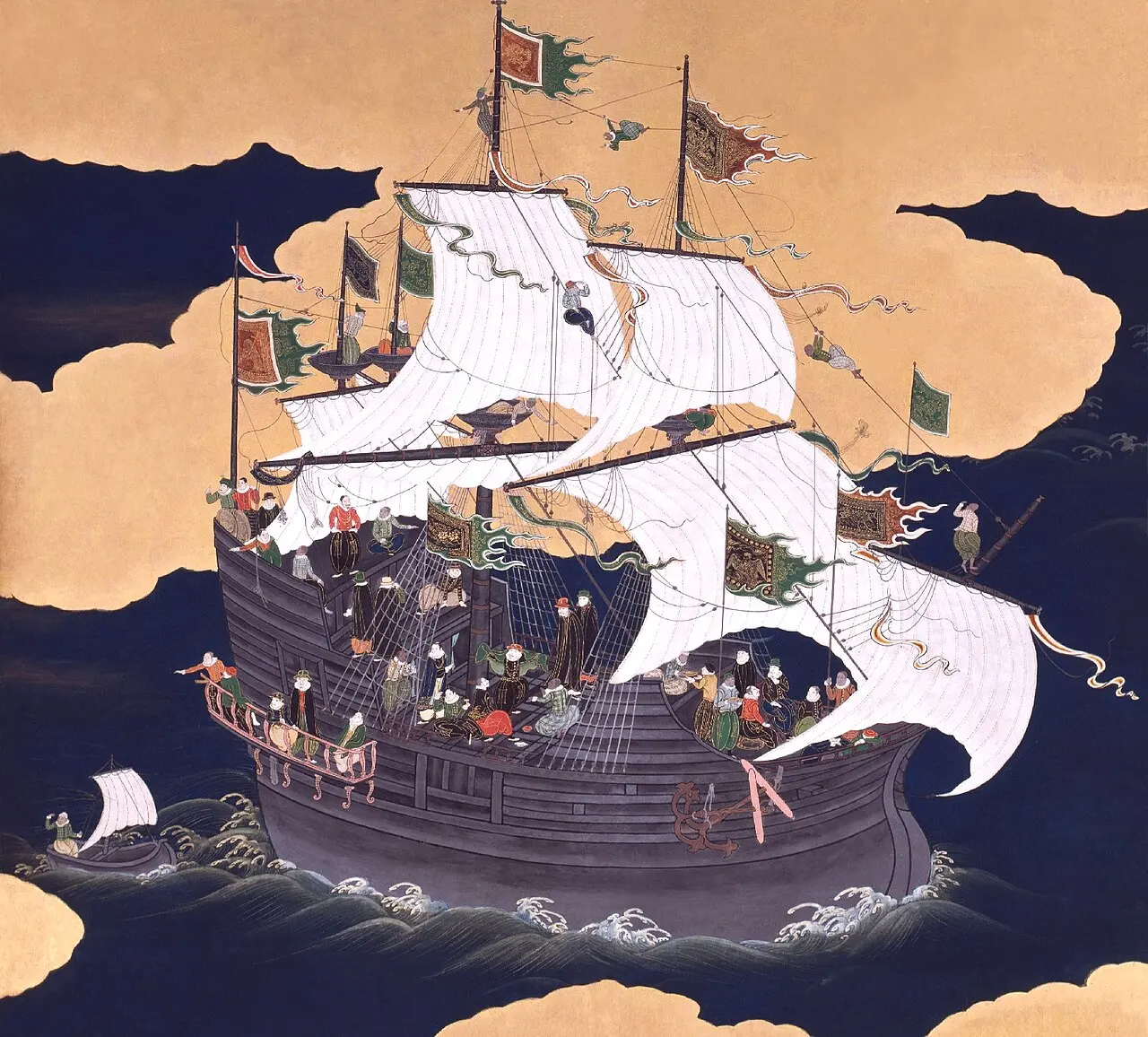

That account, however, was written more than 250 years after the fact. The Nihon Kokugo Daijiten says instead that the plant came to Kyushu by way of China in the Tenshō era (1573–1592), so the date and route are disputed. What seems certain is that it arrived in the 16th century with the ships of the Nanban trade, as Japanese called commerce with the Portuguese and Spanish, and that it was taken for a product of Cambodia.
Its real home is the Americas
Kabocha is not a Cambodian plant at all. According to Nipponica, wild species of the pumpkin and squash genus grow only in the Americas, most of them in Mexico and Central America. Archaeologists have found seeds and rind of Cucurbita pepo in layers dated to 7000–5500 BC in Mexico, and remains of the Japanese pumpkin’s species in layers from 4000–3000 BC in Peru.
Squashes spread around the world in the first half of the 16th century, after Europeans reached the Americas. If kabocha arrived in Japan in the mid-16th century, it had traveled around much of the globe within a few decades. It is perhaps no surprise that people took it for a product of Southeast Asia.
The dry, fluffy kabocha most common in Japanese supermarkets today is a different species, Cucurbita maxima. It arrived from the United States in 1863, at the very end of the Edo period.
Nankin, tōnasu, bōbura
Kabocha has gone by many other names, too. Nipponica points out that these names show it reached Japan by several routes.
Bōbura, used in Kyushu and western Japan, comes from the Portuguese word for pumpkin, abóbora. Nankin is the Japanese name of the Chinese city of Nanjing, a word attached to things that came from China, or from Southeast Asia by way of China. Tōnasu, written with characters meaning “foreign eggplant,” was so named, according to the 1712 encyclopedia Wakan Sansai Zue, because the fruit’s shape and color resemble a ripe eggplant.
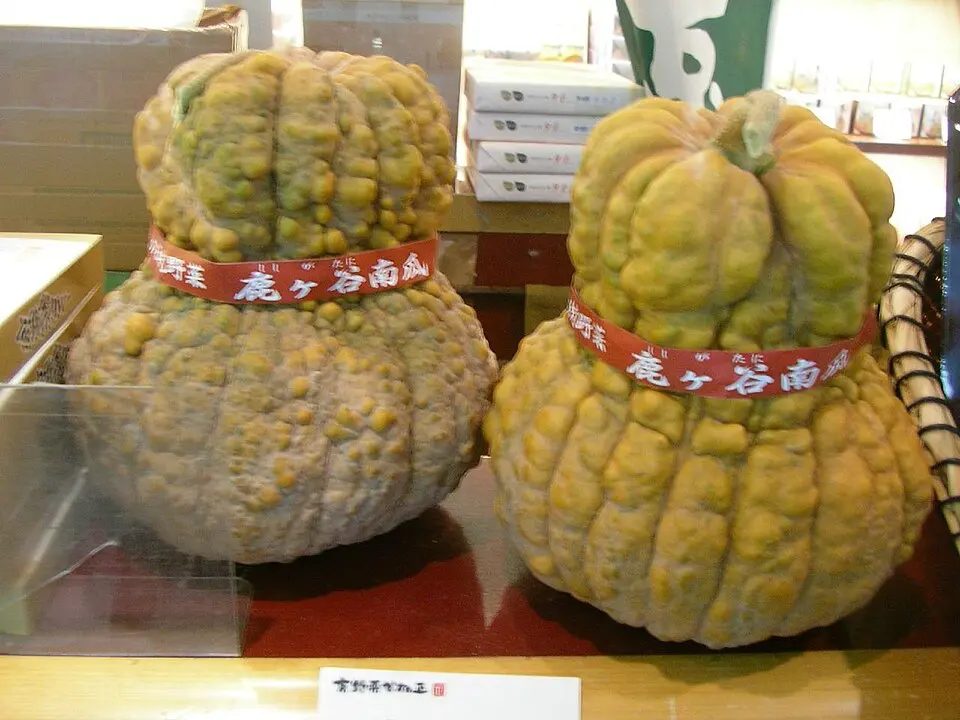

Usage also differed by region. The Edo novelist Kyokutei Bakin, who traveled to Kyoto and Osaka in 1802, wrote in his travel notes that “there is no such thing as tōnasu west of Hakone; it is all kabocha.” What people in Edo (now Tokyo) called tōnasu, people in the Kyoto–Osaka region called kabocha.