Was there a year zero?
No. In the calendar we use, 1 BC is followed directly by AD 1. That is why the 21st century began in 2001, not 2000.
525
On the night of December 31, 1999, fireworks lit up cities around the world as people welcomed the year 2000 as the start of a new millennium. Some careful timekeepers disagreed. The US Naval Observatory, among others, explained that the 21st century, and with it the third millennium, would begin on January 1, 2001.
Why the one-year gap? Because the calendar most of the world uses has no year zero.
From 1 BC straight to AD 1
In our calendar, the year after 1 BC is AD 1. There is no year 0 in between.
That makes arithmetic across the divide a little tricky. From January 1, 5 BC, to January 1, AD 5, for example, only nine years pass, not ten.
Centuries are counted the same way. The first century ran from AD 1 through AD 100. Count on from there, and the 20th century covers 1901 through 2000, while the 21st runs from 2001 through 2100. The year 2000 was not the first year of a new century but the last year of the old one.
The people who partied in 2000 were not exactly wrong to do so. Watching every digit of the year roll over at once is a perfectly natural thing to celebrate. By the rules of the calendar, though, the 21st century began on January 1, 2001.


Avoiding a persecutor’s name
The system was devised by Dionysius Exiguus, a monk living in Rome in the sixth century. Around 525, he was drawing up a table that worked out the dates of Easter, one of Christianity’s most important festivals, many years in advance.
Tables like his usually numbered years by the Era of Diocletian, counting from the accession of the Roman emperor Diocletian. But Diocletian had fiercely persecuted Christians, and Dionysius did not want to keep the memory of a persecutor alive. Instead, he counted years “from the incarnation of our Lord Jesus Christ.” The first year in his table, Anno Domini 532, corresponded to year 248 of the Diocletian era.
He started counting from 1. Roman numerals had no way to write zero, and zero as a number had not yet reached Europe.
An English monk spread the idea
Dionysius’s system did not catch on overnight. A major boost came from Bede, a monk in northern England, whose Ecclesiastical History of the English People, completed in 731, dated events by the year of the Lord. For earlier events, Bede wrote of the time “before the incarnation of our Lord.” As his history was read and copied, counting years this way spread across medieval Europe.
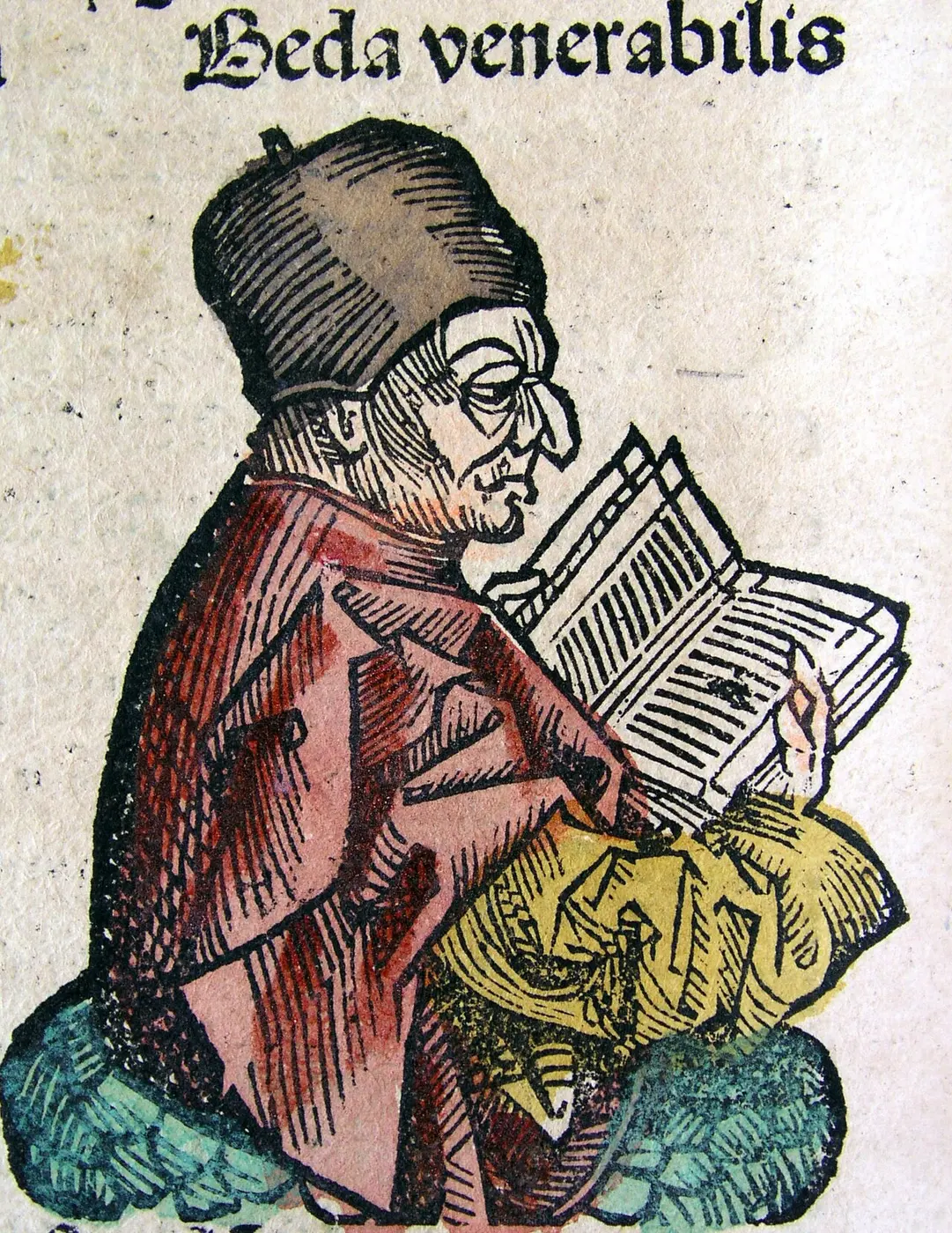

Dionysius, incidentally, did not pin down the actual year of Jesus’s birth. Many scholars today think Jesus was born a few years before AD 1.
Astronomers count a year zero
There is one field that does use a year zero: astronomy.
In astronomical year numbering, the year before AD 1 is year 0, the one before that is −1, then −2, and so on. In other words, the historian’s 1 BC is the astronomer’s year 0, and 2 BC is −1. This way, the gap between two years can be found by simple subtraction, which is handy when calculating, say, the dates of eclipses thousands of years ago.
According to the US Naval Observatory, this system was introduced in the 18th century. Astronomical tables published in 1740 by the French astronomer Jacques Cassini are a well-known early example of a year zero in use.