Did guns really reach Japan in 1543?
A Japanese chronicle, the Teppōki, gives 1543. Portuguese records speak of 1542. But the two may describe different landings, and recent research backs the Japanese date.
63years
In 1543, the story goes, a ship carrying Portuguese traders washed up on Tanegashima, an island off the southern tip of Kyushu, and introduced firearms to Japan. Matchlocks soon transformed warfare in Japan’s age of civil war, and 1543 remains one of the dates every Japanese schoolchild memorizes.
Yet the date rests almost entirely on one document, written 63 years after the event. Portuguese records, meanwhile, mention 1542. Which should we believe?
A chronicle written 63 years later
The document is the Teppōki, or “Account of Firearms,” written in classical Chinese in 1606 by Nanpo Bunshi, a Zen monk in the service of the Satsuma domain. He wrote it at the request of Tanegashima Hisatoki, lord of the island, to honor his father, Tokitaka, who had acquired the first guns.
According to the Teppōki, on the 25th day of the 8th month of 1543, a large ship of unknown origin arrived at a cove in the south of the island. It carried more than 100 people whose appearance was strange and whose language no one understood. Among them, however, was a Chinese scholar named Gohō. The village headman, Oribe-no-jō, wrote questions in Chinese characters in the sand with a stick, and Gohō wrote back that these were traders from the southern barbarian lands.
At the island’s main port, two of the traders’ leaders, whose names in the text appear to be Portuguese, demonstrated a tube two or three feet long. Loaded with powder and a lead ball and fired, it flashed like lightning, roared like thunder and hit its target. Asked for the secret, the traders said it lay in “a correct mind and one closed eye.” Tokitaka bought two of the guns, never mind the price, and had a retainer learn how to mix the gunpowder.
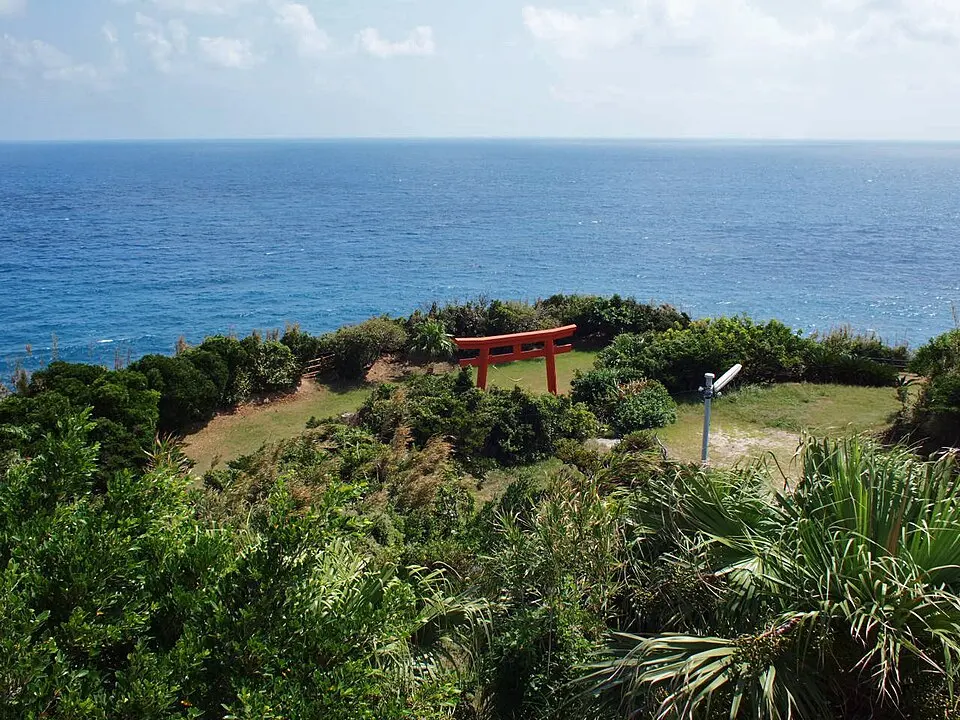

The Portuguese say 1542
Portuguese sources tell a different tale. In his Treatise of Discoveries, published in 1563, António Galvão wrote that in 1542 three Portuguese fled from Siam (now Thailand) in a Chinese junk bound for Ningbo, were blown off course by a storm, and sighted an island at 32 degrees north. Later Jesuit writers identified this with the Tanegashima landing.
But Galvão’s three names do not match the two in the Teppōki, and he mentions neither Tanegashima nor guns. In a 2024 article in the Journal of Asian Humanities at Kyushu University, the independent scholar Susan Tsumura pointed to a detail usually ignored: the Teppōki gives the arrival date together with its day in the 60-day cycle of the old East Asian calendar. In that century, the 25th day of the 8th month fell on that cyclic day only in 1543. Nobody could have known that without a calendar for that very year, so Nanpo must have worked from a record written at the time. Tsumura concludes that the Portuguese accounts probably describe a different landing, and that Portuguese may have arrived in both years.
A pirate’s ship?
Then there is the mysterious Gohō. Wang Zhi, the most notorious leader of the wakō, the pirate-smugglers who raided China’s coast in the mid-16th century, went by the same name. The standard Yamakawa dictionary of Japanese history says the guns were probably brought by Wang Zhi’s people. The firearms historian Udagawa Takehisa goes further, arguing that Japan’s matchlocks were Southeast Asian rather than European in design, and that pirates, not Portuguese, introduced them.
Tsumura is not convinced. The Teppōki describes Gohō as a scholar who happened to be aboard, not as the ship’s master, and Southeast Asian guns, she notes, are just what traders based in Portuguese Malacca would have carried.


The screw and the smith’s daughter
Tokitaka had his smiths copy the guns, but they could not work out how to seal the bottom of the barrel. The next year, according to the Teppōki, more foreign traders arrived, including a smith, from whom Kinbei Kiyosada (better known as Yaita Kinbei) learned that the breech was closed with a screw. Within a year, dozens of guns had been made, and the technique spread to the port of Sakai and the fortified temple of Negoroji.
A popular story adds that Kinbei married his daughter Wakasa to one of the foreigners in exchange for the secret. According to the Reimeikan, the history museum of Kagoshima Prefecture, that story comes from a genealogy kept by the Yaita family, which even includes a poem Wakasa is said to have written in a foreign land. Wakasa does not appear in the Teppōki, however, and the tale is best treated as family tradition. Graves said to be Kinbei’s and Wakasa’s stand side by side in the island’s main town, Nishinoomote.