Could a single tulip bulb buy a house?
In the 1630s Netherlands, some bulbs sold for more than ten times a skilled worker’s yearly income. But the idea that the whole country went bankrupt is an exaggeration.
4,200guilders
Tulips and the Netherlands go together. And in the first half of the 17th century, the price of tulip bulbs there shot up to astonishing heights, in the episode known as tulip mania.
The usual telling goes like this. A single bulb could fetch the price of a house. Everyone from rich merchants to chimney sweeps rushed into the trade. Then the market collapsed, and many people were ruined. It is often held up as the first speculative bubble in history and appears in many books on economics. Recent research, however, has shown that much of this story is exaggerated.
High prices for striped flowers
Tulips originally grew wild in the mountains of Central Asia. They were treasured in the Ottoman Empire and reached Europe in the 16th century. In the Netherlands, the botanist Carolus Clusius began growing them at the botanical garden of Leiden University in the 1590s, and they soon became a prized rarity.
The most coveted were flowers whose petals were streaked with flame-like stripes. There was no telling which bulbs would produce them, and they were scarce, so they commanded high prices. It was later discovered that the stripes are caused by a virus, which also weakens the bulbs.
The most famous of all was the Semper Augustus, white with flames of red. The Amsterdam Museum says that at the height of the mania one of its bulbs sold for 10,000 guilders, enough to buy a canal house with ease at the time. But the variety was extremely rare, and it is unclear how often it actually changed hands.
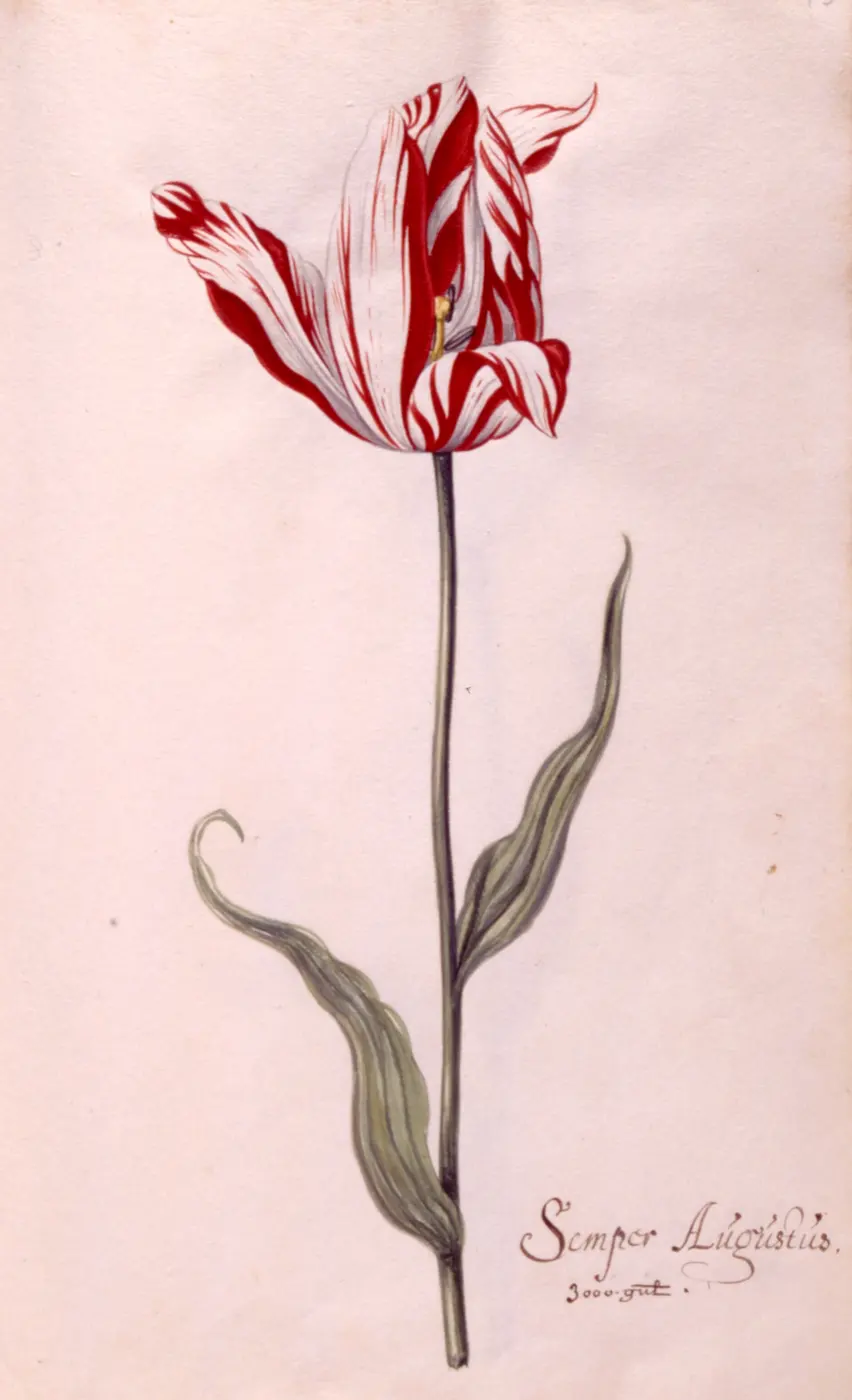

Firmer records exist, too. On February 5, 1637, in the northern town of Alkmaar, the bulbs of the late Wouter Winckel were sold at auction, and a bulb of the variety called Viceroy went for 4,200 guilders. The auction reportedly raised around 90,000 guilders in all. A skilled craftsman at the time earned roughly 300 guilders a year, so that one bulb cost well over ten times his annual income. For at least some of the finest bulbs, then, “the price of a house” is no exaggeration.
Trading on the wind
By the mid-1630s, the trade was no longer limited to growers and enthusiasts. Merchants and craftsmen joined in, too, often meeting to deal in taverns.
Bulbs were lifted from the ground and handed over only in late summer. Until then, they stayed in the soil. So buyers and sellers traded promises: written notes for bulbs still underground, to be delivered in the future. Since no goods actually changed hands, only paper, the Dutch called it windhandel, “wind trade.”
Prices climbed steeply through the fall and winter of 1636, and in early February 1637 the market suddenly collapsed. According to a satirical pamphlet of the time, it began on February 3 in Haarlem, when a seller could find no buyers even after lowering his price. The Alkmaar auction took place just two days later.
Was the whole country ruined?
The story of the great bubble was popularized by the Scottish journalist Charles Mackay in his 1841 book Extraordinary Popular Delusions and the Madness of Crowds. Mackay wrote that “the population, even to its lowest dregs, embarked in the tulip trade,” and that when prices fell, many were ruined. He also made famous the tale of a sailor who ate a precious bulb, mistaking it for an onion.
But Anne Goldgar, a historian at King’s College London, combed through the archives of the period and painted a very different picture in her 2007 book. The traders were mostly wealthy merchants and skilled craftsmen, and there were not that many of them. As for bankruptcies caused by tulips, she says, “I couldn’t find anybody that went bankrupt.”
When the crash came, very little money had actually changed hands. Many buyers simply refused to pay what they had promised, and the courts were unwilling to get involved. Most contracts were never honored, and the city of Haarlem eventually allowed buyers to cancel them by paying 3.5 percent of the agreed price. What was shaken, Goldgar argues, was less the economy than the trust that held business relationships together.
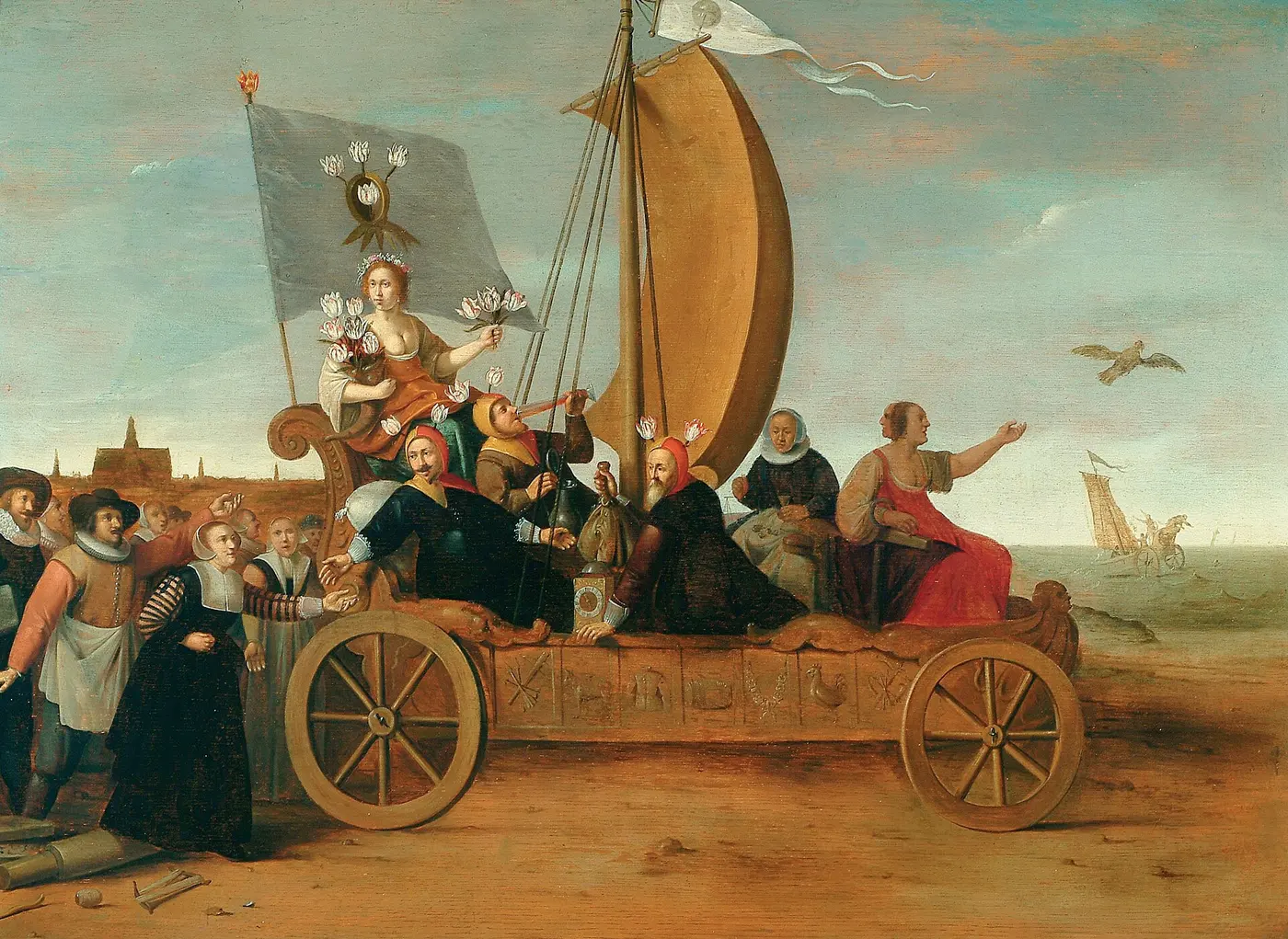

So why did the exaggerated version spread? At the time, a stream of pamphlets and pictures condemned the tulip trade. Calvinist moralists, who saw such extravagant wealth as ungodly, seized on the episode as a cautionary tale. The sailor and the chimney sweeps who jumped into the market come from these pamphlets, and Mackay built his account on sources like them.