Why do we have wisdom teeth?
They are the third set of molars, inherited from our ancestors. The trouble is that our jaws now tend to grow smaller, and many people lack the room for them.
22.6%
Somewhere between the late teens and the early twenties, a latecomer arrives at the very back of the mouth: the wisdom tooth. It may make the gums swell and ache, or prompt a dentist to suggest taking it out. And some people never get one at all.
Why would a tooth show up long after all the others have settled in? The answer seems to lie in our ancestors’ mouths, and in how our food has changed over the past few thousand years.
The third molar
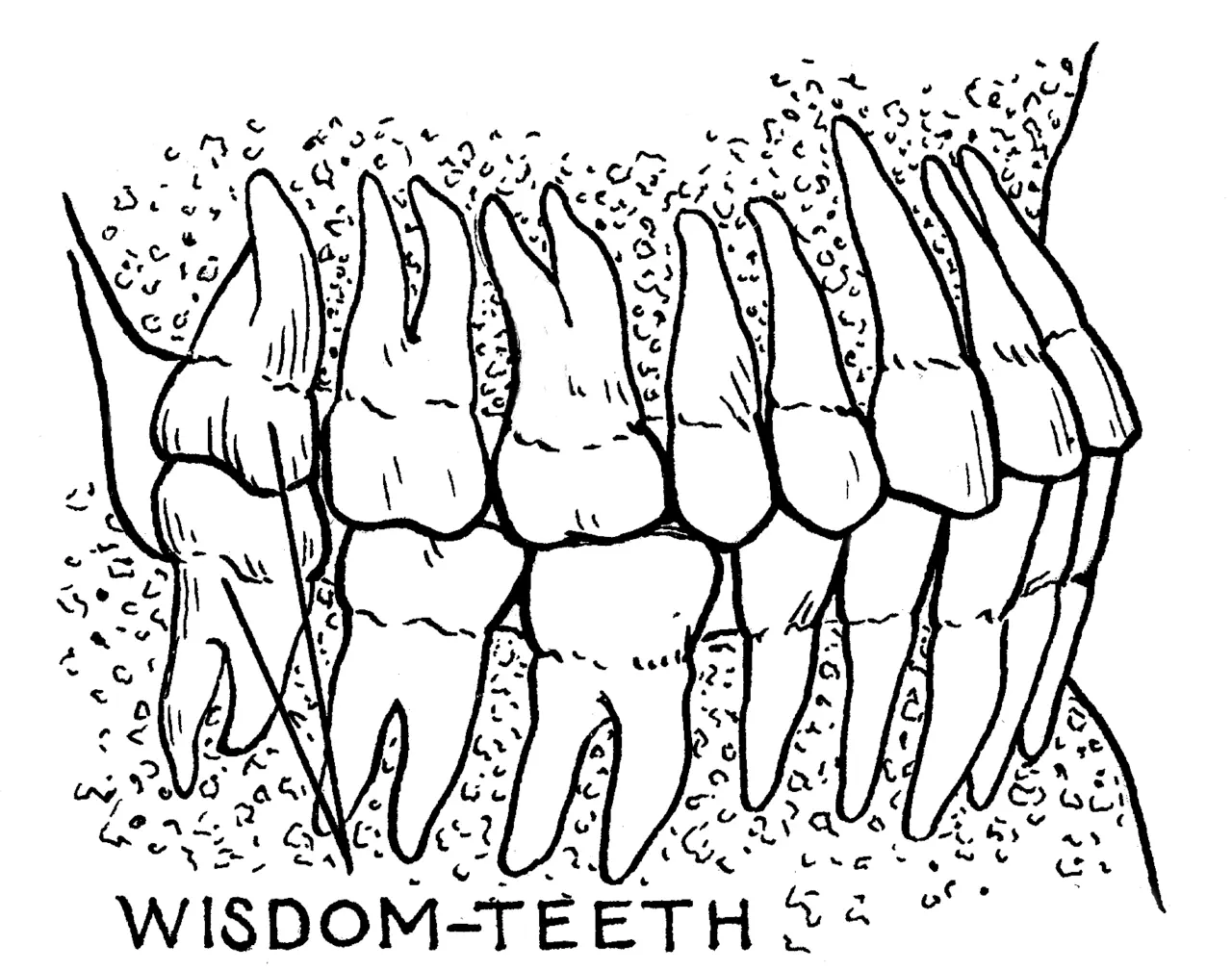
Adult teeth run, from front to back, as incisors, canines, premolars and molars. The molars, the broad grinding teeth at the back, come three to a side in each jaw. The first is often called the “six-year molar” and the second the “twelve-year molar,” after the ages at which they usually erupt. The third molar is the wisdom tooth. According to the Japanese encyclopedia Nipponica, it typically comes in at around 17 to 21.
So a wisdom tooth is not a spare or an extra. It is the rightful last member of the row. Chimpanzees, gorillas and the other great apes also have three molars on each side of each jaw, and we inherited the same set from our ancestors. The Heibonsha World Encyclopedia describes the wisdom tooth as the last tooth to form and the last to erupt: last to start, last to arrive.

A tooth that comes with age
The Japanese name, oyashirazu, means “unknown to the parents.” According to the Nihon Kokugo Daijiten, Japan’s largest historical dictionary, the tooth was so called because it appears around age 20 to 25, when, in times past, many people had already lost their parents. The name is old: it appears in this sense in a Latin-Portuguese-Japanese dictionary printed by the Jesuits in Amakusa, southern Japan, in 1595.
English, like many European languages, calls it the tooth of wisdom. The term is said to translate the Latin dens sapientiae. Even Aristotle, in his History of Animals, noted that the last molars in humans come in at about twenty, in both sexes, and English translations call them “wisdom-teeth.” East and West alike, the name comes from the tooth’s late arrival, when a person is old enough to have some sense.
Have our jaws shrunk?
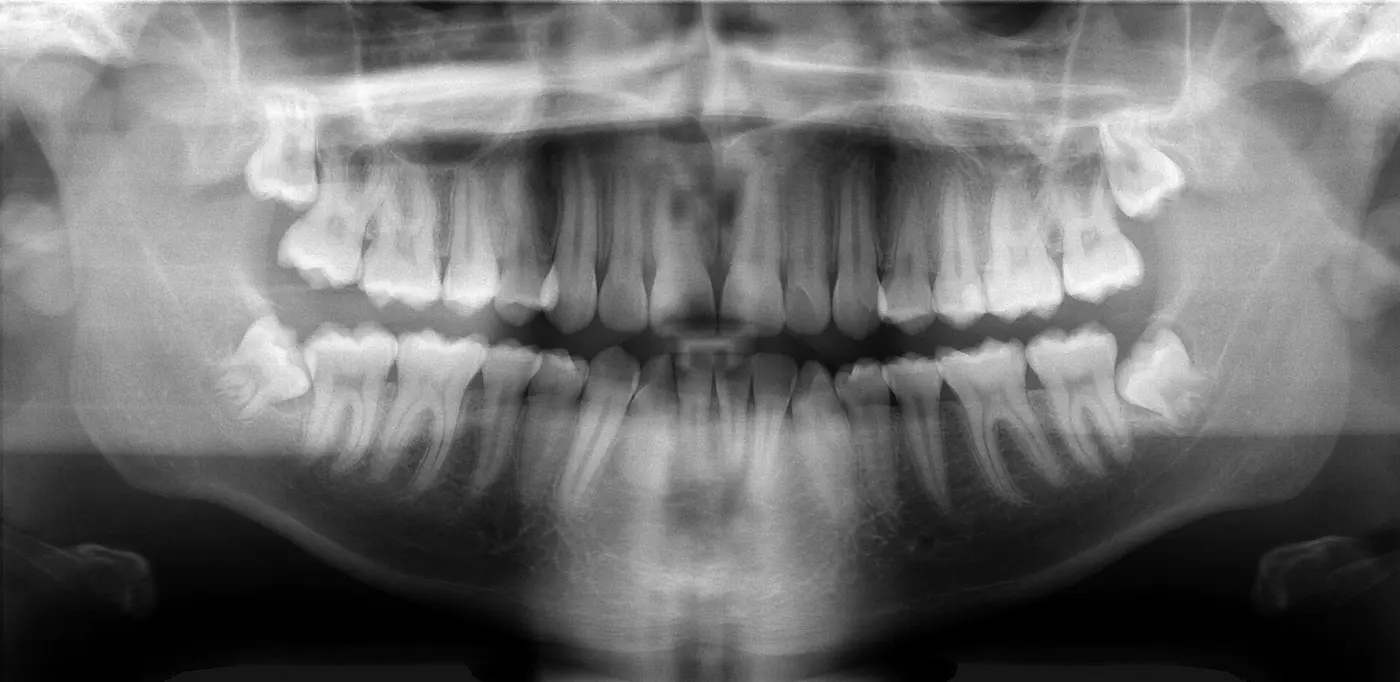
Wisdom teeth get their bad reputation because there is so often no room for them. The Japanese Society of Oral and Maxillofacial Surgeons notes that they frequently stay buried in the bone (impacted), and lower ones that do erupt often come in tilted or even sideways. Gum tissue can partly cover them, trapping food and causing inflammation. A 2016 analysis by Katherine Carter and a colleague at Harvard, pooling 49 studies of more than 80,000 people, found that about 24% of those aged 17 or older who had dental X-rays had at least one impacted wisdom tooth.
A popular explanation is that our food has become soft. In 2004, Daniel Lieberman and colleagues, also at Harvard, raised rock hyraxes, small furry mammals, on either raw and dried food or cooked, softer food. The soft-food group put less strain on their skulls while chewing, and the lower and rear parts of their faces grew about 10% less. In 2011, Noreen von Cramon-Taubadel of the University of Kent compared human lower jaws from around the world and found that hunter-gatherers tend to have longer, narrower jaws than farmers. If children who chew less grow smaller jaws, the teeth may simply run out of room. Seen that way, wisdom tooth trouble is less a matter of evolution than of how we grow up.

Still, in her doctoral thesis the same year, Carter pointed out that none of the hypotheses for when and why wisdom tooth problems became common had been properly tested. Softer food probably played a big part, but the full story is not that simple.
Plenty of people never get them
Some people have no wisdom teeth to bury in the first place: the tooth never forms. In a 2015 analysis of 92 studies covering more than 63,000 people, Carter and her colleague found that about 22.6% of people worldwide lack at least one wisdom tooth. The rate varied widely by region: roughly 30% in Asia and 22% in Europe. Africa came in lowest, at about 6%, but that figure rested on just two studies. Women were 14% more likely than men to be missing one or more, and upper wisdom teeth were missing more often than lower ones.
The Japanese Society of Oral and Maxillofacial Surgeons says that wisdom teeth are often missing from birth, and that their failure to appear is not in itself abnormal. A full set of four and none at all are both within the range of normal.