Why does hitting your funny bone make your fingers tingle?
Because you are hitting a nerve, not a bone. The ulnar nerve runs just under the skin at the inner elbow, and a knock pins it against the bone, sending a jolt toward your little finger.
You catch the inside of your elbow on the corner of a desk or the arm of a chair, and an electric jolt shoots down your forearm toward your little finger. Is it pain? Tingling? Some kind of awful tickle? It is hard to describe, and nobody finds it funny.
The thing you hit is not actually a bone. It is a nerve that runs unusually close to the surface at the inner elbow. The English name for the spot, the funny bone, comes with a pun of its own, though whether the pun is the real origin is another question.
A nerve lying on the bone
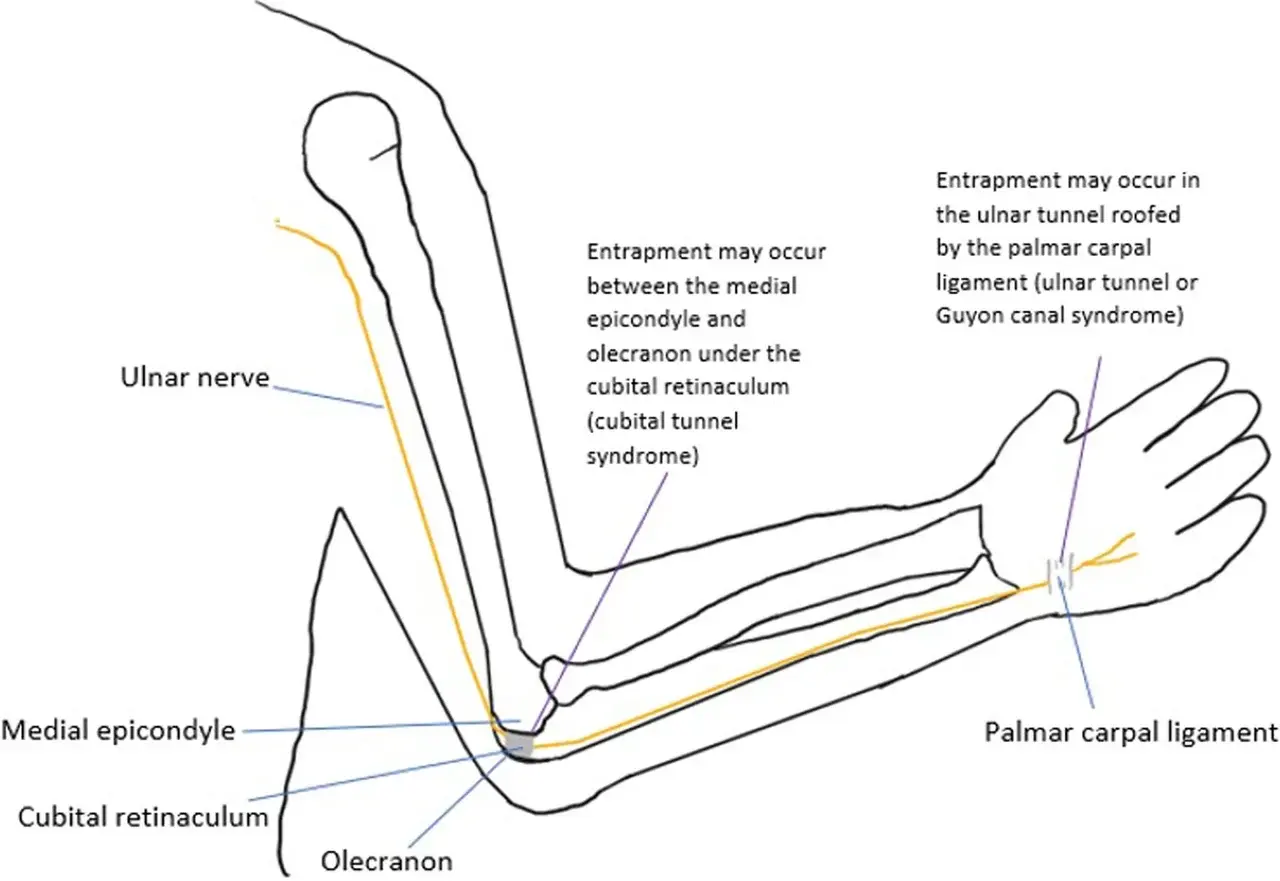
One of the main nerves of the arm is the ulnar nerve, which runs from the base of the neck down to the hand. It takes its name from the ulna, the forearm bone on the little-finger side, which it follows.
Bend your elbow and feel the inner side, and you will find a hard knob. This is the medial epicondyle, a bump at the lower end of the humerus, the bone of the upper arm. The ulnar nerve passes behind this knob on its way into the forearm. As Michael Vagg, a pain specialist and clinical senior lecturer at Deakin University in Australia, has explained, the nerve lies close to the skin there.
Most of the nerves in your arm travel deep, protected by muscle and fat. At the inner elbow, though, the ulnar nerve sits just beneath the skin with almost no cushioning. Hit that spot against something hard and the nerve is squeezed between the blow and the bone. That is where the zing begins.

Why your little finger tingles
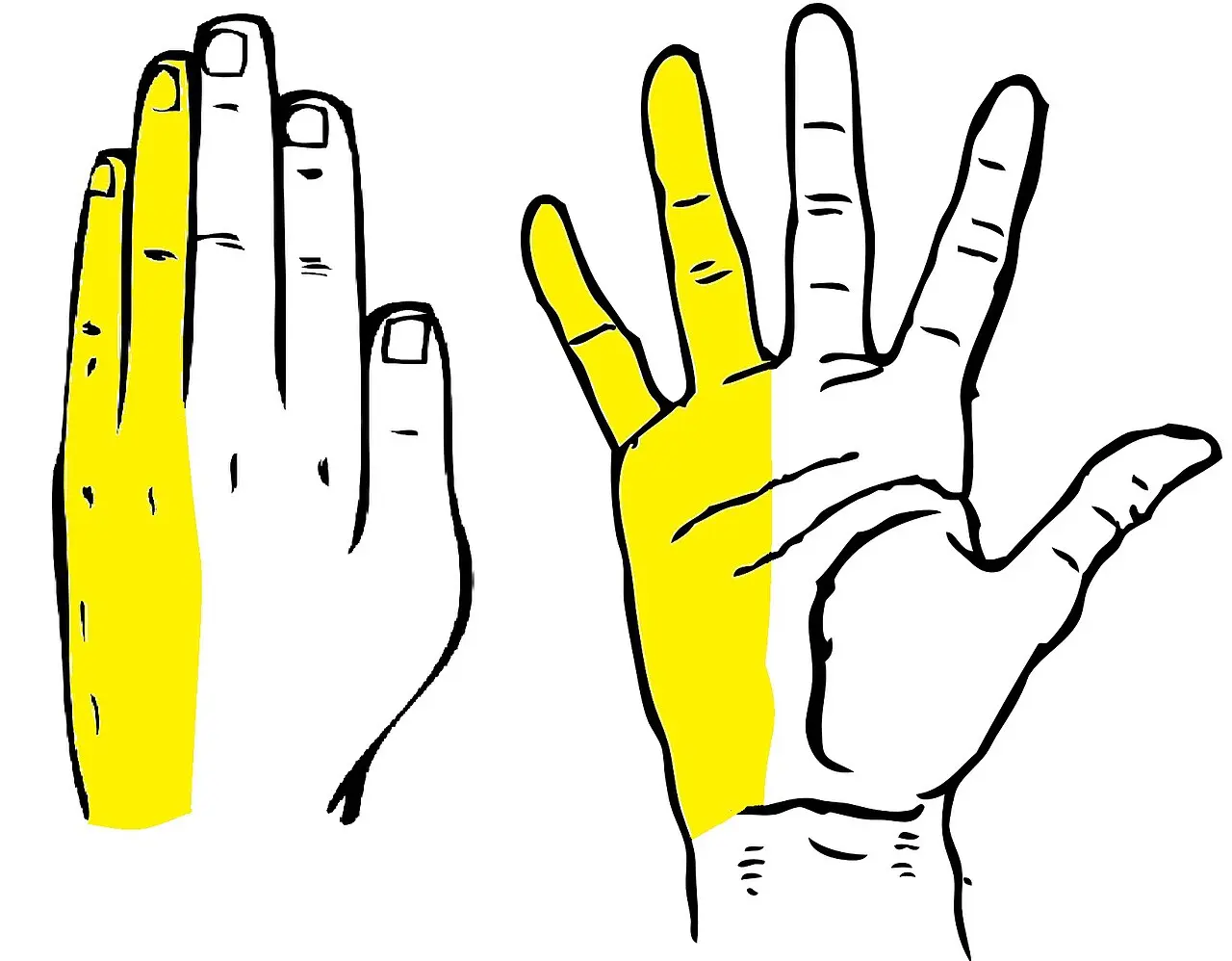
You hit your elbow, yet the tingling races off toward your little and ring fingers. That is because the ulnar nerve carries sensation from the little finger and the little-finger half of the ring finger.
Think of a nerve as a long cable carrying signals from your fingertips to your brain. Strike it partway along, at the elbow, and it fires right there. The brain receives those signals the way it always does, as messages from the fingers at the far end of the cable. So although the blow landed on your elbow, the sensation seems to come from your fingers. According to Vagg, a hard enough knock can cause a mild, temporary nerve injury, with tingling that lasts from a few minutes to a few days.
Is “funny bone” a pun?
Why “funny”? The most popular explanation is a pun. The bone of the upper arm is the humerus, which sounds almost exactly like “humorous.” Call the humerus the humorous bone and you arrive at the funny bone.
The term first appears in British writing in the early 19th century. Some dictionaries date it to the 1820s, while other accounts point to an 1842 comic poem. The word historian Pascal Tréguer has found a quip in the London Morning Post of 1827 that asks what a surgeon means by the “os humorous” and answers that he must mean the funny bone. At least by then, people were clearly enjoying the joke.
That does not prove the pun came first, however. “Funny” can also mean strange or peculiar, and the name may simply describe the odd sensation. Nobody knows for certain who first called it the funny bone.
When the tingling doesn’t stop
The brief shock from a knock to the elbow is usually nothing to worry about. What deserves attention is numbness on the little-finger side that persists when you haven’t hit anything.
According to the Japanese Orthopaedic Association, long-term pressure on or stretching of the ulnar nerve at the elbow can lead to cubital tunnel syndrome. Causes include ligaments or cysts pressing on the nerve, age-related changes in the elbow, deformities left by childhood fractures, and sports such as baseball and judo. It starts with numbness in the little finger and part of the ring finger; as it progresses, the muscles of the hand can waste away and the fingers can become deformed. One test doctors use is to tap gently on the inside of the elbow and see whether tingling shoots into those fingers. It is, in effect, a funny bone test.

If numbness lingers, your fingers don’t move as they should, or your grip weakens, it is worth seeing a doctor sooner rather than later.