Are there sounds that adults can’t hear?
Yes. Hearing fades from the top down as we age, so a tone of around 17,000 hertz that young people hear easily is hard for most adults to catch.
17,000 Hz
In June 2006, during a math class at a high school on Long Island, New York, a high-pitched ringtone went off. Phones were supposed to be off in class, and when the teacher demanded to know whose it was, the students were astonished. “You can hear that?” one asked. “Adults are not supposed to be able to hear that,” said another.
The sound in this scene, reported by The New York Times, was too high for many adults to hear, and it had started life in a device designed to chase young people away.
“What noise?”
The device was the brainchild of Howard Stapleton, a security consultant in Wales. According to a 2005 article in The New York Times, the idea went back to a factory visit with his father when he was 12. At the door of a room where workers were using high-frequency welders, he could not bear to go in. “The noise!” he complained. “What noise?” the grown-ups asked. Nearly three decades later, he turned that lesson into a product.
He called it the Mosquito (“It’s small and annoying”). Designed to disperse teenagers loitering outside shops, it emits a high, pulsing tone, which Stapleton fine-tuned by testing it on his own children. It was first tried out at the entrance of a convenience store in Barry, in south Wales. The teenagers who gathered there came in with their fingers in their ears, begging the owner to turn it off, and soon stopped showing up. He told them it was to keep birds away because of bird flu.
Stapleton said most people under 20 could hear it and almost no one over 30. Yet the shop’s 34-year-old owner could. Andrew King, a neurophysiologist at the University of Oxford, was skeptical too: high-frequency hearing declines so gradually, he said, that many people past their teens might well hear it.
Hearing fades from the top
The human ear can hear sounds from roughly 20 to 20,000 hertz, or vibrations per second. The Mosquito’s tone, at around 17,000 hertz, sits near the top, far above the 200 to 8,000 hertz where most conversation takes place.
Sound is detected by the cochlea, a snail-shaped structure deep in the ear. According to the U.S. National Institute on Deafness and Other Communication Disorders, the hair cells near the wide end of the cochlea respond to high-pitched sounds, while those nearer the center respond to low ones. Age-related hearing loss, or presbycusis, is the progressive loss of higher-frequency hearing.
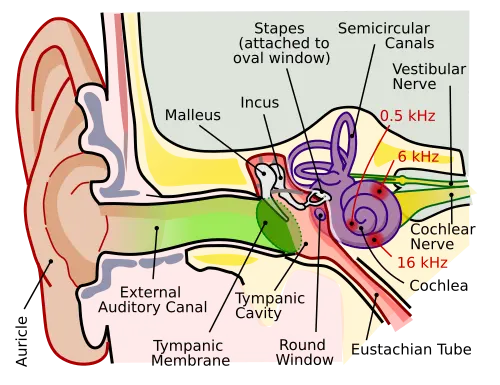

So when do the high notes slip away? In 1989, a U.S. team tested hearing between 8,000 and 20,000 hertz in 240 people aged 10 to 60. The higher the frequency and the older the person, the louder a tone had to be to be heard. The biggest changes with age came between 40 and 59, and compared with the youngest group, the losses were greatest in the 13,000 to 17,000 hertz range. Still, people vary a lot, and some in their 20s and 30s can still hear the Mosquito.
The kids strike back
In May 2006, students turned the sound to their advantage. According to British newspapers, pupils at some schools in Wales began using a ringtone that imitated the Mosquito. If it went off in class, the teacher wouldn’t hear it. The tone spread rapidly online and by June had reached high schoolers in New York, which is when the math class scene took place. At 28, that teacher evidently still had the ears to catch it.
“You’ve got to give the kids credit for ingenuity,” said the Mosquito maker’s marketing director. Because the copied ringtone earned the company nothing, it began selling an “authentic” version of its own. That year, Stapleton won the Ig Nobel Peace Prize “for inventing an electromechanical teenager repellant — a device that makes annoying high-pitched noise designed to be audible to teenagers but not to adults; and for later using that same technology to make telephone ringtones that are audible to teenagers but probably not to their teachers.”
Out of earshot, out of mind
A sound adults can’t hear can also keep playing without adults noticing. In 2010, the Parliamentary Assembly of the Council of Europe, the continent’s human rights body, adopted a recommendation calling for the marketing and use of the Mosquito to be banned. According to the recommendation, the device emits 75 to 95 decibels at 16,000 to 18,500 hertz, a sound audible to almost all young people under 20 but barely discernible to anyone over 25. Some 3,500 units were in use in the United Kingdom alone.
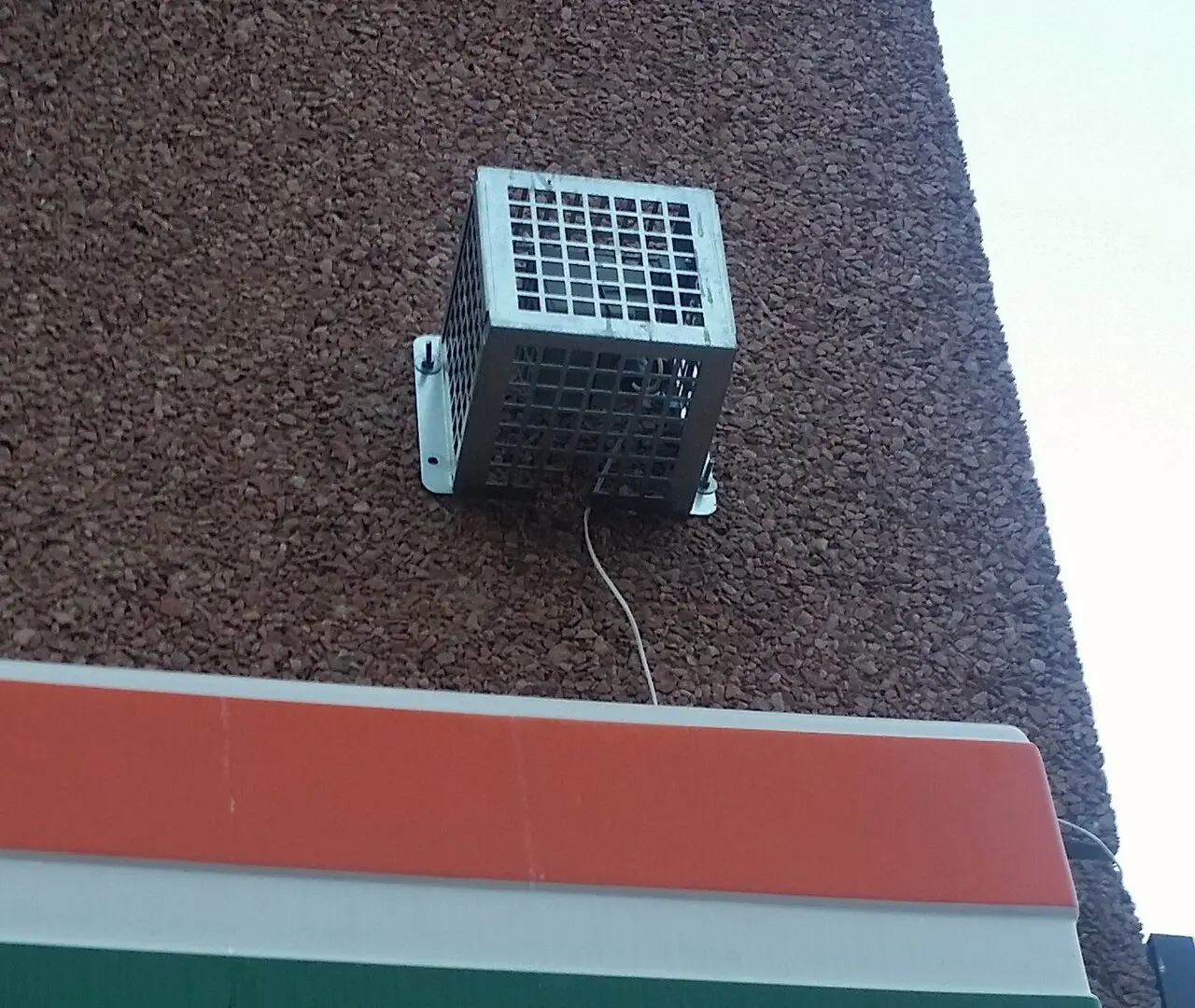

It noted that adults don’t notice the sound, so when babies suddenly start crying, parents have no idea why, and that teenagers driven off regardless of their behavior see the device as discrimination. It also acknowledged that research so far had found no danger of hearing loss.