Are there cherry trees that bloom in winter?
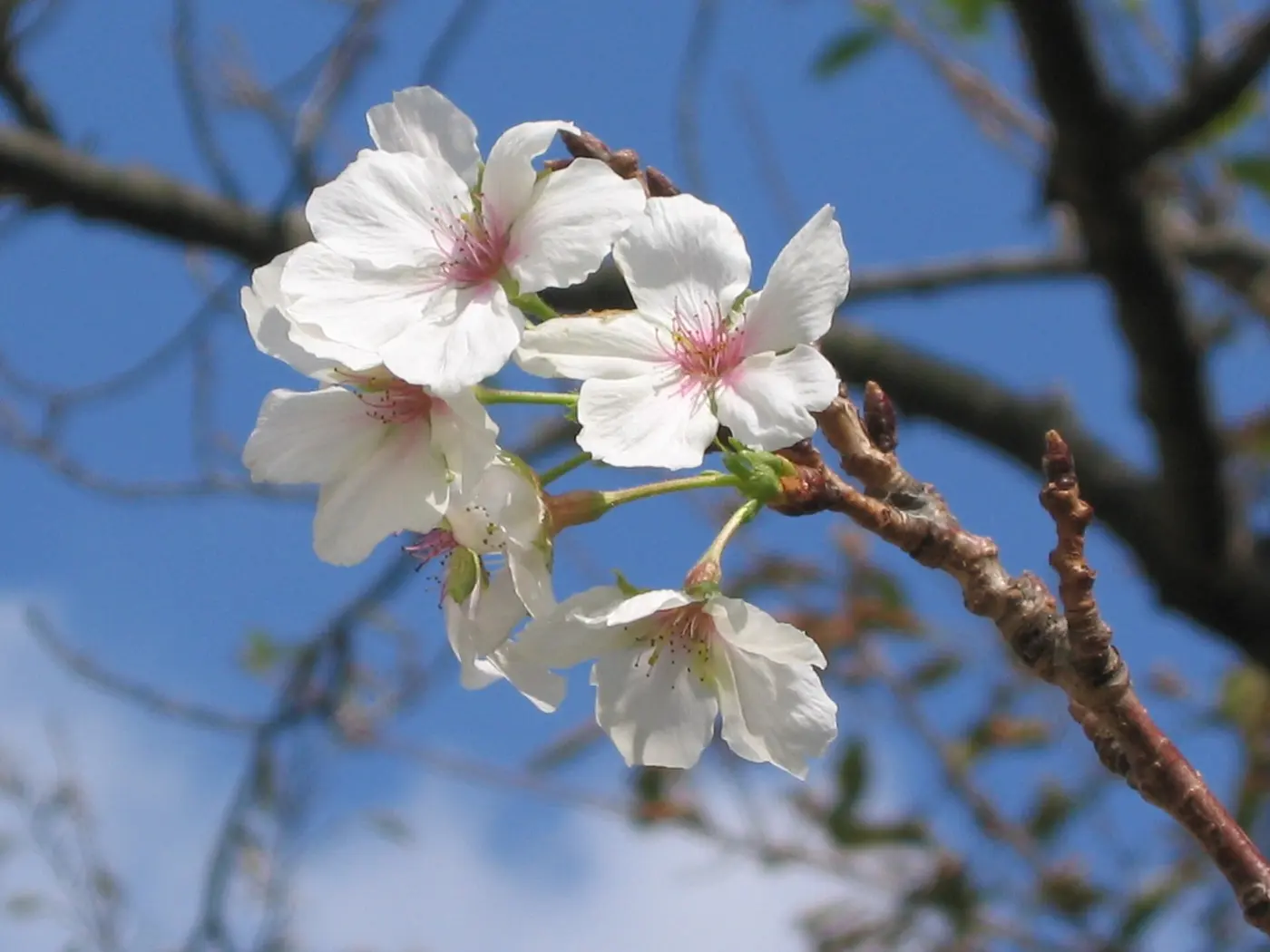
Yes. Varieties such as Jugatsu-zakura, Fuyu-zakura and Shiki-zakura flower twice a year: from autumn into winter, and again in spring.
In Japan, cherry blossoms mean spring. Yet in parks and temple gardens in late autumn, you can sometimes spot small white or pale pink flowers dotted along branches that have already lost their leaves.
Sometimes these are trees that have bloomed out of season by mistake. More often, though, they are varieties for which autumn flowering is perfectly normal. Japan has a number of cherries that bloom twice a year: once from autumn into winter, and again in spring.
Cherries that bloom in autumn and spring
Let’s look at a few well-known varieties, as described in the cherry guide of the Flower Association of Japan, a foundation that promotes flower planting.
Jugatsu-zakura, the “October cherry,” is thought to be a hybrid of two wild Japanese cherries, the Edo-higan and the Mame-zakura (Fuji cherry). It has pale pink, double flowers. In autumn it starts blooming around September, and in places like Tokyo it keeps producing a few flowers at a time all through the winter. In early April it blooms again, briefly, at the same time as the familiar Somei Yoshino.
Shiki-zakura, the “four-seasons cherry,” is thought to come from the same two parents. It bears small, single flowers, starts blooming around October, and in warm areas keeps flowering little by little through the winter.
Fuyu-zakura, the “winter cherry,” is thought to be a hybrid of the Mame-zakura and either a garden cherry or the wild Yama-zakura. It produces white, single flowers from October through about December. Because its leaves are small, it is also known as Koba-zakura, the “small-leaved cherry.”
All three bloom again in early April. Not every bud opens in autumn; the buds that make it through the winter open in spring.

Autumn leaves and cherry blossoms together
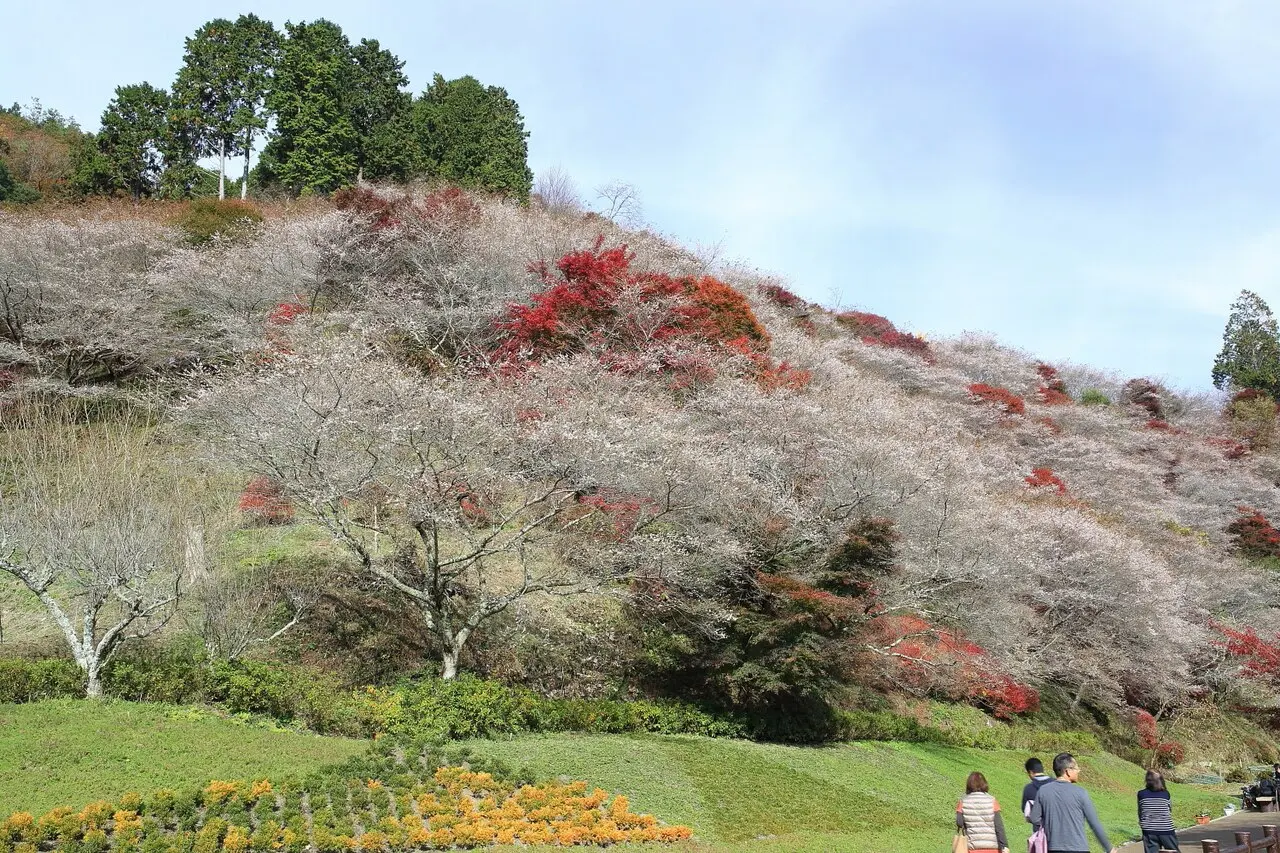
One of the best-known places to see autumn cherry blossoms is the Obara district of Toyota City in Aichi Prefecture, central Japan. About 10,000 Shiki-zakura trees grow there, and from mid- to late November visitors can enjoy red and yellow autumn leaves and pale pink blossoms at the same time. According to Aichi Prefecture’s tourism website, the trees are said to descend from saplings that a local doctor, Fujimoto Genseki, brought from the Nagoya area and planted around the start of the Bunsei era (1818–1830).
At Sakurayama Park in Fujioka, Gunma Prefecture, north of Tokyo, about 7,000 Fuyu-zakura trees have been planted. They are usually at their best from mid-November to early December, alongside the autumn colors. The site, famous for its autumn cherry viewing, has been designated a national Place of Scenic Beauty and Natural Monument.

Why most cherries wait for spring
So why do most cherry trees, like the Somei Yoshino, bloom only in spring?
According to Toshio Katsuki, director of the Kyushu branch of Japan’s Forestry and Forest Products Research Institute, a cherry tree starts forming its flower buds the summer before they bloom. In autumn the buds go dormant, and they are woken up by exposure to winter cold, a process known as breaking dormancy. Once awake, the buds resume growing and open when the weather warms in spring. Without enough cold, dormancy isn’t broken properly, and blooming can be delayed or the buds may fail to develop and drop off. For a cherry tree, winter cold is an essential signal to flower in spring.
What keeps the buds from opening in autumn are the leaves. Hiroyuki Wada, a tree doctor with the Flower Association of Japan, explains that one job of the leaves is to release hormones that stop the buds from flowering too early. So if typhoons or insects strip the leaves in summer or autumn, cherry trees may bloom in the fall. In autumn 2018, after two powerful typhoons, the weather company Weathernews received more than 350 reports of cherry trees in bloom from around Japan.
Why varieties like Jugatsu-zakura and Shiki-zakura bloom every autumn, on the other hand, is still not clearly understood. Suggested reasons include differences in how deeply the buds go dormant, how they respond to cold, how their hormones work, and shifts in flowering time caused by repeated hybridization.