Can a dead plant grow flowers of ice?
Yes. In winter, water rises through the withered stems of a Japanese plant called shimobashira and freezes into ribbons and petals of ice.
On cold winter mornings in Japan, the bare soil is often studded with crunchy columns of ice called shimobashira, or “frost pillars.” Despite the name, they aren’t frost, which forms when water vapor in the air freezes onto surfaces. They form when the air drops below freezing and water in the ground seeps up to the surface through tiny gaps in the soil, freezing into columns as it goes. In English this is called needle ice.
There is a plant that makes ice strikingly like these frost pillars. It is even named after them: shimobashira.
White flowers in autumn, ice in winter
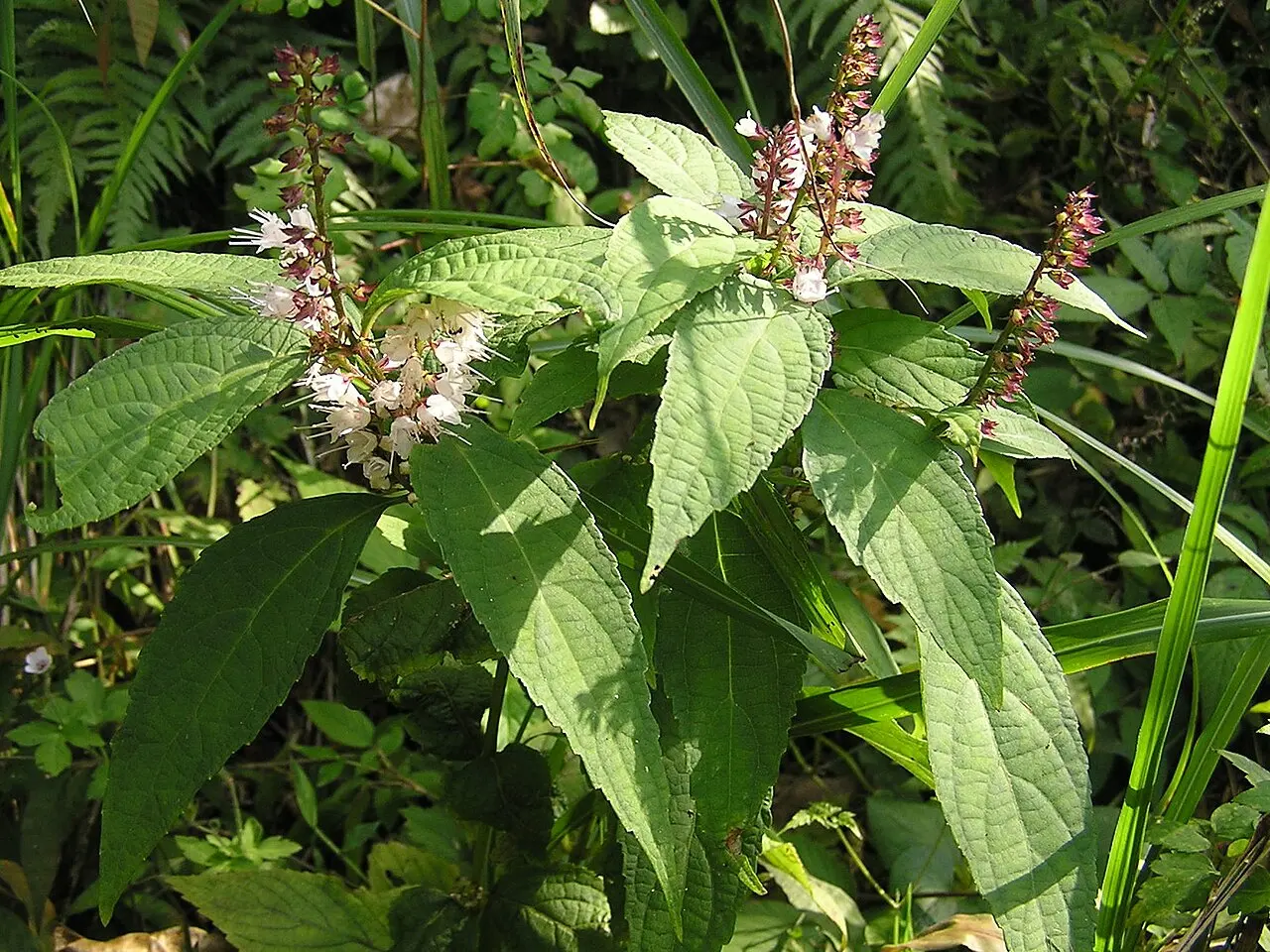
Shimobashira (Keiskea japonica) is a perennial in the mint family. It grows in the shade of trees in the mountains along the Pacific side of Honshu, from the Tokyo region westward, and on the islands of Shikoku and Kyushu. In autumn it produces small white flowers resembling those of shiso, the Japanese herb also known as perilla.
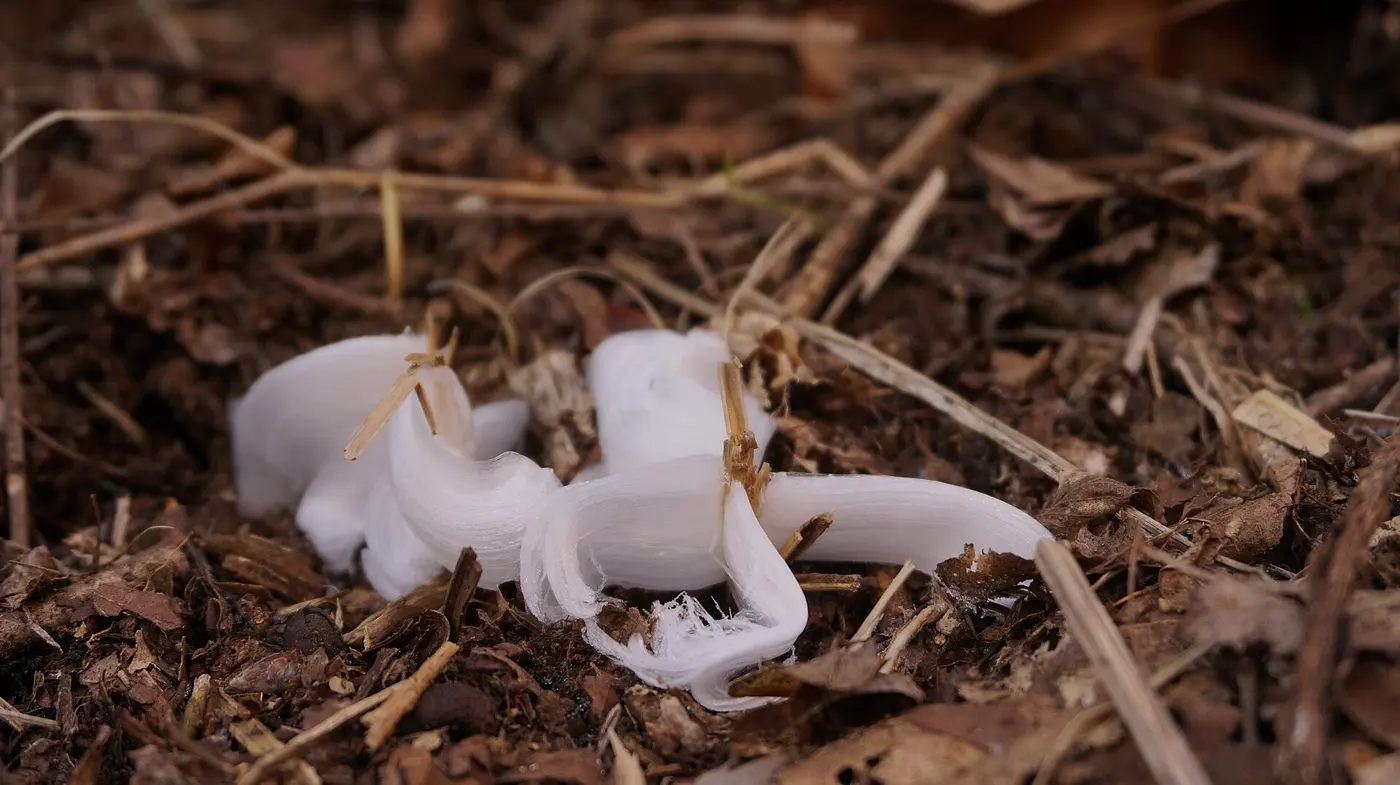
Its real moment, though, comes in winter as the parts above ground die back. On a frigid morning, white ice bursts out from the base of the stem. The ice grows outward at right angles to the stem and takes all kinds of shapes: thin sheets, curling ribbons, petals. Its resemblance to frost pillars in the soil gave the plant its name. A researcher who observed shimobashira in Fuchu, a city in western Tokyo, reported that the first ice of the winter appeared on the morning of December 19, when the temperature suddenly plunged, and that within just two or three hours the stems, green until then, looked completely withered. The plant’s ice-making habit was already described in Somoku Zusetsu, an illustrated botanical guide published in Japan’s Edo period (1603–1868).

Water drawn up through a dead stem
Even after its stems wither, the plant’s roots are still alive and keep drawing water from the soil.
According to Masatoshi Saikawa, then a professor at Tokyo Gakugei University, the water travels up through the xylem, the hard woody core of the stem, then seeps out of its sides and freezes on contact with the cold air. As more water seeps out and freezes, it pushes the ice already formed farther outward, so the ice keeps growing. The outer layers of the stem are split open by the ice, but the xylem itself, the water’s pathway, stays intact.
In 2014, a research team from Iwate University and other institutions had shimobashira stems take up a fluorescent dye, sliced them very thinly and concluded that the ice forms on the surface of the xylem. The walls of the xylem cells are dotted with tiny pores averaging about 0.4 micrometers across, less than a hundredth of the width of a human hair. The researchers believe that water fed to the freezing surface through these minute pores is the key to how the ice grows, much as water rising through fine gaps in the soil builds frost pillars.
Not just once a year
Shimobashira’s ice has sometimes been described as something the plant makes “only once a year.” But according to Saikawa, because the xylem is undamaged, the ice can form again every cold morning, melting away before noon each day.
The summit area of Mount Takao, a popular hiking spot on the western edge of Tokyo, is famous for shimobashira. Because the temperature stays low there even during the day, ice formed on successive mornings doesn’t fully melt, and it joins up into long ribbons. On winter mornings, crowds of photographers turn up to capture it.

Frost flowers across the ocean
Dead plants making ice isn’t unique to Japan. In North America, frostweed (Verbesina virginica), a member of the daisy family, is known for creating similar ice sculptures, often called frost flowers.
According to Texas Parks and Wildlife, frost flowers appear on the first really cold mornings of the season, when the air is below freezing but the ground is still warm enough for the plant’s roots to be active. The plant’s juices rise up the stem and freeze, splitting the stem and curling out as thin sheets of ice. They melt as soon as the sun hits them, so if you want to see them, you need to get up early.