Are the red parts of a poinsettia really flowers?
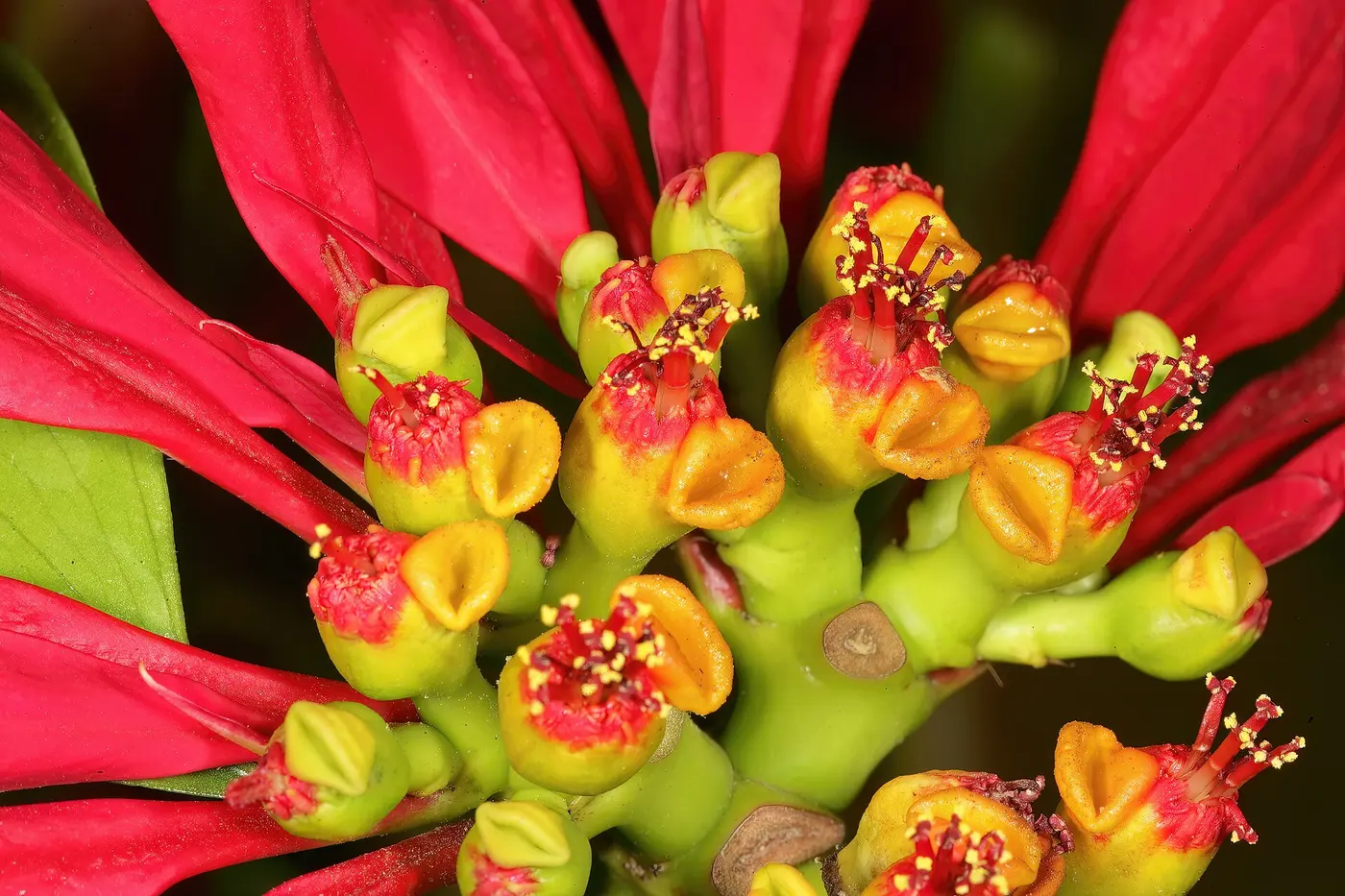
No. The red parts are bracts, a kind of leaf. The real flowers are the tiny yellow clusters in the middle.
As towns light up for Christmas, flower shops and garden centers fill their shelves with rows of bright red poinsettias. The combination of green leaves and red is about as Christmassy as colors get.
But are those red parts really flowers? They aren’t petals at all; they are leaves that have changed shape and color. A poinsettia’s real flowers are much smaller and far less noticeable.
The red parts are bracts
The red parts of a poinsettia are called bracts. A bract is a specialized leaf that grows just below a flower or bud, often wrapping or protecting it.
The real flowers sit in the center, where the red bracts spread out: those little clusters of yellow-green and yellow beads. Poinsettias belong to the spurge family, and each bead is a cyathium, a type of flower cluster unique to spurges. In other words, what looks like one flower is really a whole cluster of very simple ones. Inside a tiny cup sit several male flowers, each reduced to a single stamen with no petals, and one female flower. On the rim of the cup is a yellow gland that produces nectar.
Because the flowers themselves are so small and plain, the colorful bracts around them are thought to help attract the insects and birds that carry pollen. The poinsettia’s scientific name, Euphorbia pulcherrima, fits: pulcherrima is Latin for “most beautiful.”

Long nights bring the color
There’s a reason poinsettias turn red just in time for Christmas. They are short-day plants, which means they flower in response to the length of the night.
According to Japanese botanist Hidehiro Inagaki, poinsettias start forming flower buds when they sense the nights getting longer after the summer solstice. A University of Georgia extension publication says the buds form when the night lasts at least 11 hours and 45 minutes without any interruption by light. In Japan’s natural day length, according to the Ibaraki Prefectural Agricultural Research Center, the buds start forming around late October, and the bracts change color after that.
Growers use shade cultivation, blocking out light to lengthen the night artificially, so the plants color up earlier and can be shipped in time for the holiday season, when demand peaks. If you want your plant to color again the following year, keep it away from room lights at night. A poinsettia kept in a room that stays bright in the evening may never form buds, and its bracts may stay green.
Named after an American diplomat
Poinsettias are native to Mexico. In the wild they are shrubs that can grow about 3 meters (10 feet) tall, which is hard to picture from a potted plant.
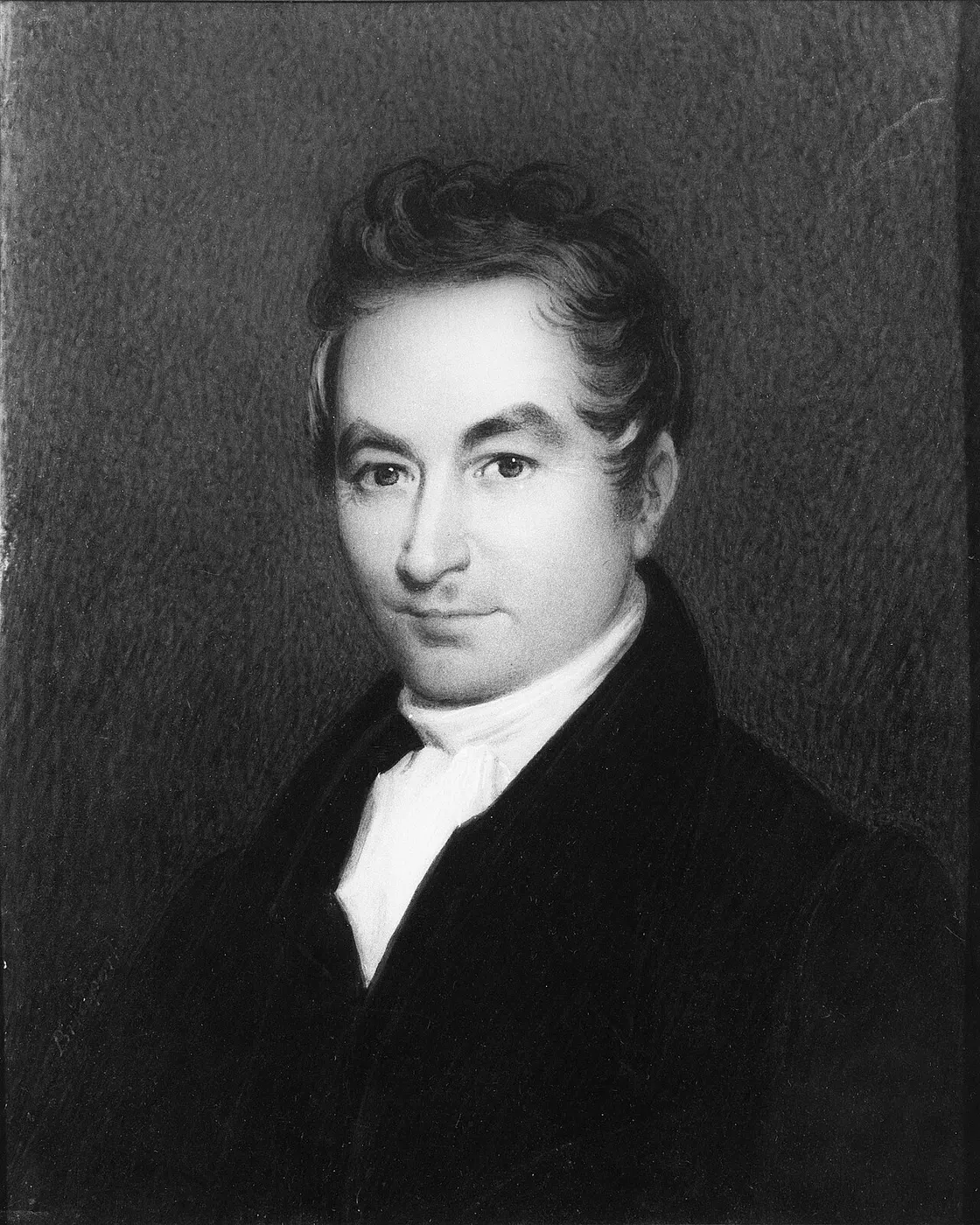
The name honors Joel Roberts Poinsett, a former congressman from South Carolina who became the first US minister to Mexico. A keen amateur botanist, Poinsett was appointed in 1825, came across the plant during his time in Mexico and introduced it to the United States. December 12, the day he died in 1851, is National Poinsettia Day in the US. In its native Mexico, the plant is called nochebuena, Spanish for Christmas Eve.

The poinsettia reached Japan in the Meiji era (1868–1912). Its Japanese name is shojoboku, the “shojo tree.” The shojo is a creature from Chinese legend with a bright red face and a great love of sake, and the name likens the plant’s scarlet bracts to its flushed face.
You may have heard that poinsettias are poisonous. But in a 1971 study at Ohio State University, rats fed very large amounts of the plant showed no signs of poisoning. The milky sap can still irritate the skin, and eating the plant can upset the stomach, so it’s best to keep it out of reach of small children and pets.