Why do trees drop their leaves in winter?
In winter, a leaf costs more than it earns. Leaves lose water and risk freezing, so the tree cuts them off itself.
Toward the end of autumn, cherry, zelkova and ginkgo trees let their leaves flutter to the ground. Trees that shed all their leaves for winter are called deciduous, as opposed to evergreens such as pines and camellias, which keep their leaves all year round.
Leaves are a tree’s vital factories, turning light into food. So why would a tree throw them away?
In winter, a leaf runs at a loss
A Q&A from the Japanese Society of Plant Physiologists explains a tree’s choice between evergreen and deciduous as a matter of return on investment. If the energy a leaf can earn through photosynthesis in winter is more than the energy it costs to keep that leaf alive, it pays to be evergreen. If it is less, it pays to be deciduous.
In winter the days are short, the light is weak and it is cold, so photosynthesis barely gets going. Keeping a leaf alive, meanwhile, still costs energy. Where winters are harsh, a leaf becomes a factory running at a loss.
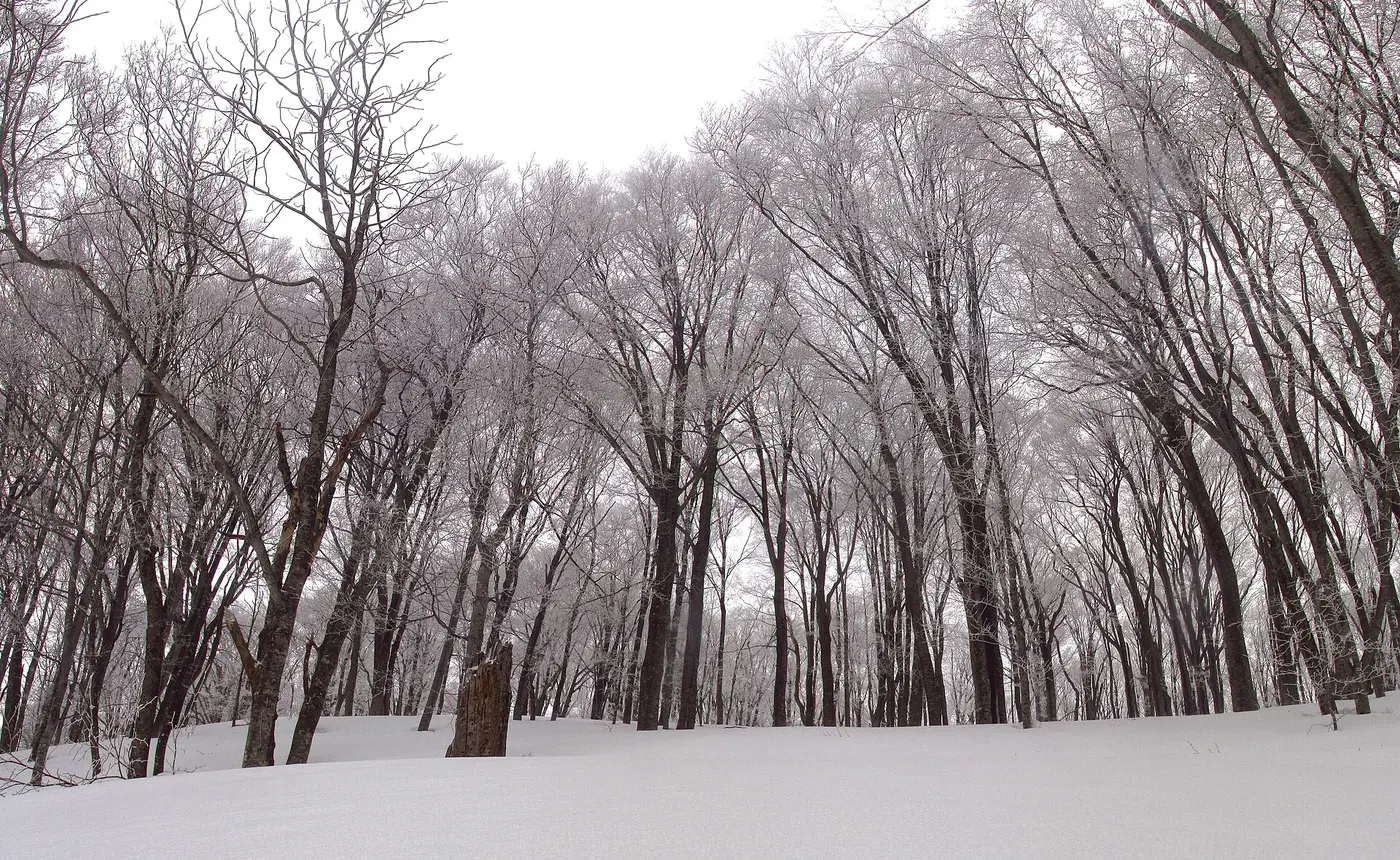

Leaves are also where water escapes
The other big reason is water. The surface of a leaf is dotted with tiny pores called stomata, through which water escapes as vapor. For a tree, leaves are also an exit for water.
When the ground freezes in winter, roots struggle to draw up water. If a tree kept its leaves, the water taken up could not keep pace with the water leaving, and the tree would run short of water in the middle of the cold. Thin, flat leaves are also easily damaged by freezing. And bare branches collect less snow and ice, so fewer of them snap under the weight.
Protecting the plumbing from freezing
Running through a tree’s trunk are fine tubes called vessels that carry water from the roots up to the leaves. If the water inside freezes in winter, the air that was dissolved in it comes out as tiny bubbles when it thaws. If leaves keep pulling water upward, these bubbles can merge and grow until they block the tube.
Dropping the leaves removes that pull, so the water stops moving and the bubbles are less likely to grow. Trees in cold regions are also known to build new vessels each spring to replace the previous year’s.
Conifers such as pines and Japanese cedars, by contrast, move water through tracheids, chains of short tubes separated by partitions. A bubble that forms is stopped at a partition and has little chance to grow. That is one reason many conifers can keep their needles through winter.
Not dying and falling, but being cut loose
Leaves do not simply die of cold and drop off. The tree cuts them loose on purpose.
As temperatures fall and a leaf begins to age, the leaf sends less of the plant hormone auxin down its stalk, and a special layer of cells, the abscission layer, starts to form at its base. There another hormone, ethylene, is produced, and enzymes loosen the material that glues the cells together. Soon a breath of wind is enough to break the leaf off.
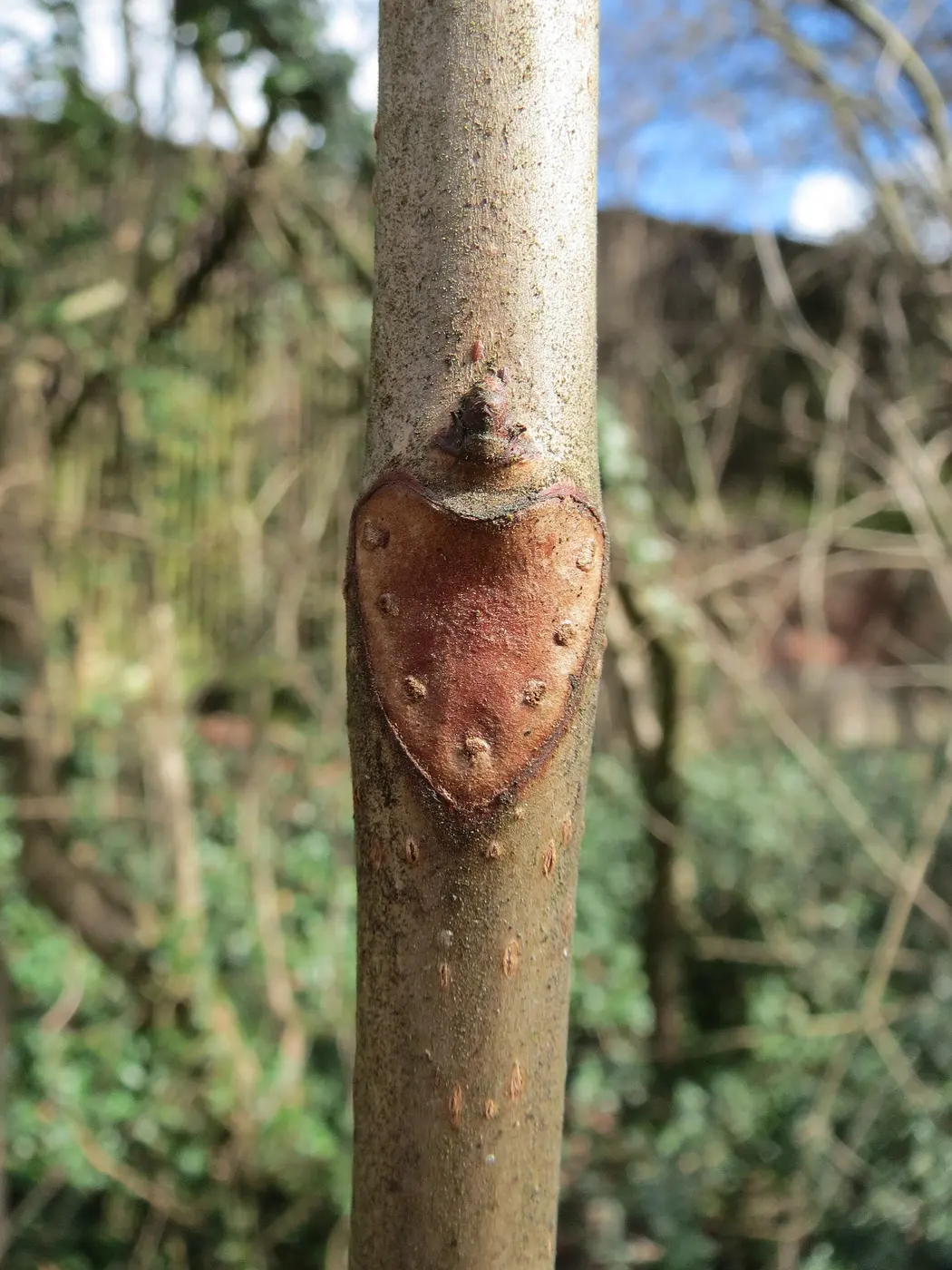

Once the leaf is gone, the wound is sealed so that no sap leaks out. Before letting go, the tree also pulls nutrients out of the leaf and back into its branches and trunk. According to a 1996 review of studies from around the world, trees recover on average roughly half of the nitrogen and phosphorus in their old leaves. Chlorophyll, the pigment that makes leaves green, is broken down too, and the nitrogen it contains is carried away. As the green drains out, hidden yellows appear. Autumn’s yellow leaves are a visible sign of this salvage operation.
There are deciduous trees in hot countries too. Teak forests in India, for example, drop their leaves in the dry season, when little rain falls. These forests shed their leaves to cope with drought rather than cold, a reminder that dropping leaves is above all a way to save water.