Who wrote the classic wedding marches?
The bride usually walks in to the Bridal Chorus from Wagner’s opera “Lohengrin,” and the couple leaves to the Wedding March from Mendelssohn’s music for “A Midsummer Night’s Dream.”
At church weddings in much of the world, the bride makes her entrance to a slow, stately tune on the organ: “Here comes the bride.” When the ceremony is over, the couple heads back down the aisle to a brilliant march that opens with a trumpet fanfare. Both tunes are instantly familiar, but they are by two different composers.
The slow one is the Bridal Chorus from Lohengrin, an opera by the German composer Richard Wagner. The brilliant one is the Wedding March that Felix Mendelssohn, also German, wrote for Shakespeare’s comedy A Midsummer Night’s Dream. Neither was written for a real wedding.
Stage music for a king
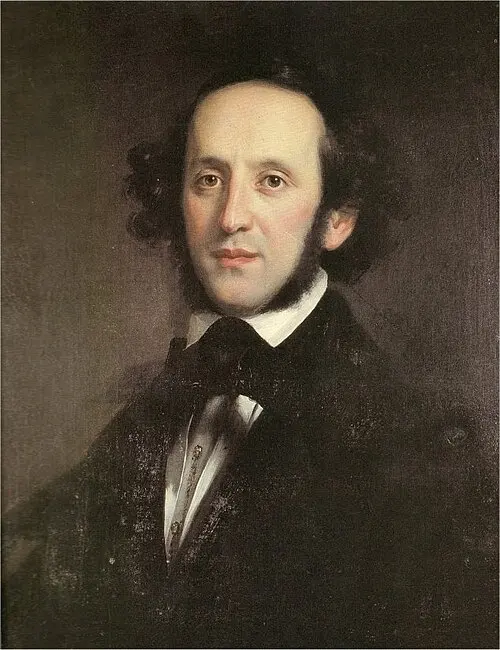
Mendelssohn first wrote music for A Midsummer Night’s Dream in 1826, when he was 17. That was a concert overture, meant to stand on its own. Sixteen years later, in 1842, King Frederick William IV of Prussia commissioned him to write music to go with a staging of the play, and the production opened with Mendelssohn’s score at Potsdam, near Berlin, on October 14, 1843.
The Wedding March is one of the numbers, an interlude played between the fourth and fifth acts. After a night of chaos in the forest caused by meddling fairies, everything is sorted out, and the duke of Athens and two pairs of young lovers all marry together. The march carries the play into that happy scene.

A chorus on the way to the bedroom
Wagner’s Lohengrin was first performed in Weimar on August 28, 1850, conducted by his friend Franz Liszt. Wagner himself could not attend. He had taken part in the failed uprising in Dresden the year before and was living in exile.
The Bridal Chorus, which begins “Treulich geführt” (“Faithfully guided”), opens the third act. The wedding has just taken place, and the guests are escorting the bride, Elsa, and the knight Lohengrin to their bridal chamber. In the opera, then, it is not a procession to the altar at all. It is the song that sees the couple off to bed.
The princess’s wedding in 1858
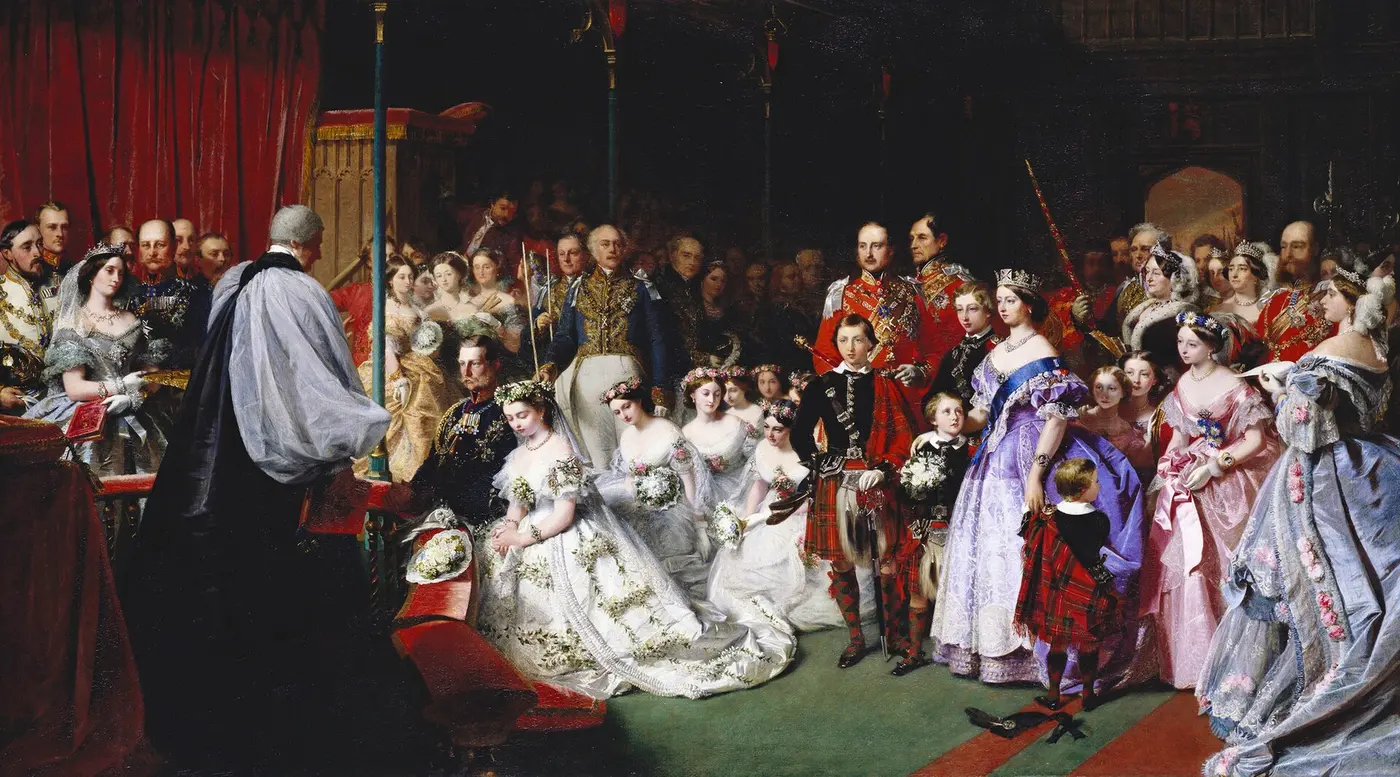
The story usually told is that the two pieces became wedding favorites thanks to a royal wedding in London on January 25, 1858, at the Chapel Royal of St James’s Palace. The bride was Victoria, Princess Royal, the eldest daughter of Queen Victoria, and the groom was Prince Frederick William of Prussia, later the German emperor Frederick III. According to this story, the bride entered to Wagner and the couple left to Mendelssohn, and the rest of the world followed. Time magazine has told it this way, too.
But the official account of the ceremony, printed in The London Gazette soon afterward, tells a slightly different story. As the queen entered the chapel, the band played a march from Handel’s Occasional Oratorio. The groom’s procession entered to a march from Handel’s Joseph, and the bride to a march from Handel’s Judas Maccabaeus. Only at the end, as the procession left the chapel, did Mendelssohn’s Wedding March ring out. Wagner is not mentioned anywhere.
There was a neat family connection, though. The groom was a nephew of Frederick William IV, the king who had commissioned Mendelssohn’s music.

So when did Wagner join in? Nobody can say for sure when the habit began, but there is a clear record from another British royal wedding, held on July 6, 1893, when Prince George, Duke of York, the future King George V, married Princess Mary of Teck. The London Gazette reports that as the bride’s procession moved up the chapel, “Wagner’s Bridal March from Lohengrin” was played on the organ, and that Mendelssohn’s Wedding March was played as the couple left. By then, at least, the pairing of Wagner in and Mendelssohn out had reached the royal family.
Two very different stage marriages
Mendelssohn’s march celebrates the happy ending of a comedy. On the wedding night, a troupe of workmen puts on an amateur play, and at the end the fairies bless the newlyweds’ houses.
Lohengrin ends in tragedy. Lohengrin has made Elsa promise never to ask his name or where he comes from. But alone in the bridal chamber, Elsa cannot bear the uncertainty and asks the forbidden question. Before the assembled court, Lohengrin reveals that he is a knight of the Holy Grail and the son of King Parsifal, and then he leaves on the boat that has come to carry him away. Elsa falls to the ground, dead from grief. The Japanese encyclopedia Nipponica describes the Bridal Chorus as music that, if anything, foreshadows the drama’s tragic end.