How was “Silent Night” born?
On Christmas Eve 1818, a young priest and a schoolteacher sang it for the first time in a village church in Austria, accompanied by a guitar.
300+
Candlelight, a hushed church on Christmas Eve, and a congregation softly singing “Silent Night.” For many people, no other song captures Christmas quite so well.
Its original German title is “Stille Nacht! Heilige Nacht!” (“Silent night! Holy night!”). Today it is sung around the world, but it was written just over 200 years ago in a small Austrian village, for a single night.
Christmas Eve, 1818
The setting was Oberndorf, a village north of Salzburg on the Salzach River. In 1817, a young priest named Joseph Mohr arrived at the village’s St. Nicholas Church. While at his previous post in Mariapfarr, in 1816, he had written a poem with six verses.
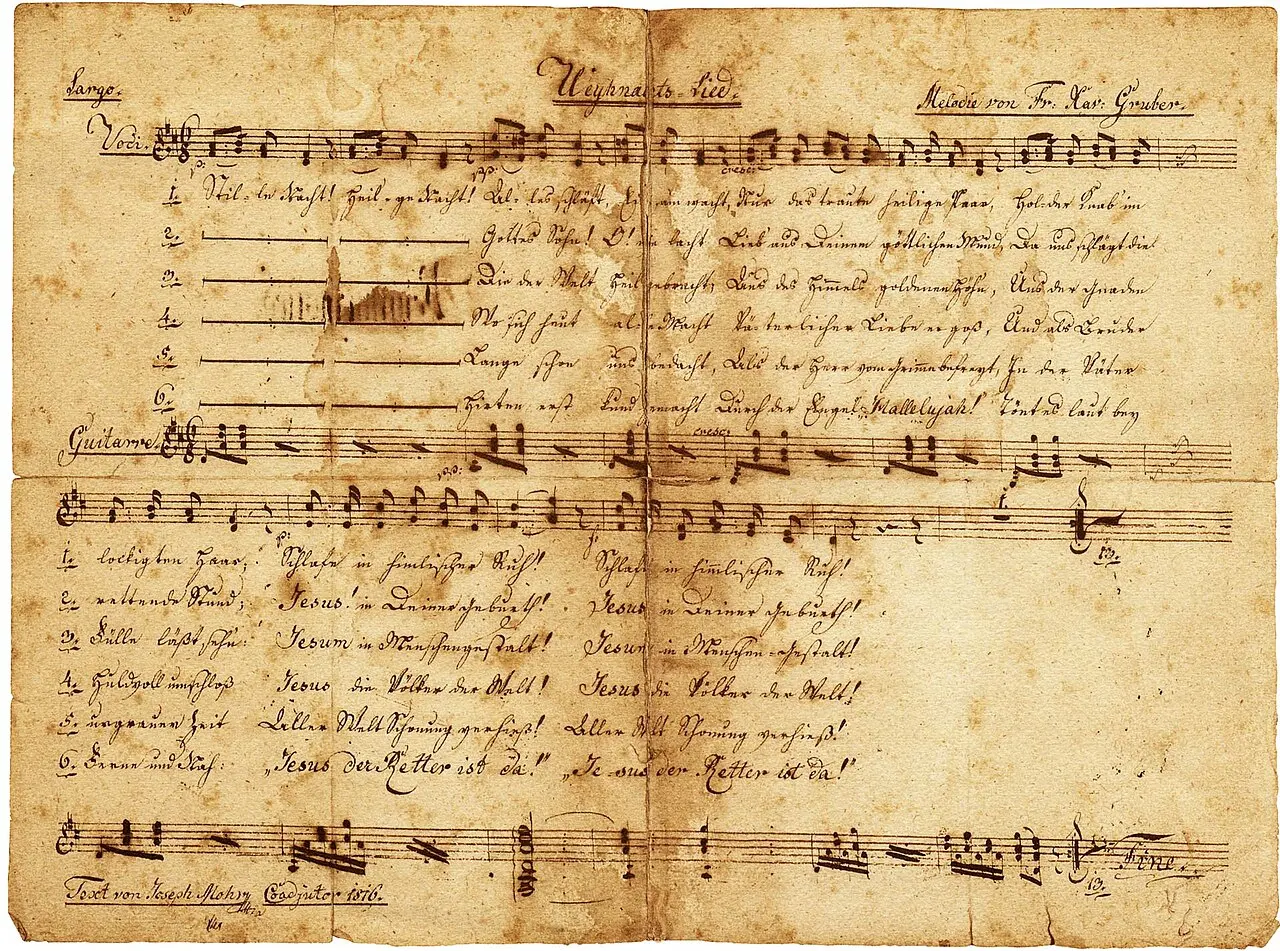
On December 24, 1818, Mohr showed the poem to Franz Xaver Gruber, a schoolteacher and organist in a nearby village, and asked him to set it to music that could be accompanied on the guitar. Gruber wrote a melody for two solo voices and choir that same day.
After Mass that night, with Mohr playing the guitar, the two men sang it together in the church. That was the first performance of “Silent Night.” Gruber’s first manuscript has not survived, but it is recorded as a gently rocking piece in 6/8 time with guitar accompaniment.

Did a mouse really chew the organ?
Why a guitar and not the organ? The popular answer is that a church mouse had gnawed a hole in the organ’s bellows, leaving it silent.
SalzburgerLand, the tourism board of the Austrian state of Salzburg, rates the truth of that story at 0 percent. The tale of a broken organ spread from an essay written in 1909, and the mouse appeared even later, in a 1954 book by the writer Hertha Pauli.
In reality, the organ was in poor repair but still playable. The following year, the organ builder Carl Mauracher was called to the village to inspect it. Mohr and Gruber planned to sing after Mass had ended, so they may well have intended to use the guitar all along.
Spread as an anonymous Tyrolean song
According to Gruber, it was that same organ builder, Mauracher, who carried the song out of the village, to the Zillertal valley in Tyrol. There, families of traveling singers such as the Strassers and the Rainers took it up and performed it far and wide. The Rainers are said to have sung it in New York in 1839.
Along the way, however, the authors’ names were forgotten. When the song was first printed in Dresden, Germany, in 1833, it carried no authors’ names and was presented as a song of the Zillertal singers. People even began to suggest that Haydn or Mozart had composed it. In 1854, after the royal court musicians in Berlin wrote to ask who the composer was, Gruber set down an account of how the song had come about. A copy written out in Mohr’s own hand was not discovered until 1995.

A song that reached the trenches
At Christmas 1914, during the First World War, German and British soldiers in parts of the Western Front spontaneously stopped fighting in what became known as the Christmas truce. A British soldier, Private Albert Moren, later recalled Christmas Eve: “There was a lot of commotion in the German trenches and there were these lights… And then they sang ‘Silent Night’ – ‘Stille Nacht’. I shall never forget it… I thought, what a beautiful tune.”
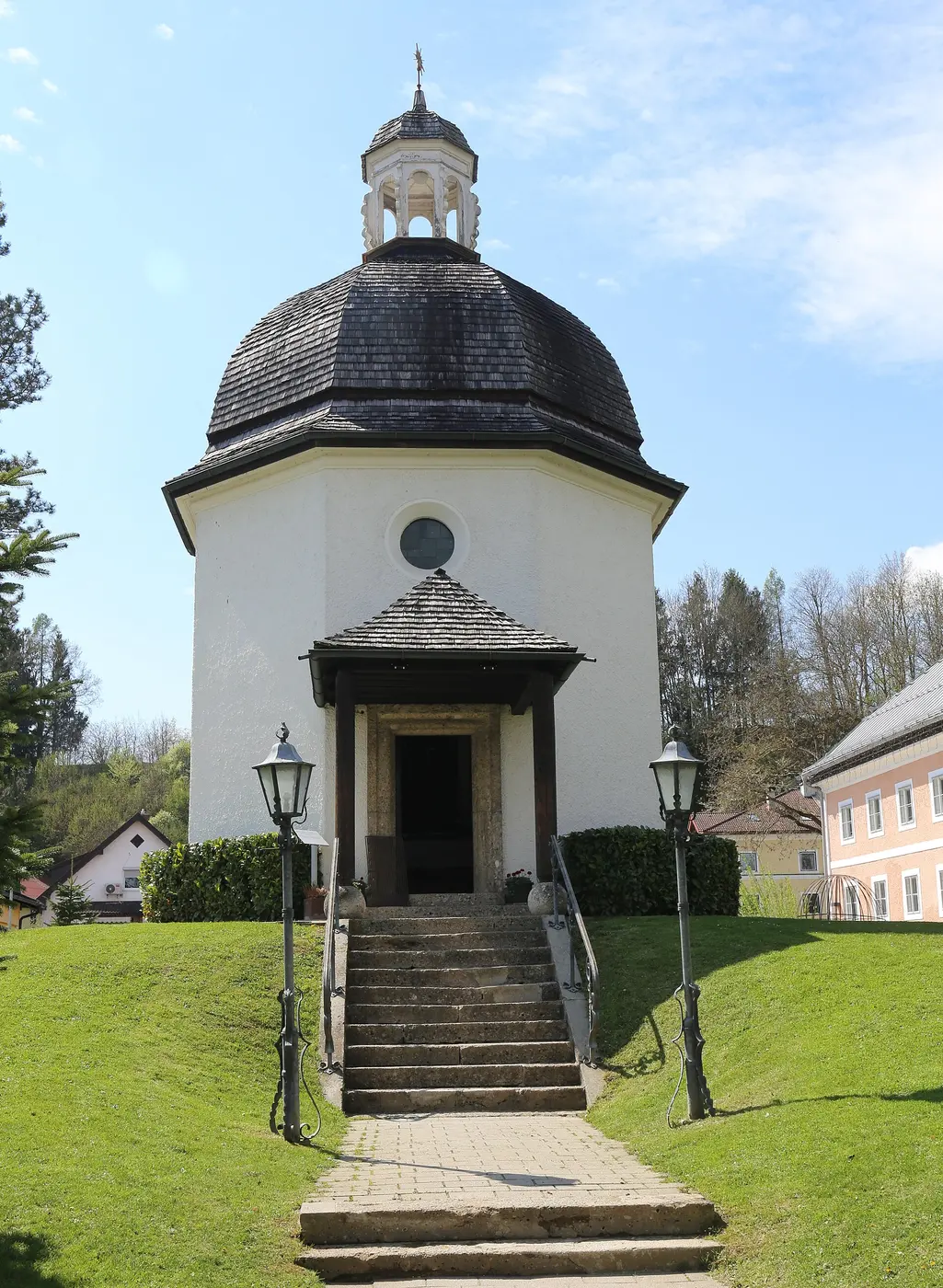
Today the song is sung in more than 300 languages and dialects, and in 2011 it was added to Austria’s national inventory of intangible cultural heritage. The original church, damaged by repeated flooding, was eventually torn down, but a small Silent Night Chapel now stands on the spot.