Do audiences stand for the “Hallelujah” chorus because a king once did?
The story of George II rising to his feet comes from a secondhand account written 37 years after the London premiere. There is no contemporary record that the king was even there.
37years
“Hallelujah! Hallelujah!” The most famous number in Handel’s oratorio Messiah is the chorus that closes Part Two. At concerts in Britain and the United States, many audiences rise to their feet when it begins.
The usual explanation goes like this: at the London premiere, King George II was so moved that he stood up, and since no one may sit while the king stands, the whole audience stood too. But trace that story back to its source, and you find a rather flimsy piece of hearsay.
A Messiah born in Dublin
George Frideric Handel was born in Germany, settled in London in 1712, and made his name there with operas and oratorios. Messiah set a text that his friend Charles Jennens had compiled from the Bible, and Handel wrote the music in a little over three weeks at the end of the summer of 1741. His manuscript records that he finished it on September 14.
The first performance took place not in London but in Dublin, Ireland. On April 13, 1742, the work was given at the Music Hall in Fishamble Street, at a concert for the benefit of three charities. The Dublin papers raved that “words are wanting to express the exquisite delight it afforded to the admiring crowded audience.”

A cool reception in London
The London premiere came on March 23, 1743, at the theater in Covent Garden. Here the response was lukewarm. Some objected to a sacred subject being performed in a playhouse. That season, Handel’s new oratorio Samson was given eight times, but Messiah only three. The following year, it was not performed at all.
In the 19th century, Victor Schœlcher, who wrote a biography of Handel, combed through London’s newspapers from 1741 to 1743 and found not a single line about the London premiere of Messiah. Yet a few years earlier, when the king attended Handel’s oratorio Saul, the London Daily Post had duly reported it.
A letter written 37 years later
The story of the king standing first appears in writing much later. On May 25, 1780, the Scottish poet James Beattie wrote to a clergyman friend:
“When Handel’s ‘Messiah’ was first performed, the audience were exceedingly struck and affected by the music in general; but when that chorus struck up, ‘For the Lord God Omnipotent reigneth,’ they were so transported, that they all, together with the King, (who happened to be present) started up, and remained standing till the chorus ended: And hence it became the fashion in England for the audience to stand while that part of the music is performing.”
Beattie wrote that he had heard the story from Lord Kinnoull. In other words, it was a secondhand account, set down 37 years after the London premiere. The letter does not even say which performance it means, only that it was when the work “was first performed.”
The same letter passes on a second anecdote from Lord Kinnoull. A few days after the premiere, Kinnoull complimented Handel on “the noble entertainment” he had given the town. “My Lord,” Handel replied, “I should be sorry if I only entertained them; I wish to make them better.”
Was the king really there?
Among Handel scholars, the general view is that there is no reliable evidence that George II ever attended a performance of Messiah.
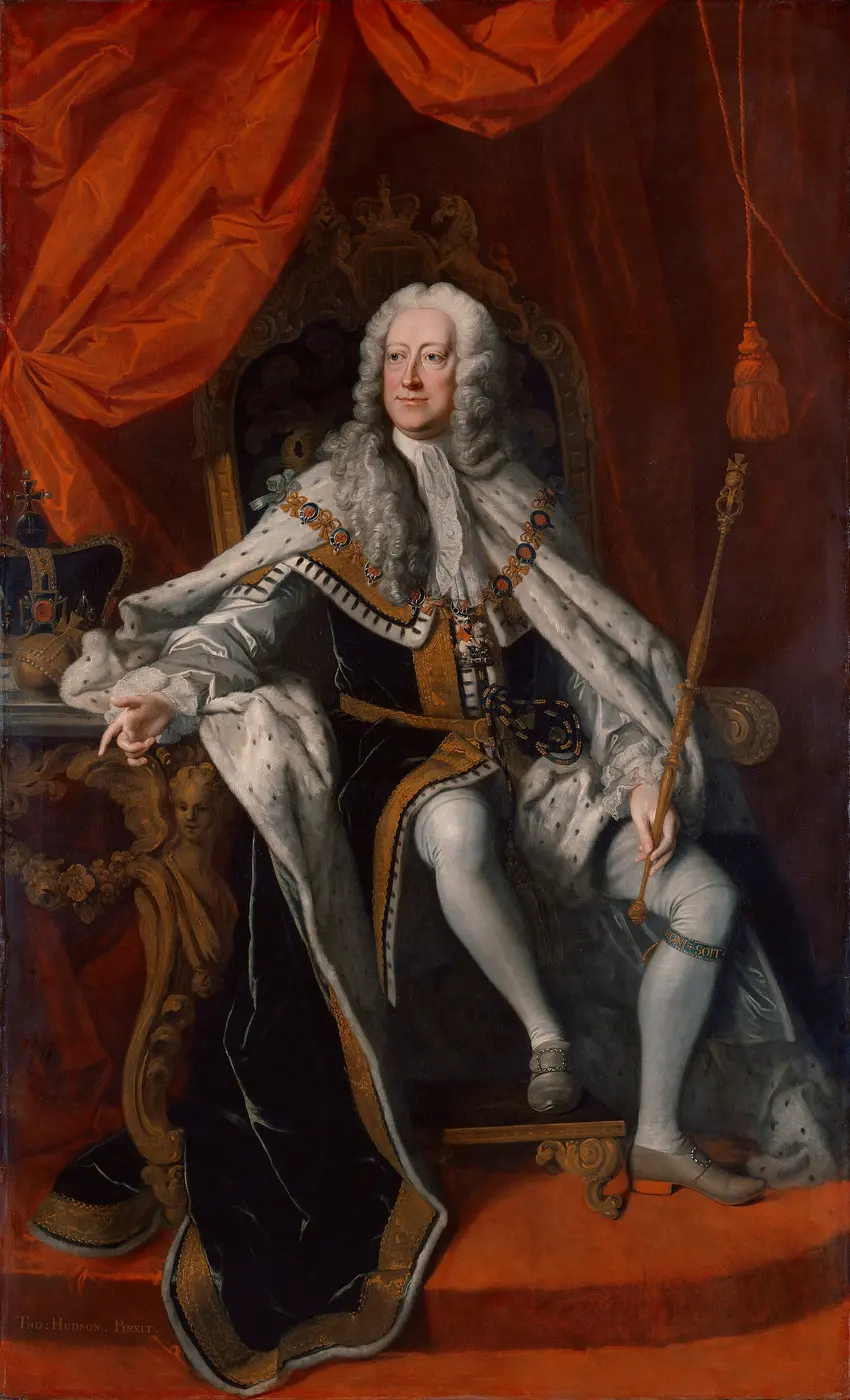

What Beattie’s letter does show is that by 1780 the custom of standing for the chorus was already well established in England. After its slow start in London, Messiah was given every year from 1750 at charity performances Handel led at London’s Foundling Hospital, and it gradually became one of the best-loved works in Britain. Whether or not the king ever really rose to his feet, his story had by then become the way people explained the custom.