Can you play Chopin’s “Minute Waltz” in a minute?
Only in a great hurry. A normal performance takes about two minutes. The “minute” in its nickname is usually said to mean “small,” not sixty seconds.
2minutes
Chopin’s Waltz in D-flat major, Op. 64 No. 1, is known in English as the “Minute Waltz” and in Japan as the “Little Dog Waltz.” It is a light, quick little piece in which the right hand spins round and round a handful of notes as it races along.
Hear the word “minute,” and most of us think of sixty seconds. So the waltz is often assumed to be a piece you play in one minute. Can you, really?
A late miniature
According to the PTNA Piano Encyclopedia, a Japanese reference on piano music, Chopin wrote the waltz in 1846 and 1847. It was published in 1847 in Paris and Leipzig as the first of the three waltzes of Op. 64. It is dedicated to Countess Delfina Potocka, a friend who had supported Chopin since his early days in Paris and who was also his piano pupil.
The tempo marking is molto vivace, very lively. The waltz is in three parts, a light opening section, a singing middle section in which the notes are held, and a return of the opening, and it ends with the right hand plunging down four octaves in one sweep.
At the time, Chopin’s relationship with the writer George Sand, his companion of some nine years, was nearing its end. They parted in 1847, the year the waltz was published.
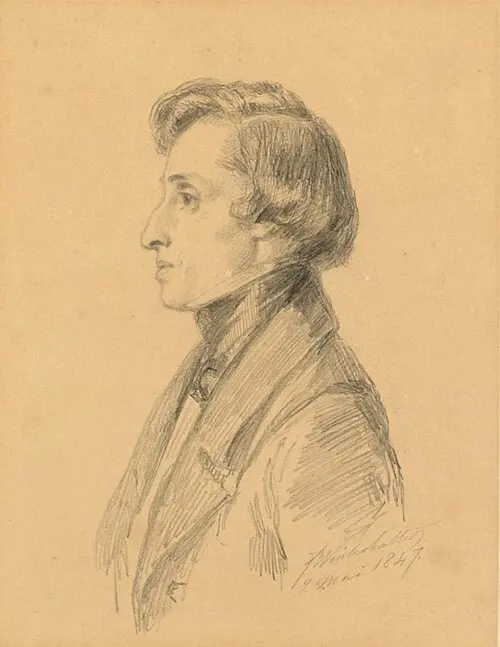

Is a “minute” a minute?
In English, “minute” can be a noun pronounced MIN-it, meaning sixty seconds, or an adjective pronounced my-NOOT, meaning tiny. The nickname, we are usually told, uses the adjective: it means a “little waltz.” Either way, the name was not Chopin’s.
Even this explanation, though, is hard to pin down. The British pianist and writer Susan Tomes has written that she tried to trace the “small” story to a source and could not.
So how long does the piece actually take? The PTNA encyclopedia gives its length as two minutes. When Tomes was a child, her piano teacher handed her the music and asked her to come back the next week and say what she thought of the nickname. Her verdict: played in one minute it sounded horrible, but given about a minute and 45 seconds it was delightful. A pianist with very fast fingers can get through it in a minute, but the waltz then turns into a breathless gabble.
The spinning puppy
In French the piece is called the Valse du petit chien, the “Little Dog Waltz,” and the Japanese nickname comes from the same story.
The best-known version of the story appears in a biography of Chopin published in 1888 by Frederick Niecks, a German-born musicologist who worked in Britain. George Sand, he writes, had a little dog that liked to turn round and round trying to catch its tail. One evening, watching it at this game, she said to Chopin that if she had his talent she would compose a piano piece for the dog. Chopin at once sat down at the piano and improvised the Waltz in D-flat.
Niecks adds that the story was well known among Chopin’s pupils and friends but was not always told the same way. In another version, the little dog was playing with a ball of wool. It is an anecdote passed down by people around Chopin, not something he wrote himself.
The dog, at least, seems to have been real. In October 1846, writing to his family from Nohant, Sand’s country house in central France, Chopin described “that little dog, Marquis,” lying on his sofa. Its coat, he wrote, was like marabou feathers, pure white, and it was as clever as you please. Later accounts identify Marquis as the dog in the story.
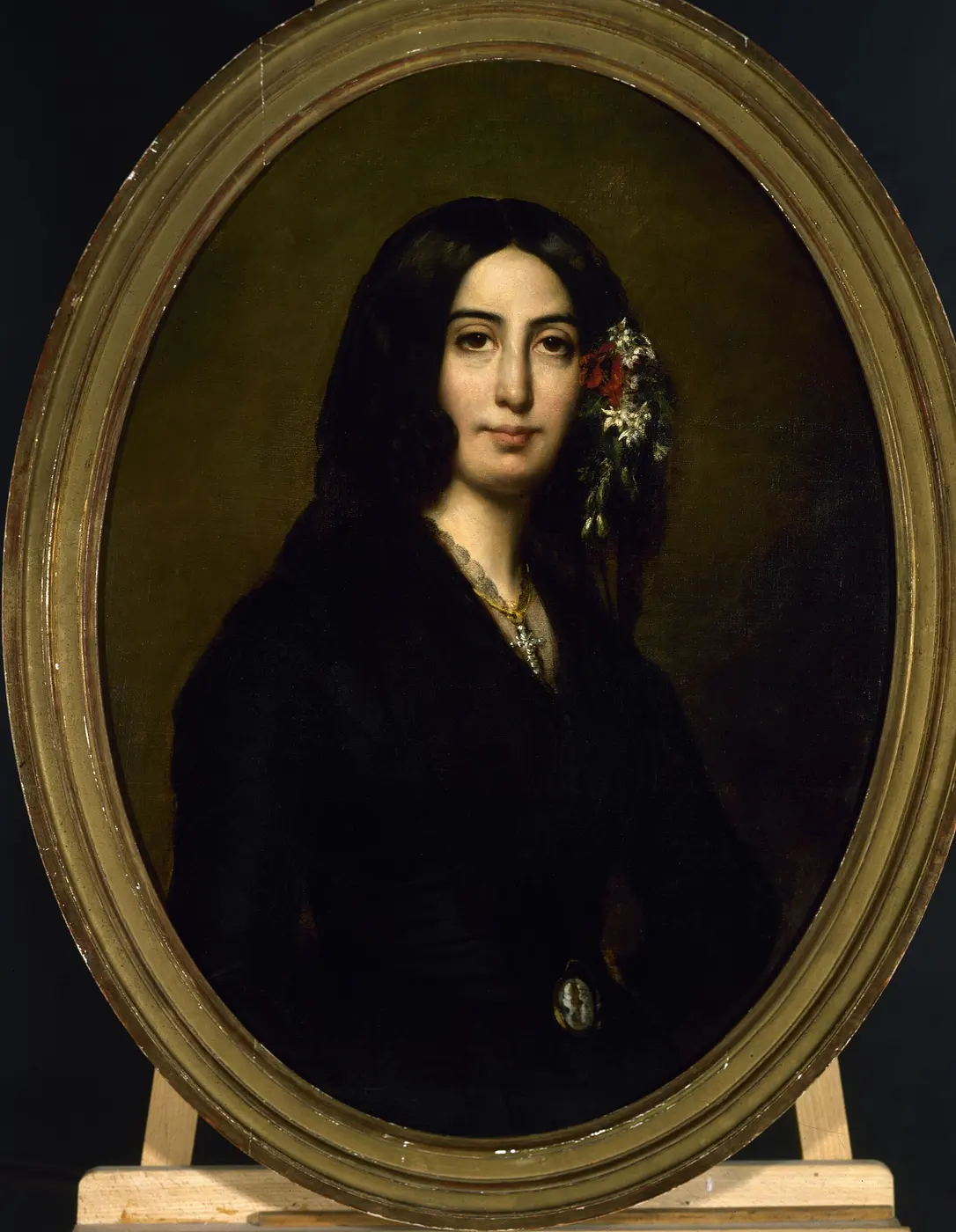

Chopin’s last Paris concert
Chopin played the waltz in public himself. On February 16, 1848, he gave a concert in the rooms of the piano maker Pleyel in Paris. According to the recollections of his pupil Madame Dubois, quoted by Niecks, the D-flat waltz was encored amid cheers, and a grand lady in the audience wanted to know Chopin’s secret for making his scales flow so smoothly.
A few days later, revolution broke out in Paris. Chopin left for London that spring, and the evening turned out to be the last concert he ever gave in the city.