Is vanilla the fruit of an orchid?
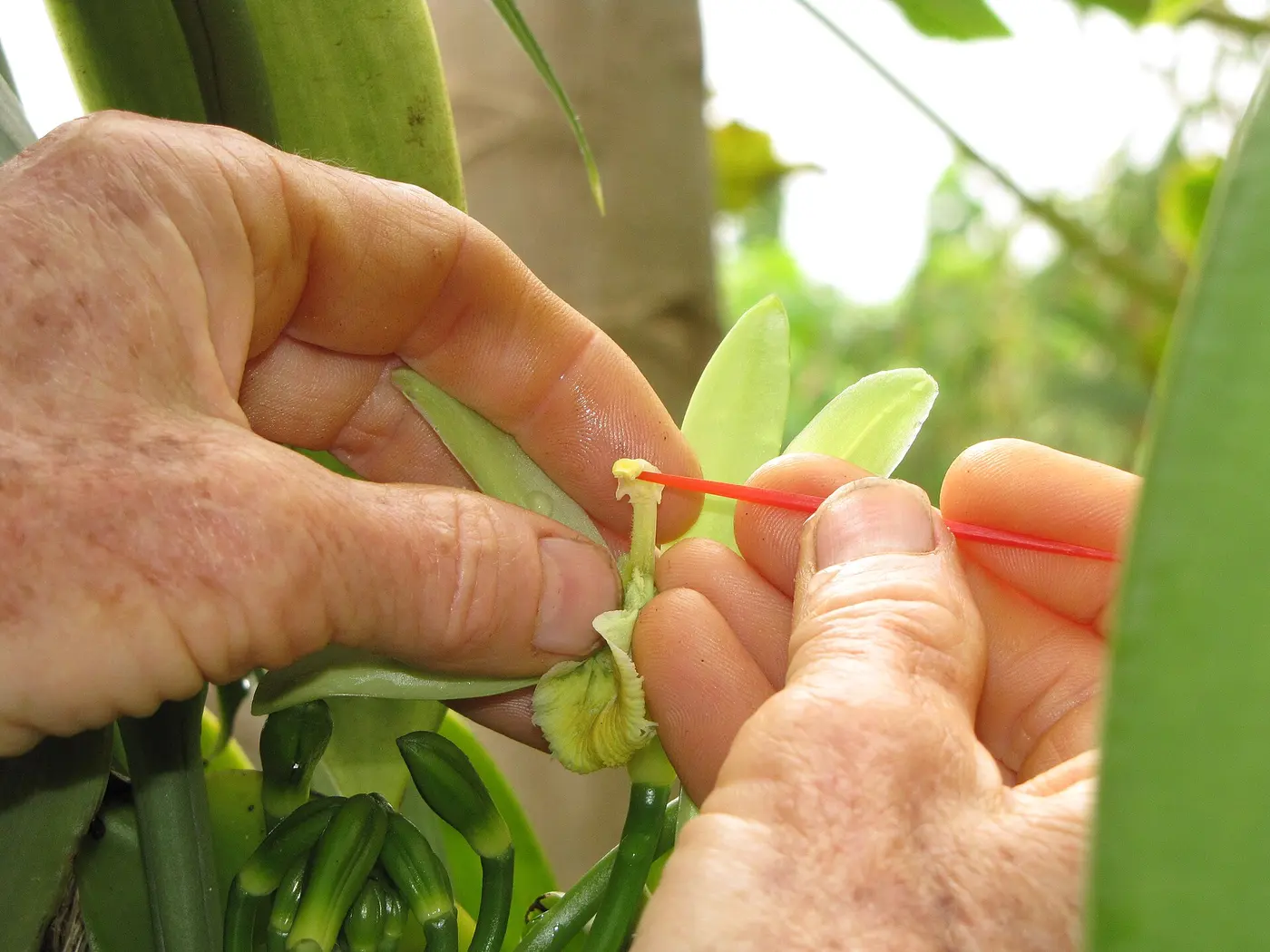
Yes. Vanilla beans are the long, slender fruits of a climbing orchid, cured until they turn fragrant. Outside its native range, every flower is still pollinated by hand.
1,000–2,000flowers
Vanilla is the scent of ice cream, custard and cookies. It comes from slender black vanilla beans, which, despite the name, have nothing to do with beans. They are the fruits of a climbing orchid.
What’s more, this orchid almost never sets fruit on its own once it leaves its native range. The world’s vanilla is still produced by pollinating the flowers by hand, one at a time. The method that made this possible was spread across an island in the Indian Ocean by an enslaved boy.
Curing a green pod
According to the Japanese encyclopedia Nipponica, vanilla is a climbing orchid native to the tropics from southeastern Mexico through Central and South America. It sends out aerial roots from its stem to clamber up trees, growing more than 10 meters (33 feet) long. Its fruit is a slender pod 20 to 30 centimeters (8 to 12 inches) long, packed with tiny seeds.
A freshly picked green pod, though, does not yet have that famous fragrance. Vanillin, the main aroma compound, is locked up in a form bound to sugar. The pods are harvested before they are fully ripe. In one method described by the Heibonsha World Encyclopedia, they are dipped briefly in hot water, laid in the sun by day, and packed into boxes wrapped in blankets at night. Over many days of this slow fermentation, enzymes in the pod split off the sugar to release vanillin, and the pod turns supple and chocolate brown.
No fruit away from home
Until the 18th century, vanilla came only from the Americas, where wild vines were harvested in the forest. Eventually vines were carried to Europe and to tropical colonies, where they flowered but bore no fruit.
Inside a vanilla flower, the pollen-bearing anther is separated from the stigma, the part that receives pollen, by a thin flap. The flower needs an animal to get pollen past that barrier, but according to a 2024 review by Adam Karremans of the University of Costa Rica, nobody is sure which insect does the job. Stingless bees are often named as the natural pollinators, but he says there is no actual evidence for it. Even in Mexico, an estimated one in every 100 to 1,000 flowers is pollinated naturally.

A professor in Liège and a boy on Réunion
The first recorded hand pollination took place in Liège, Belgium. According to Karremans, Charles Morren, director of the city’s botanical garden, succeeded on February 16, 1836, and the first pod ripened the following year.
Meanwhile, on the French island of Réunion, east of Madagascar, an enslaved boy named Edmond, born in 1829, was working as a gardener for the planter Féréol Bellier-Beaumont. Edmond worked out a simple technique: lift the flap inside the flower with a thin stick, then press the pollen onto the stigma with a finger. In an 1853 letter, Bellier-Beaumont’s nephew wrote that the earlier success in Europe had caused a stir only among scholars, and that its method was far less simple. Edmond was sent around to other plantations to teach his technique.
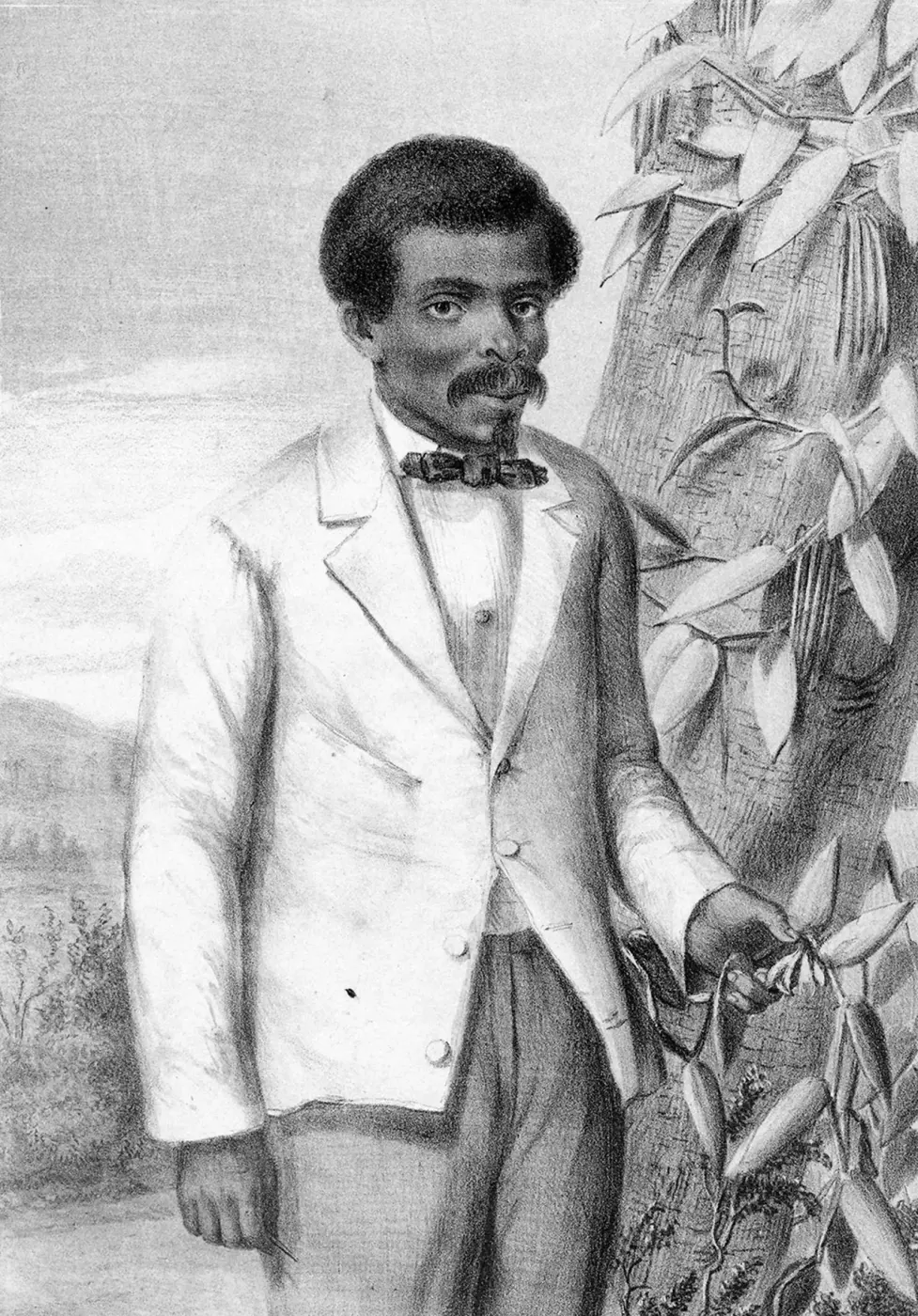

The discovery is usually dated to 1841, when Edmond was 12. That date, however, rests on an 1861 letter in which Bellier-Beaumont wrote that his memories, and the boy’s, pointed to 1841. Karremans notes that the method seems to have first appeared in a local newspaper in 1843, and that news of Morren’s success had already reached the island. Calling Edmond the first discoverer is an overstatement, he argues. Still, he writes, Edmond’s role in finding a practical technique and teaching it across the island is undisputed. When slavery was abolished in 1848, Edmond became a free man and took the surname Albius. He died in 1880.
Still done by hand
According to a 2024 paper by a team at Western Sydney University, a vanilla flower stays open for just one day. It opens early in the morning and closes in the afternoon, so it must be pollinated that same day. A skilled worker can manage 1,000 to 2,000 flowers a day, and the work accounts for about a third of the labor cost of growing vanilla. Because hand pollination yields far more pods than nature does, Karremans writes, it is used on commercial plantations everywhere, even in the orchid’s native lands.
Citing data from the Food and Agriculture Organization of the United Nations, his review puts world production at about 8,000 metric tons a year between 2010 and 2019. Madagascar is the biggest producer, and more than 90% of the crop is grown outside the plant’s native range. Most vanilla-flavored products, however, rely not on natural vanilla but on synthetic vanillin, made from raw materials such as lignin, a byproduct of turning wood into paper pulp.