Were umpires’ hand signals invented for a deaf ballplayer?
It’s a famous story, but the evidence is thin. Signals used by and for deaf players may have played a part, but nobody can pin down where umpires’ signals began.
Baseball umpires announce their calls with their bodies as well as their voices. A right arm thrust into the air means strike, a punch of the fist means out, and both arms swept out flat means safe. Even in a packed stadium, fans in the far reaches of the outfield can tell the call at a glance.
There is a well-known story about where these gestures came from. Umpires, it says, began signaling their calls for the benefit of William Hoy, a deaf outfielder who starred in the major leagues at the end of the 19th century. It is a heartwarming tale, but baseball historians who have looked into it have found the truth to be more complicated.
The outfielder called “Dummy”
According to his biography from the Society for American Baseball Research (SABR), William Hoy was born in Ohio in 1862. Meningitis left him deaf at the age of three, and he graduated as valedictorian from the Ohio School for the Deaf. He ran a shoe repair shop while playing ball, turned professional in 1886 and played in the major leagues from 1888 to 1902.
He was under 170 cm (5 feet 7 inches) tall but was known for his speed and his throwing arm, and he collected more than 2,000 major league hits. In a game on June 19, 1889, he threw out three runners trying to score. It was an era of blunt and often cruel nicknames, and deaf players were routinely called “Dummy.” Hoy was “Dummy Hoy,” and he used the name himself.
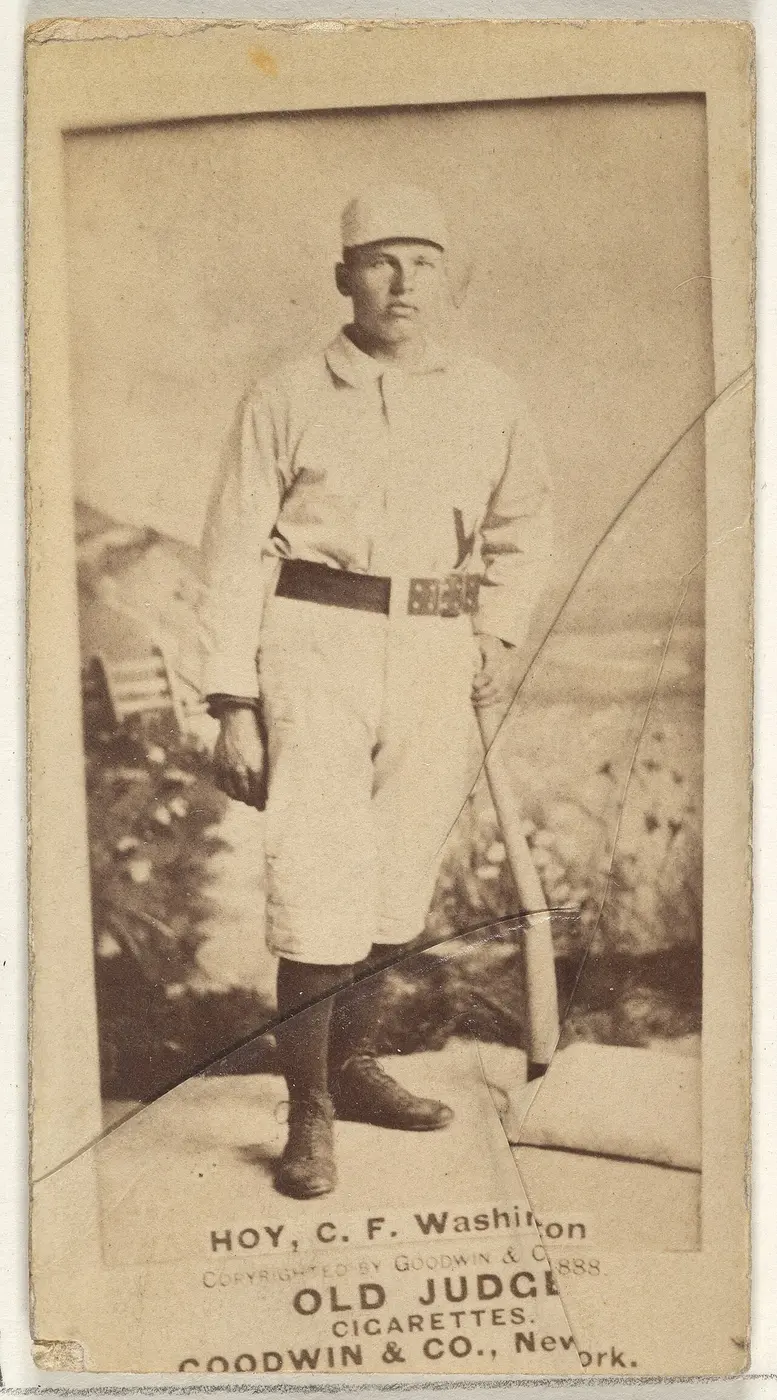

The signals came from the third-base coach
Batting was a constant struggle for a player who could not hear. According to an article in SABR’s Baseball Research Journal, early in his career Hoy had to turn around after every pitch to see what the umpire had called. Meanwhile, the opposing pitcher would hurry the next one in, and his hitting suffered.
The fix was for the third-base coach to relay the umpire’s calls with his hands: right hand up for a strike, left hand up for a ball. Hoy later said in The Silent Worker, a magazine for the deaf community, that his coaches’ signals had given later umpires the idea, and that umpires now raised their right arm to emphasize a strike.
The baseball historian Bill Deane, however, has pointed out that no articles from Hoy’s playing days connect him with umpires’ hand signals. In Deane’s reading, Hoy’s own words show that umpires adopted the practice after his career was over, and that Hoy simply assumed his coaches’ signals had inspired it. The person signaling to Hoy was the third-base coach, not the umpire.
The umpire who claimed the credit
So who started it? The National Baseball Hall of Fame credits Bill Klem, who umpired in the National League from 1905 to 1941, with introducing arm signals for strikes and for fair and foul balls. Klem himself claimed to have invented the jerk of the thumb over the shoulder for “out” and the palms-down gesture for “safe.”
But another SABR article finds no firm support for that either. Umpire Cy Rigler is credited with raising his right arm to call strikes in 1905, in the minor leagues, yet when he reached the majors the following year he found hand signals already in use. Going back further, Deane cites a game in Mobile, Alabama, on October 20, 1886, umpired by Ed Dundon, a deaf pitcher and the first deaf player in the majors. Dundon showed strikes with the fingers of his right hand and balls with his left, shook his head for “not out” and waved his hand for “out.”
Klem’s claim has drawn some sharp words. In a 2009 documentary, the great pitcher Bob Feller said: “Bill Klem on his plaque said he invented hand signals. Of course, he didn’t invent hand signals any more than I did.”
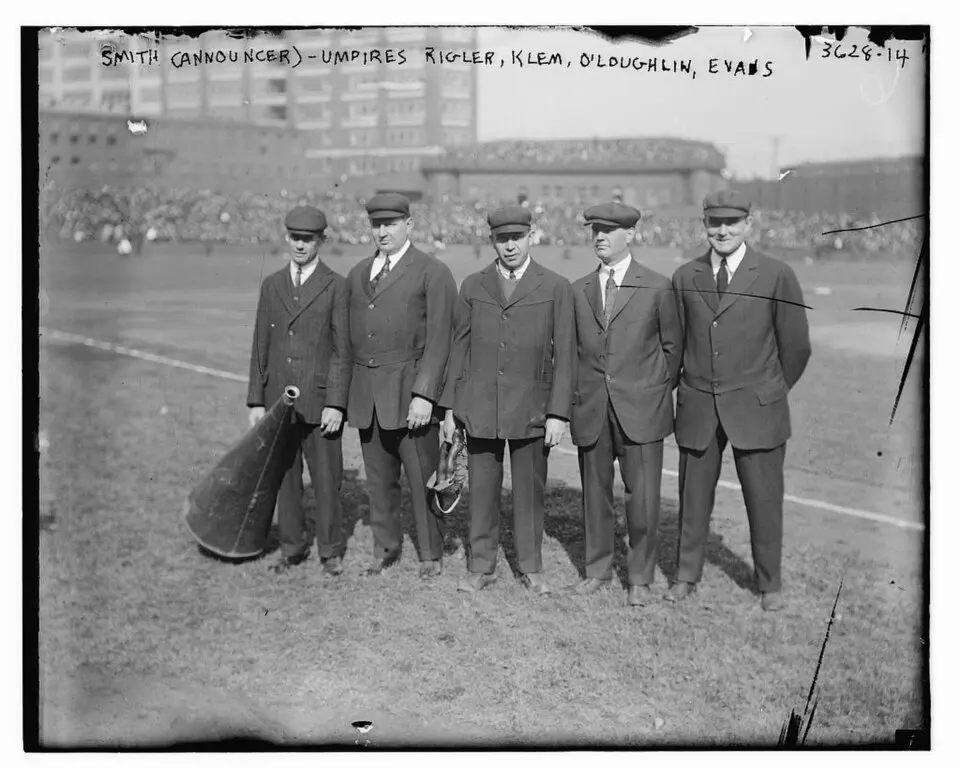

Hand signals spread gradually in the early 1900s, and by about 1908 they were standard among major league umpires. The Spalding Guide of the time called them an “invaluable assistance” in making decisions understood when the crowd was too large for the human voice to carry to every part of the field. In the end, as the SABR article concludes, it is probably futile to try to pin down the origin of umpires’ signals today. Hand signals used by deaf players may well have played a part, but there is no good evidence that they were invented for Hoy alone.