Why does bowling use ten pins?
A famous story says a tenth pin was added to dodge bans on ninepins, but ten-pin games existed earlier.
3697alleys
At the end of the lane, white pins stand in a triangle: one in front, then two, three and four. Ten in all. Roll a heavy ball and topple them all for a strike; leave even one standing and you feel the sting. The fun of bowling is inseparable from those ten pins.
But why ten? Look into it and you’ll find a very human story: the game was banned by law, so people added one more pin to slip through a loophole. That story, though, seems to have a sequel.
It began as a nine-pin game
Modern bowling is said to descend from a game long popular in Germany called Kegeln. It used nine pins, set out in a diamond. Unlike lawn bowls, the upper-class game of rolling balls across grass, it was a pastime for ordinary townspeople.
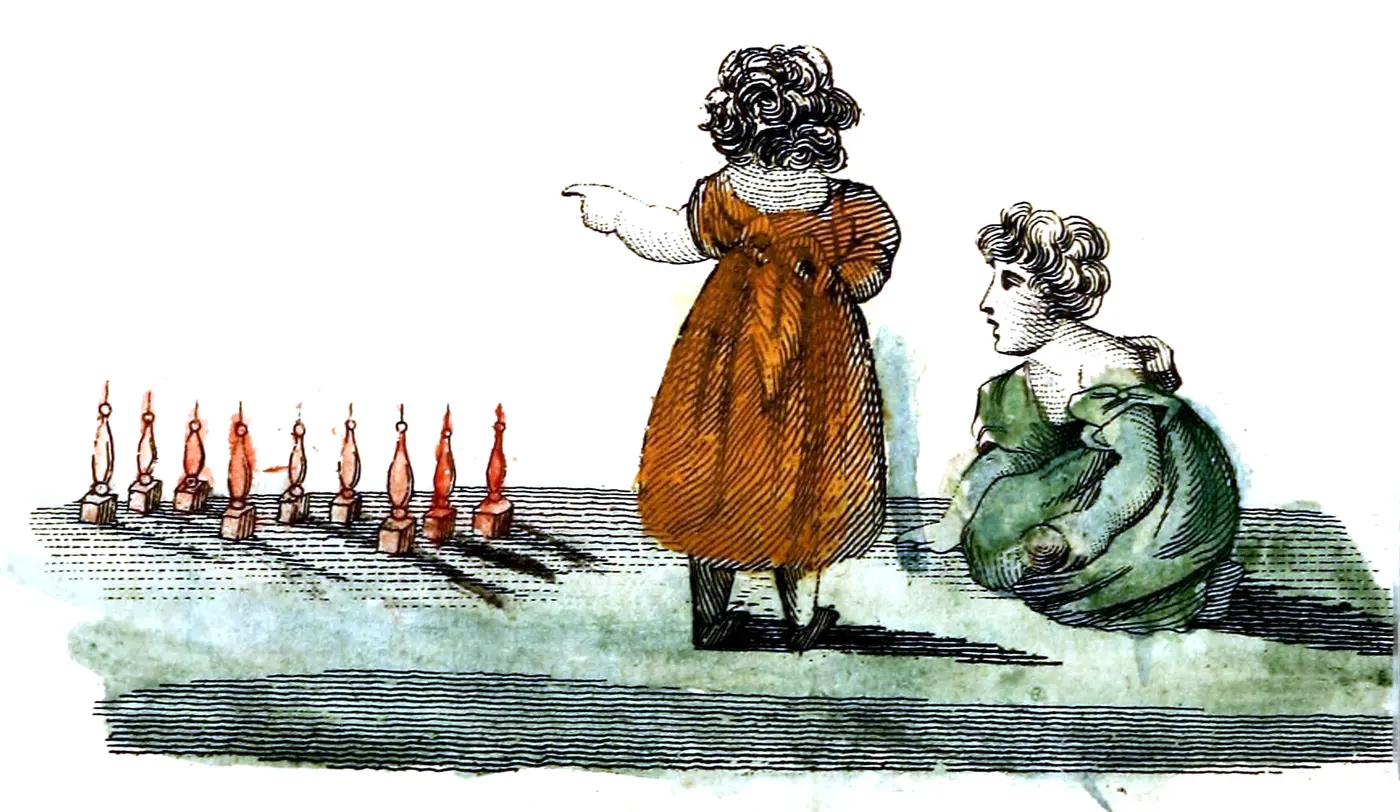
This nine-pin game—ninepins, in English—crossed to America with European immigrants. In Washington Irving’s story Rip Van Winkle, published in 1819, a band of strange men in the mountains play ninepins, the sound of their balls echoing like thunder.

“Banned, so they added a pin”
In 19th-century America, however, ninepins came to be associated with gambling and crime. In 1841, Connecticut banned ninepins by law as a breeding ground for gambling.
So people added a pin and played with ten. The law banned “nine pins”; ten pins weren’t covered. This is the story often told to explain why bowling uses ten pins. Similar tales of the loophole also turn up in an 1838 newspaper article about Baltimore, Maryland, and in an account of New York left by the English novelist Charles Dickens, who toured America in 1842.
Ten pins were around earlier
Taking this story as the “origin of ten pins,” however, seems premature. A painting of Ipswich, England, from around 1810 shows a man bowling outdoors at ten pins set in a triangle. In America, too, newspapers were running advertisements for “ten pin alleys” by 1820 at the latest.
In other words, ten-pin games existed decades before Connecticut’s ban. The ban may well have helped the ten-pin game spread, but it seems too much to say that ten pins were “invented” to dodge the ban. The loophole tale is best taken as a record of what people at the time were saying.
Later, in 1895, the American Bowling Congress was founded in the United States, and rules and equipment were gradually standardized. Ten pins set in a triangle became the norm.
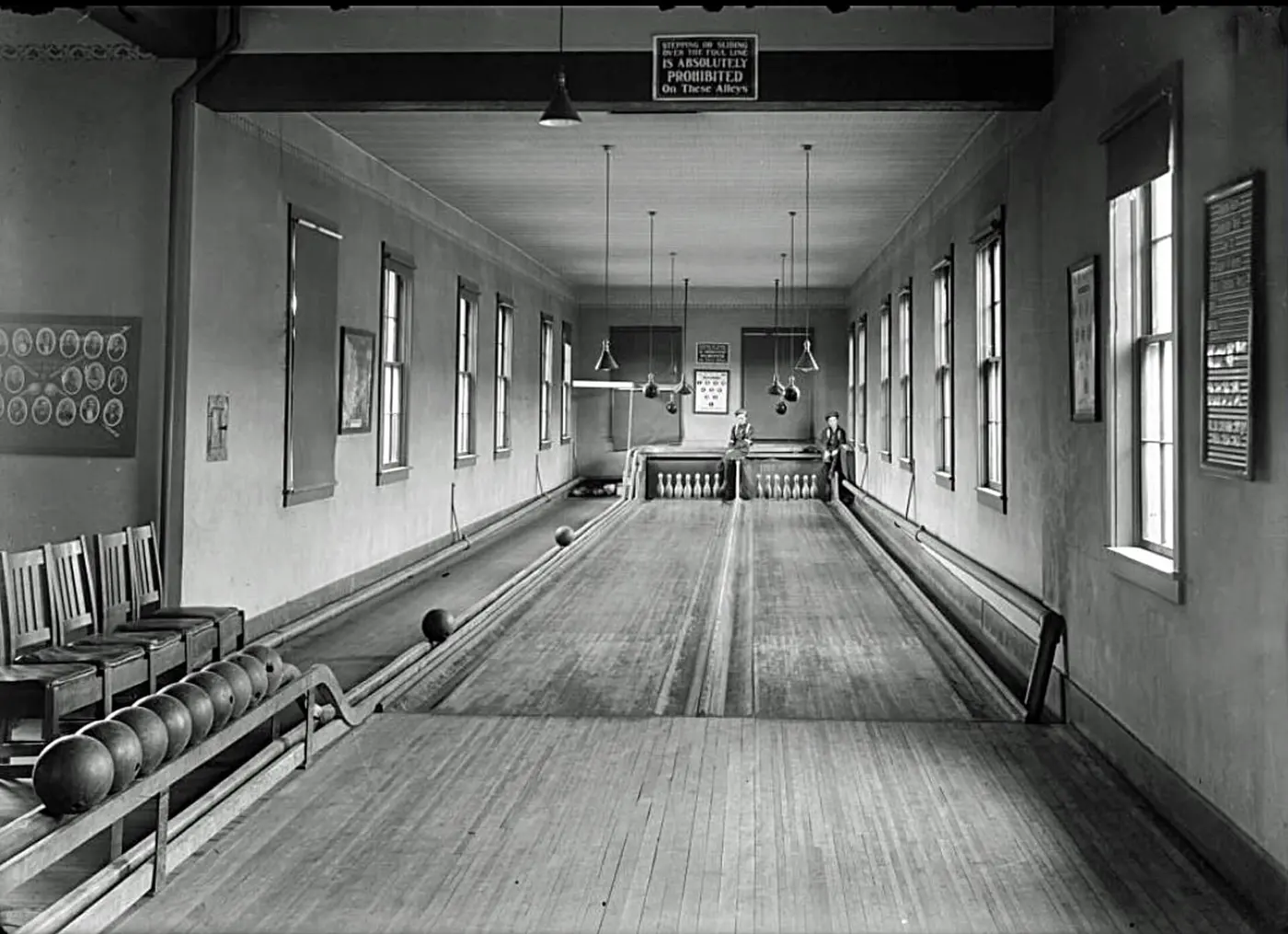

In those days, resetting the fallen pins was a job for people. A machine that set the pins automatically was invented in 1936 and put into practical use by the American company AMF in 1952, transforming bowling alleys.
Japan’s bowling boom
Japan’s first bowling alley is said to have opened in 1861 in the foreign settlement in Nagasaki. Its opening date gave Japan its “Bowling Day,” June 22. In 1952, Tokyo Bowling Center opened in Aoyama, Tokyo, as the country’s first full-fledged commercial bowling facility.
The big boom came around 1970. Fueled in part by star women professionals such as Ritsuko Nakayama, the game’s popularity soared, and by 1972 Japan had 3,697 bowling alleys. The boom then faded fast, and today there are fewer than a fifth as many.