Why are Ironman distances such odd numbers?
Because in 1978 the race simply strung together the courses of three events that already existed on the Hawaiian island of Oahu: an ocean swim, a round-the-island bike ride and the Honolulu Marathon.
140.6miles
A 3.86 km (2.4-mile) swim, a 180 km (112-mile) bike ride and a 42.2 km (26.2-mile) run: about 226 km (140.6 miles) in a single day. That is an Ironman, the best-known long-distance triathlon. Not one of those numbers is round, in miles or in kilometers.
No one worked out these distances as a scientific test of human endurance. They are what you get when you join up the courses of three events that already existed on the island of Oahu, Hawaii, in the 1970s.
Three races joined into one
The race was the idea of John Collins, a commander in the U.S. Navy, and his wife, Judy. According to the official history published by IRONMAN, the Collins family had taken part in a triathlon in San Diego in 1974 and moved from California to Hawaii in 1975.
In a document the couple later compiled, they date their decision to February 14, 1977, when they told each other, “If you do it, I’ll do it.” Judy imagined an endurance event that would take in the courses of the annual Waikiki Rough Water Swim and the Honolulu Marathon. John suggested using most of the route of a local bike club’s annual ride around the island for the cycling leg. That came to about 112 miles.
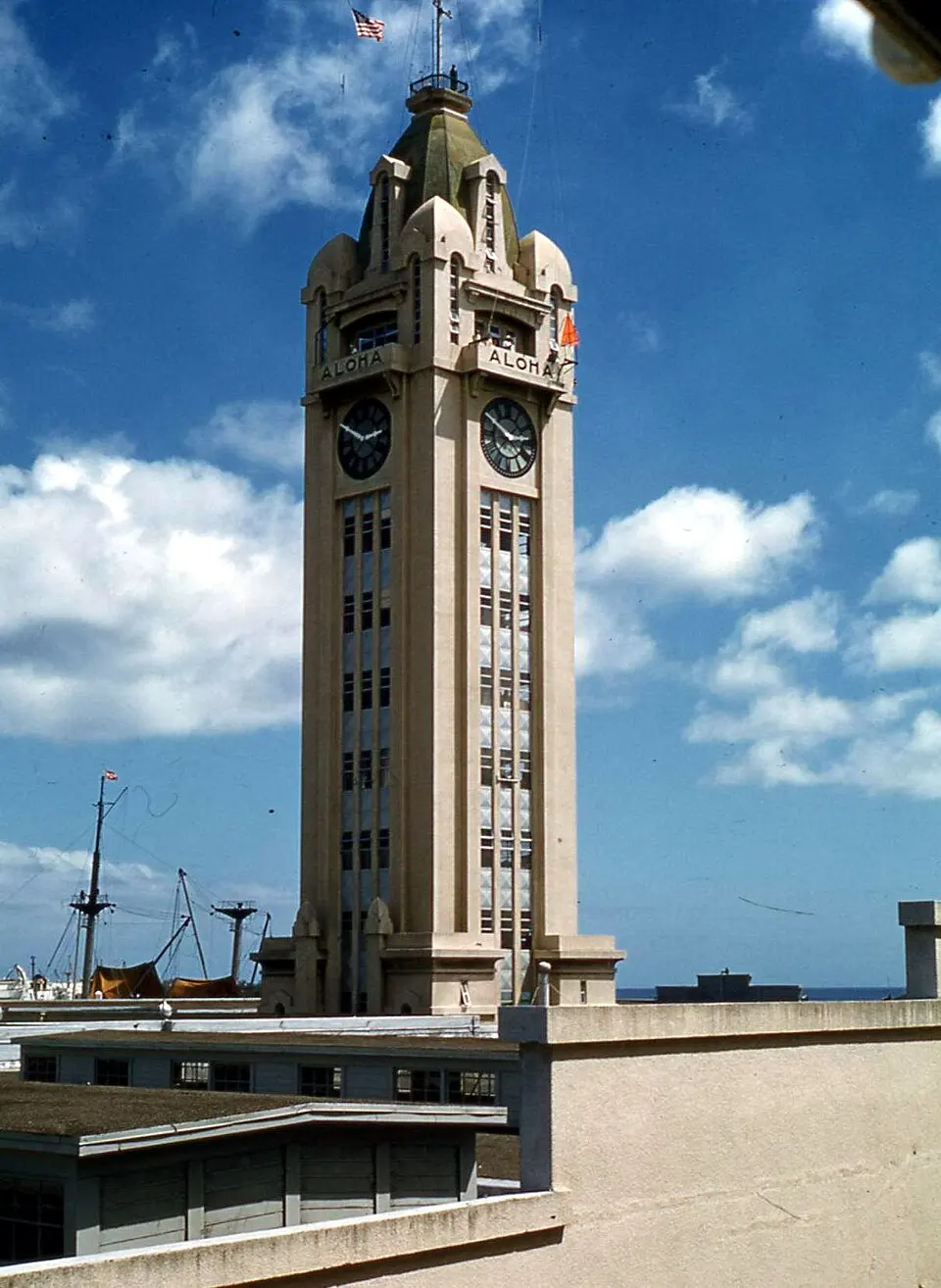
The course information sheet for the first race shows how the pieces fit together. Competitors swam from a beach in Waikiki, then cycled around Makapuu Point at the island’s eastern tip, along the North Shore and through the middle of the island to the Aloha Tower on Honolulu Harbor. There they got off their bikes and ran the Honolulu Marathon course. Why a marathon is 26.2 miles is another story altogether.

Who is the fittest?
The race’s origin is often told as something more dramatic. In 1977, the story goes, runners and swimmers were arguing about which of them were fitter. Collins chimed in that Sports Illustrated had reported that the cyclist Eddy Merckx had the highest oxygen uptake ever measured, so maybe cyclists were fittest of all, and proposed settling it with a race that combined all three. Whoever finished first, he said, they would call the Iron Man.
The Collinses have told a version of this themselves. In a 2014 interview with their local newspaper in Coronado, California, they recalled that members of their running and swimming clubs would banter about which group was more aerobically fit. John said he thought the real aerobic champions were long-distance cyclists. The couple announced the race in the fall of 1977, at a gathering of the Waikiki Swim Club.
So the debate seems to have been among local runners and swimmers rather than fellow Navy men. And settling an argument was only part of the story. The couple’s own document lists more down-to-earth reasons, too: they did better at long, slow distances than at sprints, and as club members they were expected to organize an event of their own.
Fifteen started, twelve finished
On the morning of February 18, 1978, fifteen men gathered on the beach at Waikiki. Each had to bring his own support crew: a paddler to escort him on the swim, and a handler with a vehicle for the land legs. On the last page of the race instructions was a handwritten line: “Swim 2.4 miles! Bike 112 miles! Run 26.2 miles! Brag for the rest of your life!”
Twelve of them finished. The first Iron Man was Gordon Haller, in 11 hours and 46 minutes. John Collins himself came in ninth.
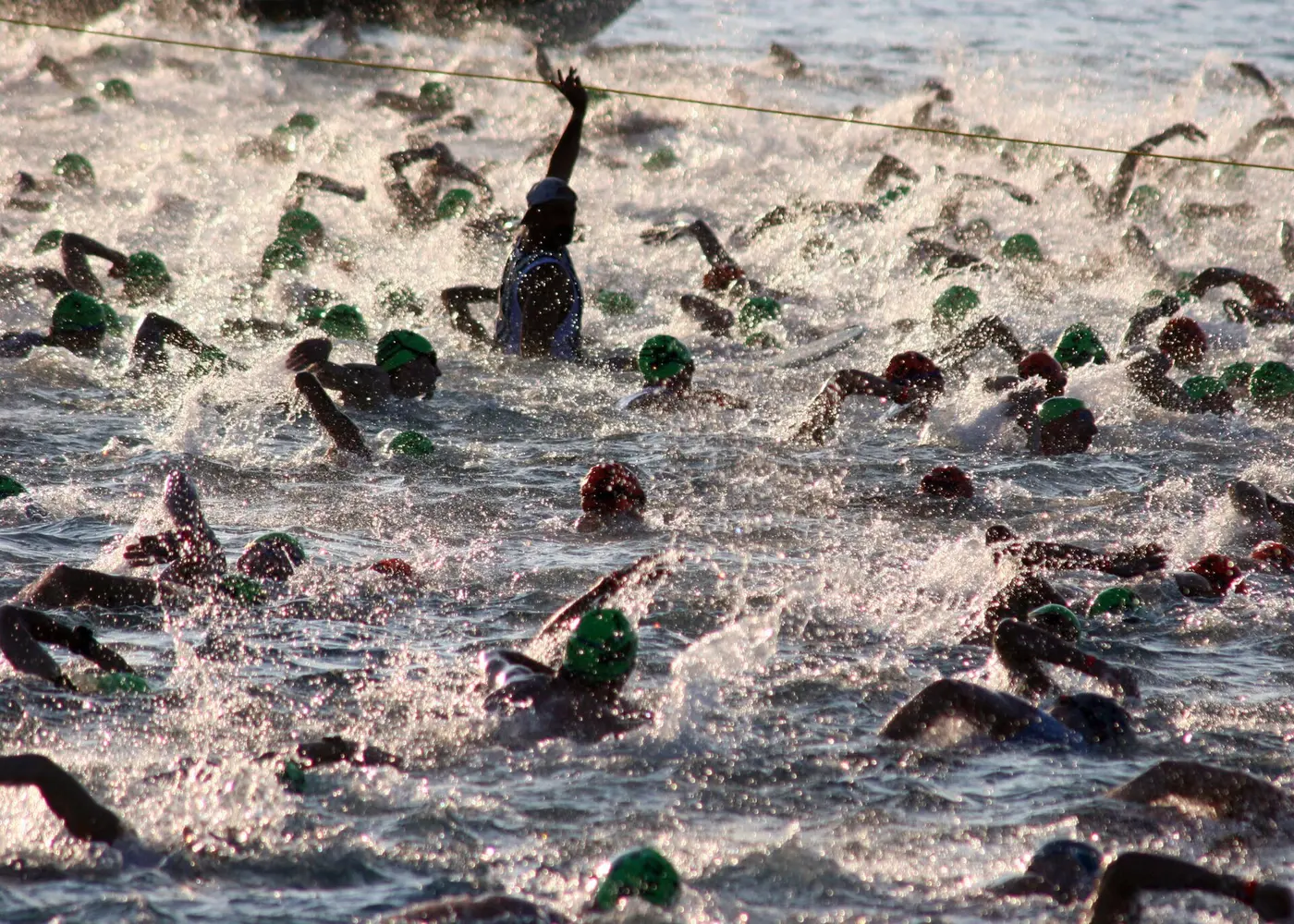

When Sports Illustrated ran a multi-page story on the 1979 race, letters poured in from people around the world who wanted to try it. In 1980, ABC’s Wide World of Sports filmed the event, and in 1981 the race moved from Oahu to Kona, on the Big Island of Hawaii.
The scenery changed, but the distances stayed the ones borrowed from Oahu: the Waikiki swim, the ride around the island and the Honolulu Marathon. Those odd-looking numbers are, in effect, a map of 1970s Oahu.